Beginners Guide to Prompt Engineering for AI
Master the art of crafting effective prompts to get the best results from AI models.
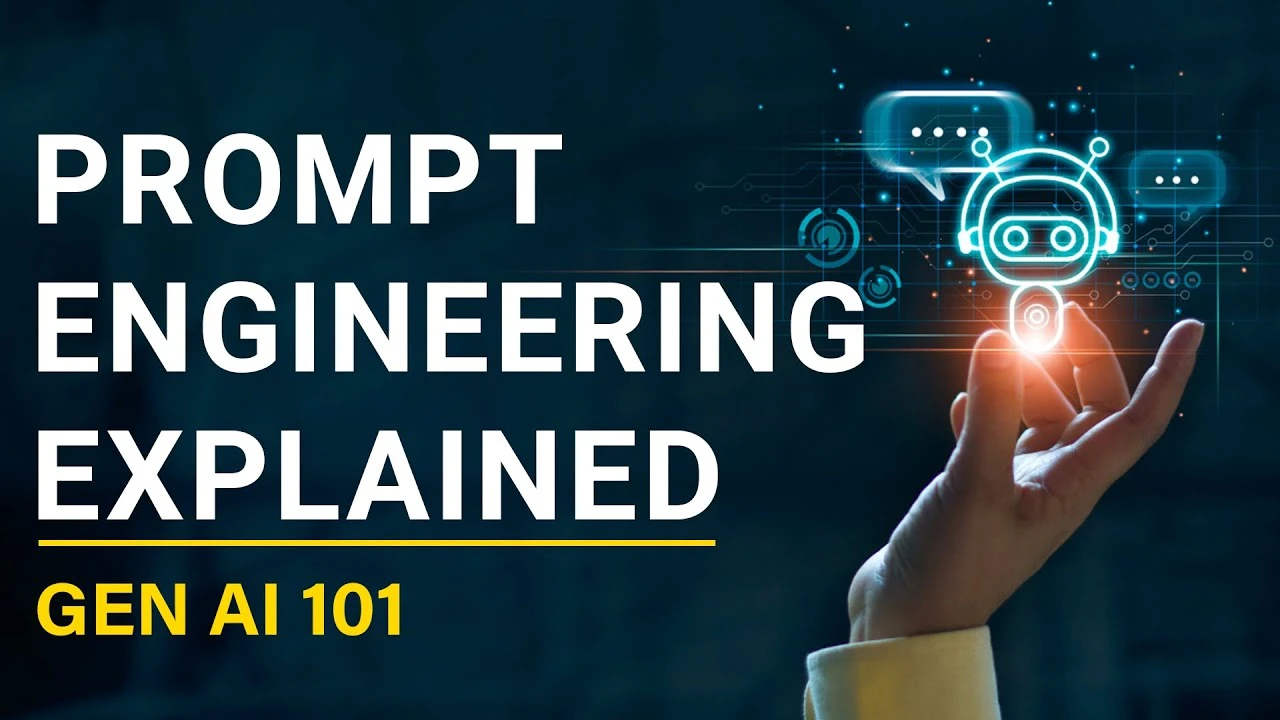
Master the art of crafting effective prompts to get the best results from AI models. Ever wondered how some people get those amazing, precise outputs from AI tools while others struggle with generic responses? The secret often lies in something called 'prompt engineering.' It's not as complicated as it sounds, and it's a skill that's becoming incredibly valuable in our AI-powered world. Think of it like learning to speak the AI's language. The better you communicate your intentions, the better the AI can understand and deliver exactly what you need.
Beginners Guide to Prompt Engineering for AI
Understanding Prompt Engineering What It Is and Why It Matters
So, what exactly is prompt engineering? At its core, it's the process of designing and refining inputs (prompts) for AI models to achieve desired outputs. It's about being clear, specific, and strategic in your communication with the AI. Why does it matter? Because the quality of the AI's output is directly proportional to the quality of your input. A well-engineered prompt can transform a mediocre AI response into something truly exceptional, saving you time, effort, and often, money. In a world where AI is becoming ubiquitous, from content creation to coding, mastering prompt engineering gives you a significant edge.
The Fundamentals of Effective Prompting Key Principles
Let's dive into the foundational principles that underpin effective prompt engineering. These aren't rigid rules, but rather guidelines that will significantly improve your AI interactions.
Clarity and Specificity The Cornerstone of Good Prompts
This is probably the most important principle. Vague prompts lead to vague answers. Be as clear and specific as possible about what you want. Instead of saying, 'Write about dogs,' try 'Write a 500-word blog post about the benefits of owning a golden retriever for first-time pet owners, focusing on their temperament and training ease.' See the difference? The more detail you provide, the less the AI has to guess, and the more accurate and relevant its output will be.
Context is King Providing Necessary Background Information
AI models don't inherently know your project, your audience, or your specific goals. You need to provide that context. If you're asking for marketing copy, tell the AI about your target demographic, your brand voice, and the product's unique selling points. If you're asking for code, explain the programming language, the desired functionality, and any existing code snippets. The more context you give, the better the AI can tailor its response to your specific needs.
Defining the Role and Persona Guiding AI Behavior
One powerful technique is to tell the AI what role or persona it should adopt. Do you want it to act as a 'professional marketing strategist,' a 'creative fiction writer,' a 'senior software engineer,' or a 'friendly customer service representative'? This helps the AI align its tone, style, and knowledge base with your requirements. For example, 'Act as a seasoned travel blogger. Write an engaging paragraph about the best hidden gems in Kyoto for a first-time visitor.' This immediately sets the stage for the AI's output.
Setting Constraints and Format Specifying Output Structure
Don't just ask for content; tell the AI how you want it structured. Do you need a bulleted list, a numbered list, a table, a specific word count, or a particular tone (e.g., formal, informal, humorous, academic)? Specifying constraints helps the AI deliver output that's immediately usable. For instance, 'Generate 5 unique blog post titles about sustainable living, each under 60 characters.' Or, 'Create a table comparing the pros and cons of remote work, with columns for 'Aspect,' 'Pros,' and 'Cons'.'
Iterative Refinement The Art of Prompt Iteration
Prompt engineering is rarely a one-shot deal. It's an iterative process. Your first prompt might not yield perfect results, and that's okay. Analyze the AI's output, identify what's missing or incorrect, and then refine your prompt. This might involve adding more detail, clarifying ambiguities, or adjusting constraints. Think of it as a conversation where you're guiding the AI closer to your desired outcome with each turn.
Advanced Prompt Engineering Techniques Maximizing AI Potential
Once you've got the basics down, you can start exploring more advanced techniques to unlock even greater potential from AI models.
Few-Shot Prompting Learning from Examples
This technique involves providing the AI with a few examples of the desired input-output pairs within your prompt. This helps the AI understand the pattern or style you're looking for. For instance, if you want the AI to summarize articles in a very specific way, you could provide two or three examples of an article and its desired summary. The AI then uses these examples to generate new summaries in the same style. This is incredibly powerful for tasks requiring specific formatting or nuanced understanding.
Chain-of-Thought Prompting Breaking Down Complex Tasks
For complex tasks, it's often beneficial to guide the AI through a multi-step reasoning process. Instead of asking for the final answer directly, instruct the AI to 'think step by step' or 'show your reasoning.' This encourages the AI to break down the problem, which often leads to more accurate and logical outputs. For example, 'Calculate the total cost of a project. First, list all materials and their individual costs. Second, list all labor hours and their hourly rates. Third, sum these up. Show your work.' This mimics human problem-solving and improves reliability.
Negative Prompting What to Avoid
Sometimes, it's easier to tell the AI what you *don't* want. This is particularly useful in image generation, but it can also apply to text. For example, 'Write a product description for a new smartphone, but do NOT mention battery life or camera megapixels.' This helps the AI steer clear of undesirable elements or topics.
Temperature and Top-P Understanding AI Creativity Controls
Many AI platforms offer parameters like 'temperature' and 'top-p' that control the randomness and diversity of the AI's output. Understanding these can help you fine-tune the AI's creativity. A higher temperature (e.g., 0.8-1.0) makes the output more creative and less predictable, while a lower temperature (e.g., 0.2-0.5) makes it more focused and deterministic. Top-p controls the diversity of words considered by the AI. Experimenting with these settings can help you achieve the desired balance between creativity and coherence.
Practical Applications and Recommended AI Tools for Prompt Engineering
Now that you understand the theory, let's look at some practical applications and the tools you can use to put these prompt engineering skills into action. The beauty is that these principles apply across a wide range of AI models and platforms.
ChatGPT and GPT-4 The Versatile Text Generators
Description: OpenAI's ChatGPT and its underlying GPT-4 model are perhaps the most well-known and widely used AI text generators. They are incredibly versatile, capable of generating everything from creative stories and marketing copy to code and factual summaries. GPT-4, in particular, boasts enhanced reasoning capabilities and a larger context window, making it excellent for complex prompt engineering tasks.
Use Cases: Content creation (blog posts, articles, social media updates), brainstorming ideas, summarizing documents, drafting emails, coding assistance, language translation, creative writing, customer service responses.
Prompt Engineering Tips: Use clear instructions, define the persona (e.g., 'Act as a marketing expert'), specify word counts or paragraph limits, use bullet points for structured output, and leverage chain-of-thought for multi-step tasks. Experiment with custom instructions in ChatGPT settings to set a default persona or style.
Pricing: ChatGPT (free tier available, GPT-3.5). ChatGPT Plus ($20/month for GPT-4 access, higher usage limits, and early access to new features). API access for GPT-4 is usage-based, starting from $0.03/1K tokens for input and $0.06/1K tokens for output (prices can vary and are subject to change).
Google Bard and Gemini Google's Conversational AI
Description: Google Bard, now powered by the advanced Gemini models (Pro and Ultra), is Google's direct competitor to ChatGPT. Gemini is designed to be multimodal, meaning it can understand and operate across different types of information, including text, images, audio, and video. This makes it particularly powerful for prompts that involve more than just text.
Use Cases: Research assistance, summarizing web pages or YouTube videos, generating creative text formats, coding, data analysis (especially with Gemini's multimodal capabilities), answering complex questions, drafting emails and documents.
Prompt Engineering Tips: Leverage its ability to access real-time information (if enabled). Ask it to summarize web pages directly. Use its draft options to explore different creative angles. For multimodal prompts, describe the image or video content clearly if you're asking it to analyze something visual.
Pricing: Google Bard (free tier available, powered by Gemini Pro). Gemini Advanced (powered by Gemini Ultra) is part of the Google One AI Premium plan, priced at $19.99/month after a free trial.
Anthropic Claude The Safety-Focused AI Assistant
Description: Claude, developed by Anthropic, is known for its focus on safety, helpfulness, and honesty. It's designed to be less prone to generating harmful or biased content. Claude 3, their latest family of models (Haiku, Sonnet, Opus), offers impressive performance across various tasks, with Opus being their most intelligent model.
Use Cases: Summarizing lengthy documents (due to large context windows), creative writing, coding, complex reasoning tasks, generating safe and ethical content, customer support, legal document analysis.
Prompt Engineering Tips: Claude excels with long prompts and large amounts of context. Don't be afraid to provide extensive background information. Its 'constitutional AI' training makes it good at adhering to ethical guidelines, so you can prompt it to be 'helpful and harmless.' Use clear, structured prompts for best results.
Pricing: Claude.ai (free tier available for Claude Sonnet). Claude Pro ($20/month for higher usage limits and access to Claude Opus). API access is usage-based, with prices varying by model (e.g., Claude 3 Opus at $15.00/M tokens for input and $75.00/M tokens for output).
Midjourney and DALL-E 3 AI Image Generation
Description: While primarily for images, prompt engineering is absolutely crucial here. Midjourney is renowned for its artistic and aesthetic image generation, often producing stunning, high-quality visuals. DALL-E 3 (integrated into ChatGPT Plus and Microsoft Copilot) is excellent at understanding natural language prompts and generating images that closely match textual descriptions, including text within images.
Use Cases: Creating unique artwork, generating marketing visuals, designing product mockups, illustrating stories, concept art, social media graphics.
Prompt Engineering Tips: Be descriptive about subjects, styles (e.g., 'photorealistic,' 'watercolor,' 'cyberpunk'), lighting, composition, and mood. Use negative prompts (e.g., '--no hands' in Midjourney) to exclude unwanted elements. Experiment with aspect ratios (e.g., '--ar 16:9'). For DALL-E 3, be very specific about text you want included and its placement.
Pricing: Midjourney (subscription required, starting at $10/month). DALL-E 3 (included with ChatGPT Plus subscription, $20/month, or via Microsoft Copilot, which has a free tier and Copilot Pro at $20/month).
Jasper AI and Copy AI AI Writing Assistants for Marketing
Description: These are specialized AI writing tools built on top of large language models, often with templates and workflows tailored for marketing and content creation. They are designed to be user-friendly for specific business needs.
Use Cases: Blog post outlines, ad copy, social media captions, product descriptions, email newsletters, website content, sales letters.
Prompt Engineering Tips: While they have templates, you still need to provide clear inputs for those templates. Define your target audience, key benefits, and desired call to action. Use their built-in features for tone of voice and length adjustments. Think about the specific marketing objective for each piece of content.
Pricing: Jasper AI (starts around $39/month for Creator plan). Copy AI (free tier available, paid plans start around $49/month for Pro plan).
Common Prompt Engineering Mistakes to Avoid
Even with the best intentions, it's easy to fall into common traps when prompting AI. Being aware of these can help you refine your approach.
Being Too Vague or General Lack of Specificity
As mentioned, this is the cardinal sin. 'Write something interesting' will get you generic, uninspired content. Always strive for precision.
Overloading the Prompt Too Much Information
While context is good, overwhelming the AI with too many conflicting instructions or irrelevant details can confuse it. Keep your prompts focused on the core task. If a task is truly complex, break it down into multiple prompts or use chain-of-thought.
Assuming AI Knows Your Intent Lack of Context
The AI doesn't read your mind. It only knows what you tell it. Never assume it understands your industry jargon, your company's internal policies, or your personal preferences unless you explicitly state them.
Not Iterating or Refining Sticking to the First Try
The first output is rarely the final output. Treat AI interaction as a dialogue. If the first response isn't perfect, don't give up. Refine your prompt based on what you learned from the AI's initial attempt.
Ignoring AI Limitations Expecting Too Much
AI models are powerful, but they're not sentient. They can 'hallucinate' (make up facts), struggle with very complex logical reasoning without guidance, and lack true understanding or consciousness. Know what your chosen AI model is good at and what its current limitations are.
The Future of Prompt Engineering and AI Interaction
Prompt engineering is a rapidly evolving field. As AI models become more sophisticated, the way we interact with them will also change. We're already seeing trends towards more intuitive interfaces, multimodal prompting (combining text, images, and audio), and even AI models that can generate their own prompts or refine existing ones.
Automated Prompt Optimization AI Helping AI
Imagine an AI that analyzes your desired outcome and automatically generates the best possible prompt for another AI. This isn't science fiction; it's an active area of research. Tools are emerging that can help you optimize your prompts, suggesting improvements for clarity, specificity, and effectiveness.
Multimodal Prompting Beyond Text
With models like Gemini and GPT-4 Vision, we're moving beyond just text. You can now prompt AI with images, and soon, audio and video. This opens up entirely new possibilities for creative and analytical tasks, requiring a new set of prompt engineering skills that encompass visual and auditory cues.
Agentic AI Systems AI Taking Initiative
The future might involve 'agentic' AI systems that can break down complex goals into sub-tasks, execute them, and even self-correct. In such a scenario, your initial prompt would be a high-level objective, and the AI agent would handle the detailed prompt engineering internally. However, understanding the underlying principles will still be crucial for guiding and overseeing these agents.
Your Journey to Prompt Engineering Mastery
Prompt engineering isn't just a technical skill; it's a creative one. It's about understanding how to communicate effectively with a powerful new form of intelligence. By applying the principles of clarity, context, role-playing, and iterative refinement, you'll be well on your way to mastering this essential skill. Keep experimenting, keep learning, and keep pushing the boundaries of what's possible with AI. The better you get at prompting, the more valuable you become in a world increasingly shaped by artificial intelligence. So go ahead, open up your favorite AI tool, and start crafting those perfect prompts. The possibilities are truly endless.
:max_bytes(150000):strip_icc()/277019-baked-pork-chops-with-cream-of-mushroom-soup-DDMFS-beauty-4x3-BG-7505-5762b731cf30447d9cbbbbbf387beafa.jpg)