Essential Programming Languages for AI Development
Identify the key programming languages like Python and R crucial for AI and machine learning.
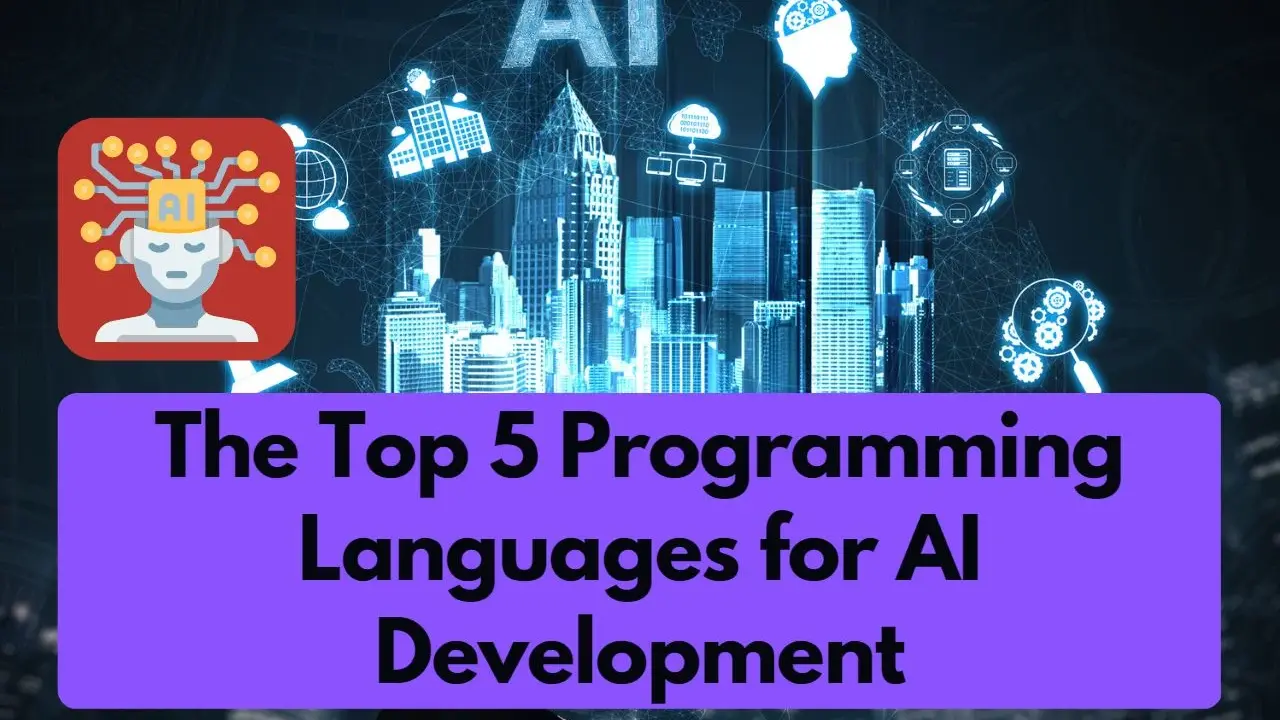
Identify the key programming languages like Python and R crucial for AI and machine learning.
Essential Programming Languages for AI Development
So, you're diving into the exciting world of Artificial Intelligence and Machine Learning, huh? That's awesome! But pretty quickly, you'll realize that to actually build and implement AI models, you're going to need to speak their language. And no, I don't mean talking to your smart speaker. I'm talking about programming languages. Choosing the right one can feel a bit overwhelming at first, especially with so many options out there. But don't sweat it! We're going to break down the essential programming languages for AI development, look at why they're popular, what they're best for, and even peek at some specific tools and their costs.
Think of it this way: if AI is the brain, then programming languages are the nervous system that allows it to function and interact with the world. Without them, your brilliant AI ideas would just stay ideas. So, let's get started and figure out which languages are going to be your best friends on this AI journey.
Python The Unquestionable King of AI and Machine Learning
If there's one language that dominates the AI and Machine Learning landscape, it's Python. Seriously, it's everywhere. From academic research to industry applications, Python is the go-to for most AI developers. But why? What makes Python so special for AI and ML?
Why Python Reigns Supreme for AI and ML Development
- Simplicity and Readability: Python's syntax is incredibly clean and easy to read, almost like plain English. This means you can write code faster, and it's easier for others (and your future self!) to understand what's going on. This is a huge plus when you're dealing with complex AI algorithms.
- Vast Ecosystem of Libraries and Frameworks: This is where Python truly shines. It has an insane number of pre-built libraries and frameworks specifically designed for AI and ML. We're talking about powerhouses like TensorFlow, Keras, PyTorch, Scikit-learn, and NumPy. These libraries provide ready-to-use functions and tools for everything from data manipulation and analysis to building and training neural networks. It's like having a massive toolbox with all the specialized tools you could ever need.
- Large and Active Community: Because Python is so popular, it has a massive and supportive community. This means if you run into a problem, chances are someone else has already faced it and found a solution. Forums, tutorials, and open-source projects are abundant, making learning and troubleshooting much easier.
- Versatility: Python isn't just for AI. It's a general-purpose language used for web development, data analysis, automation, and more. This versatility means you can use Python for the entire AI pipeline, from data collection and preprocessing to model deployment and integration with other systems.
- Platform Independence: Python code can run on various operating systems (Windows, macOS, Linux) without significant modifications, which is super convenient for development and deployment.
Key Python Libraries and Their Use Cases in AI
Let's dive into some of the specific Python libraries that are indispensable for AI development:
TensorFlow and Keras Deep Learning Powerhouses
TensorFlow is an open-source machine learning framework developed by Google. It's incredibly powerful and flexible, used for a wide range of tasks, especially deep learning. Think image recognition, natural language processing, and complex neural networks. It allows you to build and train models at scale.
- Use Cases: Building custom neural networks, large-scale deep learning projects, research, deploying models to production environments.
- Comparison: TensorFlow is known for its production readiness and scalability. It can be a bit more complex for beginners due to its lower-level API, but it offers immense control.
- Cost: Free and open-source.
Keras is a high-level API that runs on top of TensorFlow (and other backends like Theano or CNTK). It's designed for fast experimentation and makes building neural networks much simpler and more intuitive. If you're just starting with deep learning, Keras is often recommended because it abstracts away a lot of the complexity of TensorFlow.
- Use Cases: Rapid prototyping of deep learning models, educational purposes, building common neural network architectures quickly.
- Comparison: Keras is user-friendly and excellent for quick model development. It's less flexible than raw TensorFlow for highly customized operations but perfect for most standard tasks.
- Cost: Free and open-source.
PyTorch Research and Flexibility
PyTorch is another open-source machine learning library developed by Facebook's AI Research lab (FAIR). It's gained immense popularity, especially in the research community, due to its dynamic computation graph, which offers more flexibility and easier debugging compared to TensorFlow's static graph (though TensorFlow has also adopted dynamic graphs with eager execution).
- Use Cases: Deep learning research, natural language processing, computer vision, projects requiring more flexibility and dynamic model building.
- Comparison: PyTorch is often preferred by researchers for its flexibility and Pythonic nature. It's generally considered easier to debug. TensorFlow is often seen as more production-ready for large-scale deployments, though PyTorch is catching up rapidly.
- Cost: Free and open-source.
Scikit-learn The Machine Learning Workhorse
Scikit-learn is a fantastic library for traditional machine learning algorithms. If you're working with classification, regression, clustering, or dimensionality reduction, Scikit-learn has you covered. It's built on NumPy, SciPy, and Matplotlib, providing a consistent API for various ML models.
- Use Cases: Predictive modeling, data classification, clustering, feature selection, general machine learning tasks that don't necessarily require deep neural networks.
- Comparison: Scikit-learn is for classical ML, while TensorFlow/PyTorch are for deep learning. It's simpler to use for many common tasks and often the first stop for ML projects.
- Cost: Free and open-source.
NumPy and Pandas Data Manipulation Essentials
You can't do AI without data, and NumPy and Pandas are your best friends for handling it.
NumPy (Numerical Python) provides support for large, multi-dimensional arrays and matrices, along with a collection of high-level mathematical functions to operate on these arrays. It's the fundamental package for scientific computing with Python.
- Use Cases: Efficient numerical operations, array manipulation, foundational for almost all other ML libraries.
- Cost: Free and open-source.
Pandas is a library for data manipulation and analysis. It introduces DataFrames, which are tabular data structures that make working with structured data incredibly easy and intuitive. Think of it like a super-powered Excel spreadsheet in Python.
- Use Cases: Data cleaning, data transformation, data exploration, loading and saving data from various formats (CSV, Excel, SQL databases).
- Cost: Free and open-source.
R The Statistical Powerhouse for Data Science and AI
While Python might be the king, R is definitely the queen, especially in the realm of statistical analysis, data visualization, and academic research. R was specifically designed for statisticians and data miners, so it has a very strong foundation in statistical modeling and graphical representation of data.
Why R is a Strong Contender for AI and Data Science
- Statistical Prowess: R has an unparalleled collection of statistical packages and functions. If your AI project heavily relies on complex statistical modeling, hypothesis testing, or advanced econometrics, R might be a more natural fit.
- Exceptional Data Visualization: R's graphing capabilities are top-notch, especially with packages like ggplot2. Creating publication-quality plots and interactive visualizations is incredibly easy and powerful.
- Strong Community in Academia and Research: R is widely used in universities and research institutions, particularly in fields like bioinformatics, biostatistics, and social sciences.
- Reproducibility: R Markdown allows for creating dynamic reports that combine code, output, and narrative text, making research and analysis highly reproducible.
Key R Packages and Their Use Cases in AI
R also boasts a rich ecosystem of packages relevant to AI and ML:
Caret Comprehensive Machine Learning Workflow
Caret (Classification And REgression Training) is a powerful package that streamlines the process of training and evaluating machine learning models. It provides a consistent interface for many different ML algorithms, making it easy to compare and select the best model for your data.
- Use Cases: Model training, hyperparameter tuning, cross-validation, feature selection, model evaluation for various ML algorithms.
- Comparison: Similar in spirit to Scikit-learn in Python, providing a unified interface for classical ML tasks.
- Cost: Free and open-source.
Tidyverse Data Manipulation and Visualization
The Tidyverse is not a single package but a collection of R packages designed for data science. It includes dplyr for data manipulation, ggplot2 for data visualization, tidyr for tidying data, and more. It promotes a consistent grammar of data manipulation, making code more readable and efficient.
- Use Cases: Data cleaning, transformation, exploration, and creating stunning visualizations.
- Cost: Free and open-source.
Keras and TensorFlow for R Deep Learning Integration
Yes, you read that right! Both Keras and TensorFlow have R interfaces, allowing R users to leverage the power of these deep learning frameworks without switching to Python. This means you can build and train neural networks directly within your R environment.
- Use Cases: Deep learning tasks like image recognition, natural language processing, and building complex neural networks within R.
- Cost: Free and open-source.
Java The Enterprise AI Solution
While not as flashy as Python or R for rapid prototyping, Java holds a significant position in enterprise-level AI applications. Its strength lies in its robustness, scalability, and platform independence, making it ideal for building large-scale, production-ready AI systems.
Why Java for Enterprise AI and Scalability
- Performance and Scalability: Java is known for its performance and ability to handle large-scale applications. This is crucial for AI systems that need to process massive amounts of data and serve many users.
- Enterprise Integration: Java is a cornerstone of enterprise software development. If you need to integrate AI models into existing large-scale business systems, Java is often the most seamless choice.
- Strong Type System: Java's strong typing helps catch errors early in the development process, leading to more stable and reliable applications.
- JVM Ecosystem: The Java Virtual Machine (JVM) ecosystem is vast, offering a plethora of tools, libraries, and frameworks that can be leveraged for AI development.
Key Java Libraries and Frameworks for AI
Deeplearning4j Deep Learning for Java
Deeplearning4j (DL4J) is an open-source deep learning library for Java and Scala. It's designed for enterprise-grade applications and allows you to build, train, and deploy neural networks on the JVM. It's compatible with popular deep learning frameworks like Keras and TensorFlow, allowing for model import.
- Use Cases: Building deep learning models in Java, integrating AI into existing Java enterprise applications, distributed deep learning on Spark and Hadoop.
- Comparison: DL4J brings deep learning capabilities to the Java ecosystem, making it a strong choice for organizations heavily invested in Java.
- Cost: Free and open-source.
Weka Machine Learning Workbench
Weka (Waikato Environment for Knowledge Analysis) is a collection of machine learning algorithms for data mining tasks, implemented in Java. It's a powerful tool for data preprocessing, classification, regression, clustering, and association rules. Weka also provides a graphical user interface (GUI), making it accessible for those who prefer a visual approach.
- Use Cases: Data mining, machine learning experimentation, educational purposes, building predictive models in Java.
- Cost: Free and open-source.
Julia The Rising Star for Scientific Computing and AI
Julia is a relatively new language that's gaining traction, especially in scientific computing, numerical analysis, and increasingly, AI. It was designed from the ground up for high performance, making it a compelling alternative to Python and R for computationally intensive tasks.
Why Julia is Gaining Momentum in AI
- Speed: Julia is compiled Just-In-Time (JIT) and is designed for speed, often rivaling C or Fortran for numerical computations. This is a huge advantage for training large AI models.
- Ease of Use: Julia's syntax is high-level and easy to read, similar to Python, making it approachable for developers.
- Solves the Two-Language Problem: Often, data scientists prototype in Python/R and then rewrite performance-critical parts in C++ or Java. Julia aims to eliminate this by offering both high-level syntax and high performance in one language.
- Built-in Parallelism: Julia has excellent support for parallel computing, which is essential for modern AI workloads.
Key Julia Packages for AI and Machine Learning
Fluxjl Deep Learning in Julia
Flux.jl is a powerful and flexible deep learning library written entirely in Julia. It's designed to be easy to use for beginners while providing the flexibility and performance needed for advanced research.
- Use Cases: Building and training neural networks, deep learning research, projects where performance is critical.
- Comparison: Flux.jl aims to be a PyTorch-like experience in Julia, offering dynamic computation graphs and a highly composable API.
- Cost: Free and open-source.
MLJjl Machine Learning in Julia
MLJ.jl (Machine Learning in Julia) is a meta-package that provides a unified interface for various machine learning models implemented in Julia. It's similar to Scikit-learn in its goal of providing a consistent API for different ML algorithms.
- Use Cases: Classical machine learning tasks, model selection, hyperparameter tuning, and general ML workflows in Julia.
- Cost: Free and open-source.
C++ The Performance Powerhouse for AI
While not typically the first choice for AI development due to its complexity, C++ is indispensable for performance-critical AI applications, especially in areas like embedded systems, real-time AI, and game AI. Many of the underlying libraries for Python (like TensorFlow's core) are actually written in C++ for speed.
Why C++ for High-Performance AI and Edge Computing
- Unmatched Performance: C++ offers direct memory management and low-level control, leading to highly optimized and fast code. This is crucial for AI models that need to run in real-time or on resource-constrained devices.
- Resource Efficiency: C++ applications consume fewer resources (CPU, memory) compared to higher-level languages, making it ideal for edge AI and embedded systems.
- Integration with Hardware: C++ is excellent for interacting directly with hardware, which is vital for specialized AI accelerators and custom chips.
Key C++ Libraries for AI
TensorFlow C++ API and PyTorch C++ Frontend
Both TensorFlow and PyTorch offer C++ APIs or frontends. This allows developers to deploy and run models trained in Python in a C++ environment, which is common for production systems where performance and low latency are paramount.
- Use Cases: Deploying trained AI models in production, real-time inference, embedded AI, game AI, high-performance computing.
- Cost: Free and open-source.
OpenCV Computer Vision Library
OpenCV (Open Source Computer Vision Library) is a massive library of programming functions primarily aimed at real-time computer vision. While it has Python bindings, its core is written in C++, and it's widely used for image and video analysis, object detection, and facial recognition.
- Use Cases: Computer vision applications, image processing, video analysis, augmented reality.
- Cost: Free and open-source.
JavaScript AI in the Browser and Beyond
You might be surprised to see JavaScript on this list, but with the rise of web-based AI applications and frameworks like Node.js, JavaScript is becoming increasingly relevant for AI development, especially for front-end AI and deploying models directly in web browsers.
Why JavaScript for Web AI and Front-End Integration
- Ubiquity: JavaScript runs everywhere – in browsers, on servers (Node.js), and even on mobile devices. This makes it incredibly versatile for deploying AI models.
- Interactive AI: For AI applications that require direct user interaction in a web browser, JavaScript is the natural choice.
- Accessibility: Leveraging existing web development skills for AI can lower the barrier to entry for many developers.
Key JavaScript Libraries for AI
TensorFlowjs Machine Learning in the Browser
TensorFlow.js is a library for developing and training machine learning models in JavaScript, and deploying them directly in the browser or in Node.js. This opens up a world of possibilities for interactive AI experiences and client-side model inference.
- Use Cases: Running ML models directly in web browsers, interactive AI demos, real-time inference on user data without sending it to a server, mobile AI applications.
- Cost: Free and open-source.
Brainjs Neural Networks for JavaScript
Brain.js is a JavaScript library for neural networks. It's simpler than TensorFlow.js and is great for smaller-scale neural network implementations and learning the basics of neural networks in JavaScript.
- Use Cases: Simple neural network implementations, pattern recognition, learning purposes.
- Cost: Free and open-source.
Choosing Your AI Programming Language The Right Fit for Your Project
So, which language should you choose? There's no single 'best' language; it really depends on your specific goals, project requirements, and existing skill set. Here's a quick rundown to help you decide:
- For Beginners and Most AI/ML Projects: Python. If you're just starting out or working on general AI/ML tasks, Python is almost always the recommended choice due to its ease of use, vast libraries, and strong community support.
- For Statistical Analysis and Data Visualization: R. If your project is heavily focused on statistical modeling, deep statistical insights, or creating high-quality data visualizations, R is an excellent choice.
- For Enterprise-Grade, Scalable AI Systems: Java. If you're building large-scale, robust AI applications that need to integrate with existing enterprise systems, Java offers the performance and stability required.
- For High-Performance Numerical Computing and Research: Julia. If you need extreme speed for numerical computations and want a language that combines ease of use with performance, Julia is a promising option.
- For Low-Level Control, Embedded AI, and Real-time Systems: C++. When performance, resource efficiency, and direct hardware interaction are paramount, C++ is the go-to.
- For Web-Based AI and Interactive Front-End Applications: JavaScript. If you're building AI experiences directly in the browser or leveraging web technologies, JavaScript with TensorFlow.js is your friend.
Many professionals even use a combination of these languages. For example, you might prototype a model in Python, then deploy it using a C++ or Java framework for production. Or you might use R for initial data exploration and statistical modeling, then switch to Python for deep learning.
The most important thing is to pick a language and start building! The more you practice, the more comfortable you'll become, and you'll naturally discover which tools best fit your workflow and the problems you're trying to solve. Happy coding!
:max_bytes(150000):strip_icc()/277019-baked-pork-chops-with-cream-of-mushroom-soup-DDMFS-beauty-4x3-BG-7505-5762b731cf30447d9cbbbbbf387beafa.jpg)