Practical AI Applications for Everyday Life
Discover how AI is already integrated into daily routines and how to utilize it more effectively.
Discover how AI is already integrated into daily routines and how to utilize it more effectively.
Practical AI Applications for Everyday Life
AI in Your Smart Home Enhancing Convenience and Security
Hey there! Ever thought about how much artificial intelligence has quietly woven itself into the fabric of our daily lives? It's not just about robots taking over the world, thankfully! A huge chunk of AI's magic happens right in our homes, making things smoother, safer, and frankly, a lot cooler. Let's dive into how AI is transforming our living spaces, from smart thermostats to security systems.
Smart Thermostats and Energy Efficiency
One of the most common and impactful AI applications in the home is the smart thermostat. Devices like the Nest Learning Thermostat and ecobee SmartThermostat with Voice Control are prime examples. They don't just let you set a temperature; they learn your habits. Imagine this: you leave for work at 8 AM every weekday, and you like your house cooler at night. These AI-powered thermostats pick up on these patterns. They learn when you're home, when you're away, and what temperatures you prefer at different times of the day. This isn't just about comfort; it's about serious energy savings. Nest, for instance, claims it can save users 10-12% on heating and 15% on cooling bills. How do they do it? They use sensors to detect if you're home, integrate with your phone's location, and even pull in local weather data to pre-heat or pre-cool your home efficiently. The ecobee takes it a step further with room sensors to eliminate hot or cold spots, ensuring consistent comfort throughout your home. Both typically retail between $150 and $250, a small investment for long-term savings and convenience.
AI Powered Home Security Systems
Security is another area where AI shines. Traditional security systems are great, but AI adds a layer of intelligence that makes them far more effective. Take Arlo Pro 4 Spotlight Camera or Ring Floodlight Cam Wired Pro. These aren't just cameras; they're smart sentinels. They use AI to differentiate between a person, a pet, or a car. This means fewer false alarms from a squirrel scampering across your lawn and more accurate alerts when something genuinely suspicious is happening. Some systems even offer facial recognition, so they can tell you if it's a family member or an unknown visitor. The Arlo Pro 4, for example, offers 2K HDR video, a 160-degree view, and integrated spotlight and siren. Its AI can identify packages, vehicles, and animals. Ring's Floodlight Cam Wired Pro provides 1080p HD video, 3D Motion Detection, and a 110dB siren. These cameras often come with subscription plans (e.g., Arlo Secure starts around $2.99/month per camera, Ring Protect starts around $3.99/month) for cloud storage and advanced AI features, but the peace of mind they offer is invaluable.
Smart Lighting and Ambiance Control
Beyond security and climate, AI is making our homes more responsive to our moods and needs through smart lighting. Systems like Philips Hue and LIFX bulbs integrate seamlessly with AI assistants. You can tell Alexa or Google Assistant to 'dim the lights to 50%' or 'change the living room lights to blue.' But it goes deeper. Some systems can learn your routines and adjust lighting automatically. Imagine your lights slowly brightening in the morning to simulate a sunrise, or dimming as bedtime approaches. Certain advanced setups can even use AI to detect your presence and adjust lighting accordingly, saving energy when rooms are empty. Philips Hue starter kits typically range from $70-$200 depending on the number of bulbs and features, while individual LIFX bulbs are around $25-$50.
AI in Your Daily Commute and Navigation Smarter Journeys
Now, let's step outside the house and hit the road. AI is a silent co-pilot in our cars and a brilliant guide on our phones, making commutes less stressful and more efficient.
Navigation Apps and Real-time Traffic
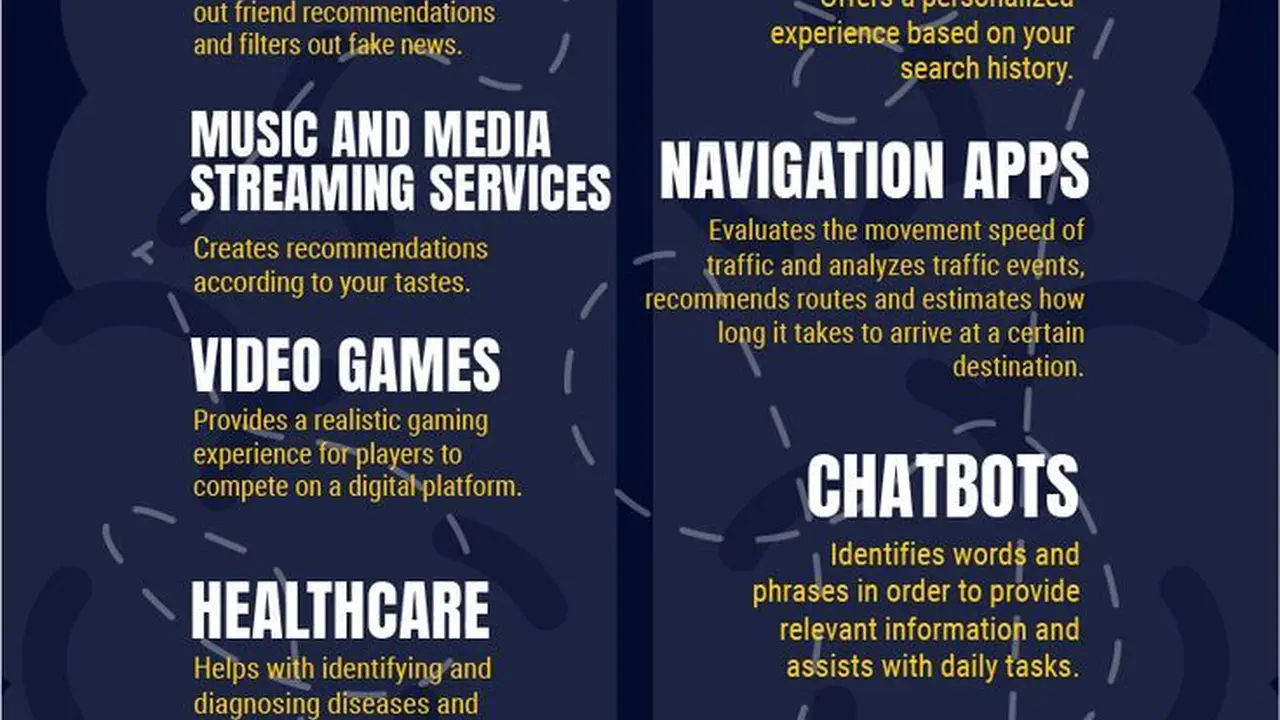
You probably use it every day without thinking much about the AI behind it: Google Maps and Waze. These aren't just digital maps; they're sophisticated AI systems. They collect real-time traffic data from millions of users, analyze historical traffic patterns, and even factor in road closures, accidents, and weather conditions. Their AI algorithms then calculate the fastest route, predict your arrival time, and even suggest alternative paths if traffic builds up. Waze, in particular, thrives on community-sourced data, where users report hazards, police presence, and traffic jams, which its AI then incorporates into routing for everyone else. These apps are generally free, relying on advertising or data collection, and have revolutionized how we navigate urban jungles.
Ride-Sharing and Delivery Services
Ever wondered how Uber or Grab assigns you a driver so quickly, or how food delivery apps like DoorDash or Foodpanda estimate delivery times so accurately? It's all AI. Their algorithms are constantly optimizing. They consider driver location, passenger demand, traffic, estimated travel time, and even surge pricing based on real-time supply and demand. For delivery services, AI optimizes delivery routes for drivers, ensuring multiple orders can be delivered efficiently, minimizing wait times for customers. This complex orchestration is only possible with powerful AI at its core.
Advanced Driver-Assistance Systems ADAS
Modern cars are increasingly equipped with ADAS features, many of which are AI-powered. Think about adaptive cruise control, lane-keeping assist, or automatic emergency braking. These systems use cameras, radar, and sensors to perceive the environment around the car. AI processes this data in real-time to maintain a safe distance from the car ahead, keep you centered in your lane, or even apply the brakes if a collision is imminent. While these are often integrated into the car's base price, aftermarket solutions like Comma.ai's Openpilot (which requires specific hardware and technical know-how, costing around $1000 for the hardware) can add advanced driver assistance to compatible vehicles, showcasing the power of open-source AI in automotive applications.
AI in Your Personal Productivity and Learning Smarter Workflows
AI isn't just for big tech companies; it's a fantastic personal assistant, helping us manage our schedules, write better, and even learn new things.
Smart Assistants and Scheduling
Your smartphone's built-in AI assistant, whether it's Siri, Google Assistant, or Bixby, is a prime example of AI in action. Beyond setting alarms or playing music, they can manage your calendar, send messages, make calls, and even answer complex questions by pulling information from the web. More advanced AI scheduling tools, often integrated into email clients or standalone apps, can analyze your calendar and suggest optimal times for meetings, avoiding conflicts and even considering travel time. While the basic assistant features are free with your device, more robust scheduling tools might be part of a premium productivity suite (e.g., Microsoft 365 or Google Workspace, starting around $6-$12/month).
AI Powered Writing and Grammar Tools
For anyone who writes – which is pretty much everyone these days – AI writing assistants are game-changers. Grammarly and ProWritingAid are excellent examples. They go far beyond simple spell-checking. Their AI analyzes your writing for grammar, punctuation, style, tone, and even clarity. Grammarly, for instance, can suggest rephrasing sentences to be more concise, identify passive voice, and even detect plagiarism. ProWritingAid offers more in-depth reports on readability, sticky sentences, and overused words. These tools are invaluable for students, professionals, and content creators. Both offer free basic versions, with premium subscriptions (Grammarly Premium around $12-$30/month, ProWritingAid Premium around $10-$20/month) unlocking advanced features like tone detection, plagiarism checks, and deeper stylistic suggestions.
Personalized Learning Platforms
AI is also revolutionizing how we learn. Platforms like Duolingo for language learning or Khan Academy for academic subjects use AI to personalize the learning experience. Duolingo's AI adapts to your progress, identifying areas where you struggle and providing more practice in those specific areas. It uses spaced repetition algorithms to optimize retention. Khan Academy uses AI to track your mastery of concepts and recommend the next steps in your learning path, ensuring you build a strong foundation before moving on. These platforms are largely free, making high-quality, personalized education accessible to millions.
AI in Your Entertainment and Media Consumption Smarter Choices
From what you watch to what you listen to, AI is constantly working behind the scenes to enhance your entertainment experience.
Recommendation Engines
This is perhaps one of the most pervasive AI applications in our daily lives. Every time you open Netflix, Spotify, or YouTube, AI is at work. These platforms use sophisticated recommendation engines that analyze your viewing or listening history, ratings, genres you prefer, and even what similar users enjoy. Netflix's algorithm, for example, is incredibly complex, considering not just what you watched, but how long you watched it, when you watched it, and even what device you used. Spotify's 'Discover Weekly' playlist is a testament to AI's ability to introduce you to new music you'll love, based on your listening habits and those of millions of others. These services are subscription-based (Netflix starting around $6.99/month with ads, Spotify Premium around $10.99/month), with the AI recommendation engine being a core value proposition.
AI in Gaming
AI has been a part of video games for decades, controlling non-player characters (NPCs) and creating challenging opponents. Modern AI in gaming is far more advanced, leading to more realistic and dynamic game worlds. AI can generate complex environments, create adaptive enemy behaviors that learn from your playstyle, and even personalize game narratives. Think about the adaptive difficulty in many modern games, where the AI adjusts the challenge based on your performance. While not a product you buy separately, the AI is integral to the gaming experience on platforms like PlayStation, Xbox, and PC gaming.
Content Moderation and Curation
On social media platforms like Facebook, Instagram, and TikTok, AI plays a crucial role in content moderation and curation. AI algorithms identify and filter out inappropriate content, spam, and misinformation at scale. They also curate your feed, showing you content that they predict you'll find most engaging based on your past interactions. This ensures a more personalized and, ideally, safer online experience. While these platforms are free to use, their AI systems are constantly being refined to manage the vast amount of user-generated content.
AI in Your Health and Wellness Smarter Living
AI is increasingly being used to help us monitor our health, improve our fitness, and even manage our mental well-being.
Wearable Technology and Health Monitoring
Smartwatches and fitness trackers like the Apple Watch, Fitbit, and Garmin devices are packed with AI. They use AI to analyze data from their sensors – heart rate, sleep patterns, activity levels, blood oxygen, and even ECG readings. The AI can detect anomalies, track trends over time, and provide personalized insights into your health. For example, an Apple Watch can alert you to an irregular heart rhythm, or a Fitbit can tell you if you're getting enough restorative sleep. These devices range widely in price, from around $50 for basic fitness trackers to $400+ for advanced smartwatches, often with optional subscription services for deeper health insights (e.g., Fitbit Premium around $9.99/month).
AI Powered Fitness Apps
Beyond wearables, many fitness apps leverage AI to create personalized workout plans and provide real-time coaching. Apps like Peloton Digital or Nike Training Club use AI to adapt workout intensity and duration based on your performance and goals. Some even use computer vision AI to analyze your form during exercises, providing feedback to prevent injuries and improve effectiveness. While the apps themselves might be free to download, premium features or connected equipment often come with a subscription (e.g., Peloton Digital App around $12.99/month).
Mental Wellness and Therapy Apps
AI is also making inroads into mental health support. Apps like Woebot or Wysa use AI-powered chatbots to provide cognitive behavioral therapy (CBT) techniques, mindfulness exercises, and emotional support. They can engage users in conversations, track mood, and offer coping strategies. While they are not a substitute for human therapy, they provide accessible, on-demand support for managing stress, anxiety, and other mental health challenges. Many of these apps offer free basic features, with premium subscriptions (e.g., Wysa Premium around $69.99/year) unlocking more extensive content and personalized interactions.
AI in Your Shopping and Retail Experience Smarter Purchases
From online browsing to in-store experiences, AI is making shopping more personalized and efficient.
Personalized Shopping Recommendations
Just like with entertainment, AI powers the recommendation engines on e-commerce sites like Amazon, Etsy, and Zalora. They analyze your browsing history, past purchases, items in your cart, and even what other customers with similar tastes have bought. This allows them to suggest products you're more likely to be interested in, making your shopping experience more relevant and often leading to impulse buys! This AI is integral to the platform's functionality and doesn't come with a separate cost to the consumer.
AI Powered Chatbots for Customer Service
Ever interacted with a chatbot on a retail website? Many of these are AI-powered, designed to answer common questions, help you track orders, or guide you through product selection. They can handle a large volume of inquiries simultaneously, providing instant support and freeing up human agents for more complex issues. While the specific AI chatbot software isn't a consumer product, it's a common feature on most major e-commerce sites.
Visual Search and Product Discovery
Some shopping apps now incorporate AI-powered visual search. You can take a photo of an item you like, and the app will use AI to identify similar products available for purchase. Pinterest Lens is a great example, allowing you to snap a picture of anything and find related items, from furniture to fashion. This technology makes product discovery incredibly intuitive and convenient. Pinterest Lens is a free feature within the Pinterest app.
The Unseen Hand of AI Everywhere
It's pretty wild when you start to notice just how much AI is integrated into our daily lives, isn't it? From the moment your smart alarm gently wakes you up, to the personalized news feed you scroll through, to the optimized route your navigation app suggests, AI is working tirelessly in the background. It's not always flashy or obvious, but its impact on convenience, efficiency, and personalization is undeniable. So next time you interact with a smart device or get a surprisingly accurate recommendation, give a little nod to the AI that's making it all happen. It's truly transforming the mundane into the magical, one smart interaction at a time.
:max_bytes(150000):strip_icc()/277019-baked-pork-chops-with-cream-of-mushroom-soup-DDMFS-beauty-4x3-BG-7505-5762b731cf30447d9cbbbbbf387beafa.jpg)