Top Online Courses for Learning AI Basics
Discover the best online platforms and courses to kickstart your journey into artificial intelligence.
Discover the best online platforms and courses to kickstart your journey into artificial intelligence.
Top Online Courses for Learning AI Basics
So, you're ready to dive into the fascinating world of Artificial Intelligence, huh? That's awesome! AI is everywhere these days, from the smart assistants in our phones to the algorithms recommending your next binge-watch. It's not just for tech gurus anymore; understanding AI basics can open up a ton of opportunities, whether you're looking to switch careers, enhance your current skills, or just satisfy your curiosity. But with so many online courses out there, how do you pick the right one? Don't sweat it! I've done the legwork for you, sifting through countless options to bring you the cream of the crop. We'll look at courses that are perfect for absolute beginners, those that offer a solid foundation, and even some that give you a taste of practical application. Let's get started!
Understanding AI Learning Paths Your Journey Begins
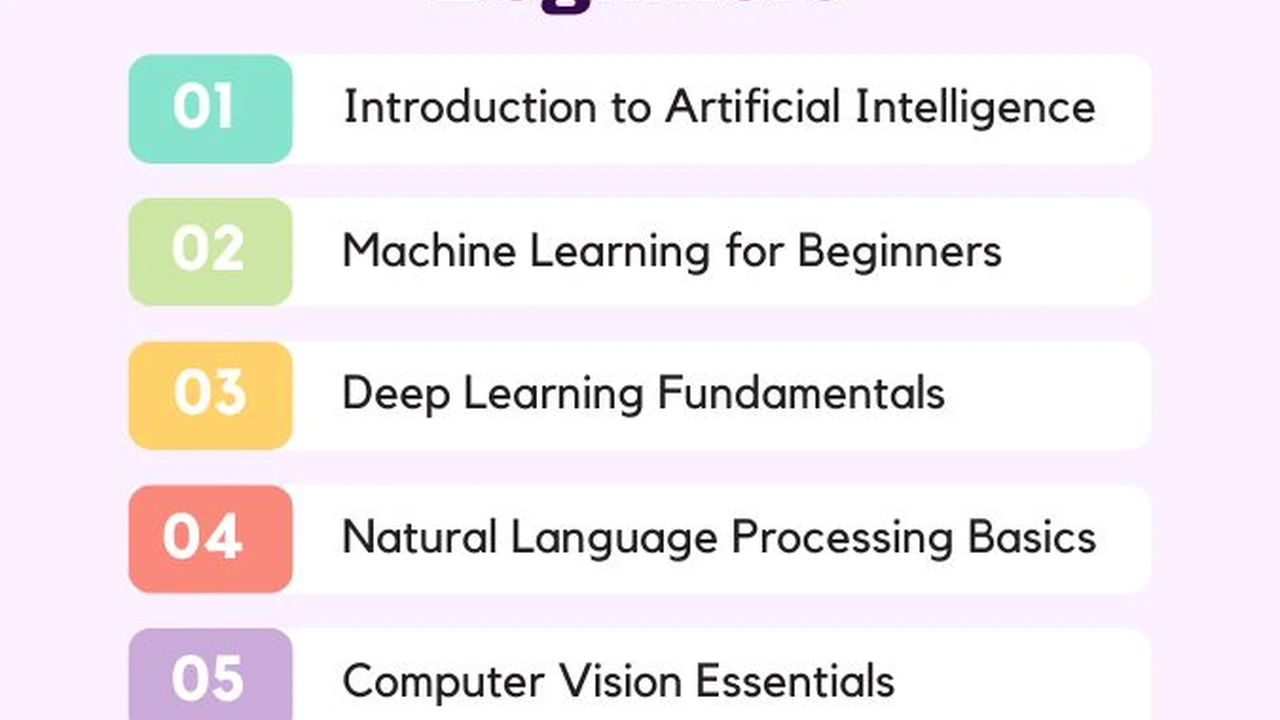
Before we jump into specific courses, let's talk about what you might expect from an AI basics course. Generally, these courses aim to demystify AI, machine learning (ML), and deep learning (DL). You'll learn about core concepts like supervised and unsupervised learning, neural networks, and how AI is applied in real-world scenarios. Some courses are more theoretical, focusing on the 'what' and 'why,' while others are hands-on, teaching you to code simple AI models. Think about your learning style: do you prefer lectures, interactive exercises, or project-based learning? Knowing this will help you choose a course that keeps you engaged.
Comparing Leading AI Platforms and Their Offerings
When it comes to online learning, a few platforms consistently stand out for their quality and breadth of content. These include Coursera, edX, Udacity, and DataCamp. Each has its own strengths, whether it's university-backed specializations, career-focused nanodegrees, or interactive coding environments. Let's break down some of their top AI basic courses.
Coursera AI for Everyone by Andrew Ng DeepLearningAI
Overview: This is often the first recommendation for anyone curious about AI, regardless of their technical background. Taught by Andrew Ng, a co-founder of Coursera and a leading figure in AI, this course is designed to be accessible to everyone. It focuses on what AI is, what it can do, what it can't do, and how to think about building AI products and strategies. It's less about coding and more about understanding the landscape.
Key Learning Points:
- What is AI, Machine Learning, and Deep Learning?
- How AI is transforming industries.
- Understanding the workflow of an AI project.
- Ethical considerations and societal impacts of AI.
Use Cases: Perfect for business leaders, managers, marketers, or anyone who wants to understand AI's implications without getting bogged down in technical details. It's also great for those who want to decide if a deeper dive into AI is for them.
Pricing: This course is part of Coursera's subscription model. You can often audit the course for free (accessing most materials without graded assignments or a certificate), or pay for a Coursera Plus subscription (around $59/month or $399/year) to get full access and a certificate. Financial aid is also available.
edX Introduction to AI by Microsoft
Overview: This course, offered by Microsoft on edX, provides a comprehensive introduction to AI concepts, including machine learning, deep learning, natural language processing (NLP), and computer vision. It balances theoretical understanding with practical examples, often using Microsoft Azure AI services. While it touches on technical aspects, it's still very beginner-friendly.
Key Learning Points:
- Core concepts of AI and its subfields.
- Introduction to common AI algorithms.
- Understanding AI services and platforms (e.g., Azure AI).
- Real-world applications of AI.
Use Cases: Ideal for IT professionals, developers, or anyone looking to understand how AI is implemented in enterprise environments and cloud platforms. It's a good stepping stone if you plan to work with Microsoft technologies.
Pricing: Similar to Coursera, edX offers a free audit track for most courses. To get graded assignments, full access, and a verified certificate, you'll typically pay a one-time fee, which for this course is usually around $99-$199. They also have program bundles.
Udacity Intro to AI Nanodegree Program
Overview: Udacity's Nanodegree programs are known for their project-based learning approach and career focus. The Intro to AI Nanodegree is no exception. It's more intensive than the previous two, requiring some basic programming knowledge (Python is a plus). You'll work on several projects, building AI agents for games, solving optimization problems, and more. It's designed to give you practical skills you can put on your resume.
Key Learning Points:
- Problem-solving with AI techniques (search, optimization).
- Introduction to machine learning algorithms.
- Building intelligent agents.
- Practical application through hands-on projects.
Use Cases: Best for aspiring AI engineers, data scientists, or anyone who wants a more hands-on, project-driven learning experience and is comfortable with some coding. It's a significant time commitment but offers tangible skills.
Pricing: Udacity Nanodegrees are generally more expensive, reflecting their in-depth, project-based nature and career services. The Intro to AI Nanodegree typically costs around $399 per month, or you can save by paying for multiple months upfront. Scholarships are sometimes available.
DataCamp Introduction to AI
Overview: DataCamp is renowned for its interactive coding environment, making it a great choice for those who learn by doing. Their Introduction to AI course focuses on the fundamental concepts of AI and machine learning, with an emphasis on practical application using Python. You'll write code directly in your browser, which is fantastic for immediate feedback and understanding.
Key Learning Points:
- Core AI concepts explained with code examples.
- Introduction to Python libraries for AI (e.g., scikit-learn).
- Building simple machine learning models.
- Interactive coding exercises to reinforce learning.
Use Cases: Ideal for data analysts, aspiring data scientists, or anyone who wants to learn AI with a strong emphasis on coding and practical implementation in Python. If you prefer learning by writing code, this is a strong contender.
Pricing: DataCamp operates on a subscription model. A standard subscription is around $25-$33 per month (billed annually) or $39 per month (billed monthly). This gives you access to their entire library of courses, not just the AI ones. They also offer a free tier with limited access.
Google AI Education Resources
Overview: Google offers a wealth of free AI education resources, including courses, tutorials, and documentation. While not a single 'course' in the traditional sense, their AI Education platform provides structured learning paths, often focusing on TensorFlow (Google's open-source ML framework) and practical applications. It's a fantastic resource for self-learners.
Key Learning Points:
- Introduction to machine learning concepts.
- Hands-on experience with TensorFlow.
- Practical examples of AI in Google products.
- Access to cutting-edge research and tools.
Use Cases: Great for developers, researchers, or anyone who wants to learn AI directly from one of the leading companies in the field and is interested in using TensorFlow. It requires a good degree of self-discipline.
Pricing: Mostly free! Some advanced courses or specializations might be offered through platforms like Coursera or edX, which would then have their respective pricing models.
Choosing Your AI Learning Adventure Factors to Consider
With these options in mind, how do you make the final decision? Here are a few factors to consider:
Your Current Skill Level and Background
Are you an absolute beginner with no coding experience? Then 'AI for Everyone' or 'Introduction to AI by Microsoft' might be your best bet. If you have some programming chops, especially in Python, then Udacity's Nanodegree or DataCamp's courses will be more suitable. Don't bite off more than you can chew; starting with something too advanced can be discouraging.
Your Learning Style and Preferences
Do you prefer watching lectures, reading, or hands-on coding? If you're a visual learner, look for courses with high-quality video content. If you learn by doing, prioritize courses with interactive exercises and projects. Some people thrive in structured environments with deadlines, while others prefer to learn at their own pace.
Your Goals and What You Want to Achieve
Are you learning AI for general knowledge, career advancement, or to build specific projects? If it's general knowledge, a broad introductory course is fine. If you're aiming for a career in AI, a more intensive program like a Nanodegree might be worth the investment. If you want to build something specific, look for courses that align with that application (e.g., computer vision, NLP).
Time Commitment and Flexibility
Some courses are designed to be completed in a few weeks with a few hours of study per week, while others are multi-month programs requiring significant dedication. Be realistic about how much time you can commit. Look for courses that offer flexibility if your schedule is unpredictable.
Budget and Cost Considerations
Online courses range from completely free to several hundred or even thousands of dollars. Free courses are a great way to test the waters, but paid courses often offer more in-depth content, graded assignments, and certificates. Consider the ROI: will the skills you gain justify the cost?
Beyond the Basics Next Steps in Your AI Journey
Once you've completed an introductory course, what's next? The world of AI is vast, and there's always more to learn. You might want to specialize in a particular area like Natural Language Processing (NLP), Computer Vision, or Reinforcement Learning. Or perhaps you want to delve deeper into specific tools and frameworks like PyTorch, scikit-learn, or advanced TensorFlow. Many platforms offer intermediate and advanced courses, specializations, and even master's degrees in AI.
Building a Portfolio Practical Application of AI
One of the best ways to solidify your AI knowledge and demonstrate your skills is by working on personal projects. Start small: maybe build a simple image classifier, a text generator, or a recommendation system. Platforms like Kaggle offer datasets and competitions that are excellent for practice. Contributing to open-source AI projects is another fantastic way to learn and collaborate.
Staying Current with AI Trends and Research
AI is a rapidly evolving field. What's cutting-edge today might be commonplace tomorrow. To stay relevant, make it a habit to read AI news, follow leading researchers on social media, and perhaps even read academic papers (though that's a more advanced step!). Subscribing to AI newsletters, attending webinars, and joining online communities can also keep you in the loop.
Networking in the AI Community
Connect with other AI enthusiasts and professionals! Online forums, LinkedIn groups, and local meetups (if available) are great places to ask questions, share insights, and find collaborators. Networking can open doors to new learning opportunities, mentorship, and even job prospects.
Learning AI basics is an exciting first step into a field that's reshaping our world. By choosing the right course and committing to continuous learning, you'll be well on your way to understanding and even contributing to the AI revolution. Happy learning!
:max_bytes(150000):strip_icc()/277019-baked-pork-chops-with-cream-of-mushroom-soup-DDMFS-beauty-4x3-BG-7505-5762b731cf30447d9cbbbbbf387beafa.jpg)