Using AI for Predictive Analytics in Business
Leverage AI to forecast market trends and consumer behavior for strategic business planning.
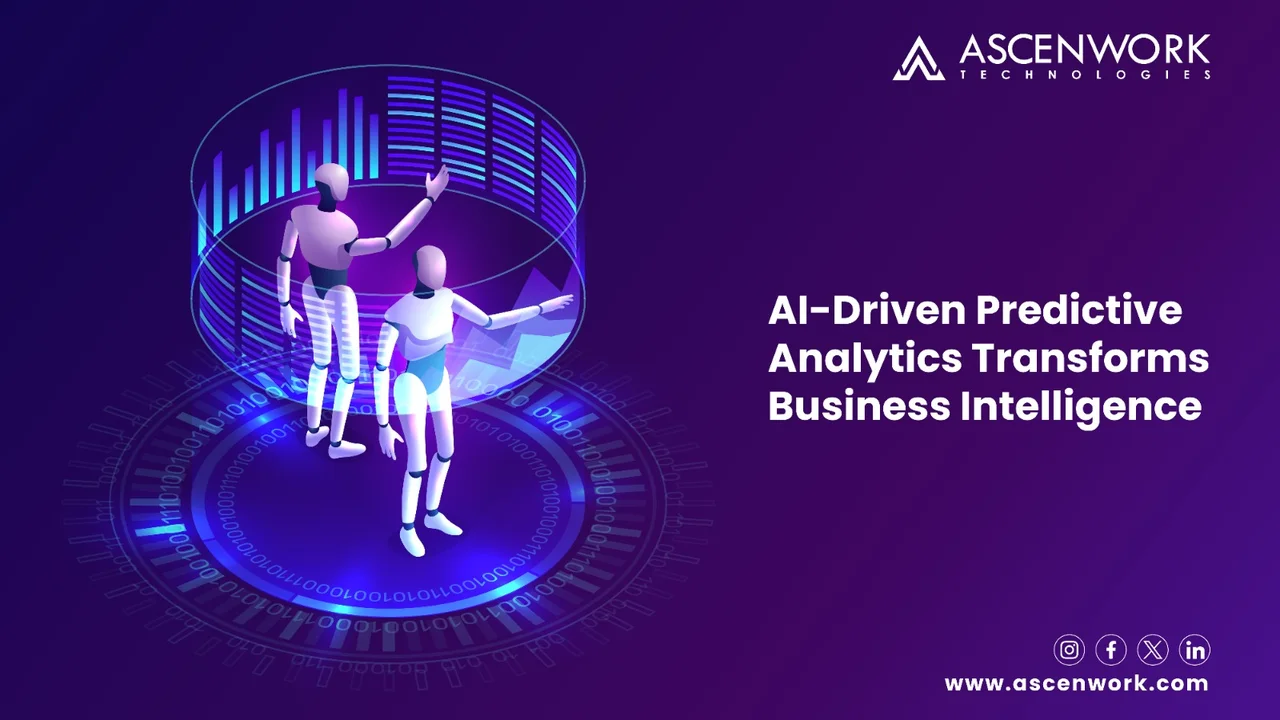
Leverage AI to forecast market trends and consumer behavior for strategic business planning.
Using AI for Predictive Analytics in Business
Understanding Predictive Analytics and AI Integration
Predictive analytics is no longer a buzzword; it's a cornerstone of modern business strategy. At its core, predictive analytics uses historical data to forecast future outcomes. When you integrate artificial intelligence (AI) into this process, you supercharge its capabilities, allowing for more accurate predictions, faster processing of vast datasets, and the identification of subtle patterns that human analysis might miss. Think of it as having a crystal ball, but one that's powered by algorithms and data, not magic. This isn't just about knowing what might happen; it's about understanding the probabilities and the factors influencing those probabilities, enabling businesses to make proactive, data-driven decisions.
The synergy between AI and predictive analytics is profound. AI algorithms, particularly those rooted in machine learning (ML), can learn from data without being explicitly programmed. This means they can adapt and improve their predictive models over time as new data becomes available. For businesses, this translates into dynamic forecasting models that can respond to changing market conditions, customer behaviors, and operational variables. From predicting sales trends to identifying potential equipment failures, AI-powered predictive analytics offers a competitive edge by transforming raw data into actionable foresight.
Key Applications of AI Predictive Analytics for Business Growth
The applications of AI predictive analytics are incredibly diverse, touching almost every facet of business operations. Let's dive into some of the most impactful areas where businesses are leveraging this technology to drive growth and efficiency.
Sales Forecasting and Revenue Optimization with AI
Accurate sales forecasting is critical for inventory management, resource allocation, and strategic planning. AI models can analyze historical sales data, economic indicators, seasonal trends, promotional activities, and even social media sentiment to predict future sales with remarkable precision. This allows businesses to optimize inventory levels, preventing both stockouts and overstocking, which directly impacts profitability. For example, an e-commerce retailer can use AI to predict demand for specific products during holiday seasons, ensuring they have enough stock without tying up excessive capital in unsold goods.
Customer Behavior Prediction and Personalization AI
Understanding customer behavior is paramount for marketing and customer retention. AI predictive analytics can identify patterns in customer browsing history, purchase behavior, demographics, and interactions to predict future actions. This includes predicting which customers are likely to churn, which products a customer is likely to buy next, or which marketing message will resonate most effectively. This enables highly personalized marketing campaigns, tailored product recommendations, and proactive customer service interventions, leading to increased customer lifetime value and reduced churn rates.
Risk Management and Fraud Detection AI Solutions
In financial services, insurance, and e-commerce, mitigating risk and detecting fraud are constant challenges. AI predictive models can analyze vast amounts of transaction data, user behavior, and network patterns to identify anomalies that indicate fraudulent activity. These models can learn from new fraud patterns, making them highly effective at adapting to evolving threats. For instance, a bank can use AI to flag suspicious transactions in real-time, preventing financial losses and protecting customer accounts. Similarly, insurance companies can predict the likelihood of claims based on various factors, allowing for more accurate risk assessment and pricing.
Operational Efficiency and Predictive Maintenance AI
For businesses with physical assets, predictive maintenance is a game-changer. AI models can analyze data from sensors on machinery, vehicles, or infrastructure to predict when a component is likely to fail. This allows for scheduled maintenance before a breakdown occurs, minimizing downtime, reducing repair costs, and extending the lifespan of assets. In manufacturing, this means fewer production interruptions; in logistics, it means fewer vehicle breakdowns. This proactive approach significantly improves operational efficiency and reduces unforeseen expenses.
Supply Chain Optimization and Demand Planning AI
Modern supply chains are complex, and disruptions can be costly. AI predictive analytics can optimize supply chain operations by forecasting demand fluctuations, predicting potential delays, and identifying optimal routing and inventory placement. By analyzing historical data, weather patterns, geopolitical events, and supplier performance, AI can provide insights that lead to more resilient and efficient supply chains. This helps businesses avoid stockouts, reduce transportation costs, and respond more effectively to market changes.
Top AI Predictive Analytics Tools and Platforms for Business
The market for AI predictive analytics tools is robust, offering solutions for businesses of all sizes and technical capabilities. Here are some leading platforms, their features, use cases, and pricing considerations.
1. Google Cloud AI Platform Unified
Overview: Google Cloud AI Platform Unified is a comprehensive suite of machine learning services that allows businesses to build, deploy, and manage ML models at scale. It offers a wide range of tools, from AutoML for automated model building to custom training environments for data scientists.
Key Features:
- AutoML: Enables users with limited ML expertise to train high-quality models with minimal effort.
- Custom Training: Provides flexibility for data scientists to use popular ML frameworks like TensorFlow, PyTorch, and scikit-learn.
- Explainable AI (XAI): Helps understand model predictions, crucial for trust and compliance.
- Vertex AI: A unified platform for the entire ML lifecycle, from data preparation to deployment and monitoring.
Use Cases: Ideal for businesses looking for scalable, enterprise-grade AI solutions. Excellent for complex predictive modeling in finance, retail, healthcare, and manufacturing. Can be used for sales forecasting, customer churn prediction, fraud detection, and demand planning.
Pricing: Pay-as-you-go model based on usage (compute, storage, API calls). Can range from a few dollars for small projects to thousands for large-scale enterprise deployments. Free tiers are available for initial exploration.
2. Amazon SageMaker
Overview: Amazon SageMaker is a fully managed service that provides every developer and data scientist with the ability to build, train, and deploy machine learning models quickly. It integrates seamlessly with other AWS services.
Key Features:
- Managed Notebooks: Jupyter notebooks for easy development.
- Built-in Algorithms: A wide array of pre-built algorithms for common ML tasks.
- Automatic Model Tuning: Optimizes model performance automatically.
- Model Monitoring: Continuously monitors models in production for drift and bias.
Use Cases: Popular among startups and enterprises leveraging the AWS ecosystem. Suitable for predictive analytics in e-commerce (recommendation engines), logistics (route optimization), and media (content personalization). Strong for real-time prediction needs.
Pricing: Pay-as-you-go, based on compute instance usage, storage, and data processing. Offers various instance types for different workloads. Can be cost-effective for scalable solutions, but costs can accumulate with heavy usage. Free tier available for new users.
3. Microsoft Azure Machine Learning
Overview: Azure Machine Learning is a cloud-based service for building, training, and deploying machine learning models. It offers a comprehensive set of tools for both code-first and low-code/no-code approaches.
Key Features:
- Azure Machine Learning Studio: A web-based interface for visual model building.
- Automated ML: Automates model selection and hyperparameter tuning.
- MLOps Capabilities: Tools for managing the entire ML lifecycle, including versioning and deployment.
- Integration with Microsoft Ecosystem: Seamless connectivity with Power BI, Azure Data Lake, etc.
Use Cases: Excellent for businesses already invested in the Microsoft ecosystem. Applicable across industries for predictive maintenance, customer analytics, financial risk assessment, and healthcare diagnostics. Its MLOps features are great for regulated industries.
Pricing: Consumption-based, varying by compute, storage, and specific service usage. Offers different pricing tiers for various needs, from development to production. Enterprise agreements can provide cost efficiencies.
4. DataRobot
Overview: DataRobot is an enterprise AI platform that automates the end-to-end process of building, deploying, and managing machine learning models. It's known for its automated machine learning (AutoML) capabilities, making AI accessible to business users.
Key Features:
- Automated Machine Learning: Automatically builds and evaluates hundreds of models to find the best one.
- AI Catalog: Manages and reuses models across the organization.
- MLOps: Robust tools for model deployment, monitoring, and governance.
- Feature Discovery: Helps identify and engineer relevant features from raw data.
Use Cases: Ideal for organizations that want to accelerate their AI initiatives without extensive data science teams. Widely used in financial services for credit scoring and fraud detection, retail for demand forecasting, and healthcare for patient outcome prediction. Its focus on business value makes it very appealing.
Pricing: Enterprise-level pricing, typically subscription-based, and can be significant. Specific costs depend on the scale of deployment and features required. Contact DataRobot for a custom quote.
5. H2O.ai
Overview: H2O.ai offers an open-source machine learning platform (H2O-3) and an enterprise-grade platform (Driverless AI) that automates machine learning. It's known for its speed and ability to handle large datasets.
Key Features:
- Driverless AI: Automated feature engineering, model selection, and interpretability.
- MLI (Machine Learning Interpretability): Provides insights into why models make certain predictions.
- Time Series Forecasting: Strong capabilities for time-dependent data.
- Open-Source H2O-3: A powerful, free platform for data scientists.
Use Cases: Favored by data scientists and enterprises needing high-performance, interpretable AI. Excellent for financial modeling, insurance risk assessment, manufacturing quality control, and retail demand forecasting. Its open-source component makes it accessible for experimentation.
Pricing: H2O-3 is open-source and free. Driverless AI is an enterprise product with subscription-based pricing, which can vary based on usage and support needs. Contact H2O.ai for detailed pricing.
6. IBM Watson Studio
Overview: IBM Watson Studio is part of the IBM Cloud Pak for Data, providing a comprehensive environment for data science and machine learning. It supports the entire data science lifecycle, from data preparation to model deployment.
Key Features:
- AutoAI: Automates model building and optimization.
- Data Refinery: Tools for data preparation and cleansing.
- Deployment Spaces: For managing and deploying models.
- Open-Source Integration: Supports popular open-source tools and frameworks.
Use Cases: Suited for large enterprises, especially those with existing IBM infrastructure. Strong in regulated industries like finance and healthcare for compliance and governance. Can be used for customer analytics, fraud detection, and operational efficiency improvements.
Pricing: Subscription-based, often part of larger IBM Cloud Pak for Data offerings. Pricing can be complex and depends on the specific services and scale of deployment. Free tiers and trial versions are available.
Implementing AI Predictive Analytics Best Practices and Challenges
While the benefits of AI predictive analytics are clear, successful implementation requires careful planning and an understanding of potential pitfalls. Here are some best practices and common challenges to consider.
Data Quality and Preparation for AI Models
The old adage 'garbage in, garbage out' holds especially true for AI. The accuracy of your predictive models is directly tied to the quality of your data. This means ensuring data is clean, consistent, complete, and relevant. Businesses often underestimate the time and effort required for data collection, cleansing, and transformation. Investing in robust data governance strategies and data engineering capabilities is crucial. Without high-quality data, even the most sophisticated AI algorithms will produce unreliable predictions.
Choosing the Right AI Model and Metrics
There isn't a one-size-fits-all AI model. The choice of algorithm (e.g., regression, classification, time series) depends on the specific business problem you're trying to solve and the nature of your data. Furthermore, selecting appropriate evaluation metrics (e.g., accuracy, precision, recall, F1-score, RMSE) is vital to truly understand a model's performance. A model that's 'accurate' might still be poor if it fails to predict rare but critical events. Understanding these nuances requires either in-house data science expertise or reliance on platforms with strong AutoML and interpretability features.
Ethical Considerations and Bias in AI Predictions
AI models learn from historical data, and if that data contains biases (e.g., historical hiring practices that favored certain demographics), the AI will perpetuate and even amplify those biases in its predictions. This can lead to unfair or discriminatory outcomes, particularly in areas like loan approvals, hiring, or criminal justice. Businesses must actively work to identify and mitigate bias in their data and models. This involves diverse data collection, fairness metrics, and explainable AI (XAI) techniques to understand why a model makes certain predictions. Transparency and accountability are paramount.
Integration with Existing Business Systems
For AI predictive analytics to be truly impactful, it needs to be integrated seamlessly into existing business workflows and systems. This means connecting AI models to CRM, ERP, marketing automation, or operational systems so that predictions can inform real-time decisions. Poor integration can lead to predictions sitting in a silo, failing to translate into actionable insights. This often requires robust API development and a clear understanding of how the predictions will be consumed and acted upon by different departments.
Scalability and Performance of AI Solutions
As your business grows and data volumes increase, your AI predictive analytics solution must be able to scale. This involves considering the computational resources required for training and inference, the latency of predictions, and the ability to handle increasing data throughput. Cloud-based platforms like Google Cloud, AWS, and Azure offer inherent scalability, but proper architecture and resource management are still essential to ensure cost-effectiveness and performance. Planning for future growth from the outset is key to avoiding bottlenecks.
Talent and Skill Gaps in AI Adoption
Implementing and managing AI predictive analytics solutions often requires specialized skills in data science, machine learning engineering, and MLOps. Many businesses face a talent gap in these areas. This can be addressed through upskilling existing employees, hiring new talent, or leveraging external consultants and managed services. Platforms with strong AutoML capabilities can help bridge this gap by making AI more accessible to business analysts, but a foundational understanding of data and analytics remains important.
The Future of Predictive Analytics with AI Advancements
The field of AI is evolving at an incredible pace, and these advancements will continue to reshape predictive analytics. We can expect even more sophisticated models, greater automation, and broader accessibility.
Generative AI and Synthetic Data for Predictions
Generative AI, known for creating new content, is also poised to impact predictive analytics. It can be used to generate synthetic data, which can be invaluable when real-world data is scarce, sensitive, or biased. Training predictive models on diverse synthetic datasets can improve their robustness and fairness. Furthermore, generative models might eventually be able to predict not just numerical outcomes but also generate plausible future scenarios or even design optimal strategies based on predicted conditions.
Real-time Predictive Capabilities and Edge AI
The demand for real-time predictions is growing, especially in areas like fraud detection, personalized recommendations, and autonomous systems. Advancements in edge AI, where AI processing happens closer to the data source (e.g., on a device or sensor), will enable faster, lower-latency predictions. This will be crucial for applications where immediate action is required, such as in smart factories or self-driving vehicles, allowing for proactive adjustments based on instantaneous data analysis.
Explainable AI XAI and Trust in Predictions
As AI models become more complex, understanding how they arrive at their predictions becomes increasingly important, especially in critical applications. Explainable AI (XAI) is a rapidly developing field focused on making AI models more transparent and interpretable. Future predictive analytics tools will likely incorporate more advanced XAI techniques, allowing users to not only see the prediction but also understand the key factors and data points that influenced it. This will build greater trust in AI-driven decisions and facilitate regulatory compliance.
AI for Prescriptive Analytics Beyond Prediction
While predictive analytics tells you what will happen, prescriptive analytics tells you what you should do about it. The next frontier for AI in business is moving beyond just prediction to providing actionable recommendations. AI models will not only forecast outcomes but also suggest optimal strategies to achieve desired results or mitigate risks. For example, an AI might predict a sales decline and then prescribe specific marketing campaigns or pricing adjustments to counteract it. This shift from 'what' to 'what next' will unlock even greater business value.
Democratization of AI Predictive Analytics
The trend towards user-friendly interfaces, AutoML, and low-code/no-code platforms will continue, making AI predictive analytics accessible to a wider range of business users, not just data scientists. This democratization will empower more departments to leverage data-driven insights, fostering a more analytical and proactive organizational culture. As AI becomes easier to use, its adoption will accelerate across small and large businesses alike, driving innovation and efficiency on a broader scale.
Embracing AI for predictive analytics is no longer an option but a necessity for businesses aiming to stay competitive and agile in a rapidly changing world. By leveraging these powerful tools, companies can transform uncertainty into opportunity, making smarter decisions that drive sustainable growth and success.
:max_bytes(150000):strip_icc()/277019-baked-pork-chops-with-cream-of-mushroom-soup-DDMFS-beauty-4x3-BG-7505-5762b731cf30447d9cbbbbbf387beafa.jpg)