Building an AI Ready Workforce Training Strategies
Prepare your team for the AI era with effective training programs and skill development initiatives.
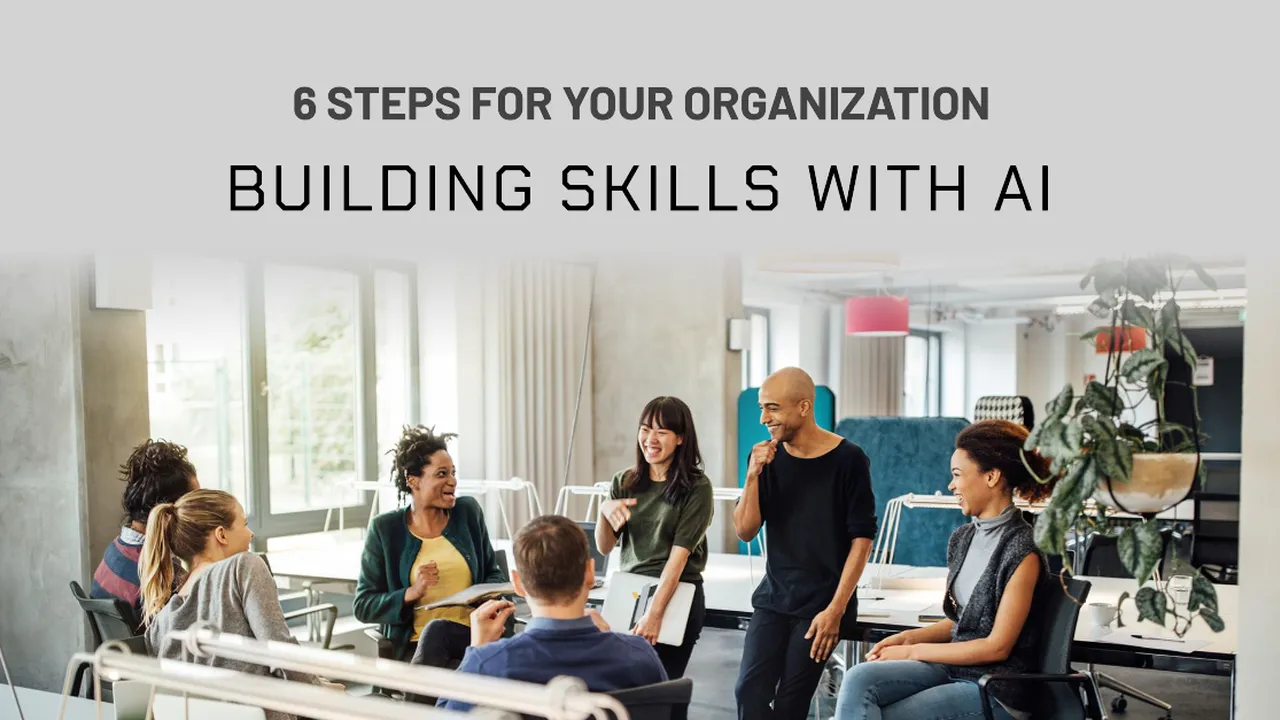
Prepare your team for the AI era with effective training programs and skill development initiatives.
Building an AI Ready Workforce Training Strategies
Understanding the AI Revolution and Workforce Impact
Hey everyone, let's talk about something super important for any business looking to stay competitive: building an AI-ready workforce. We're not just talking about tech companies anymore; AI is seeping into every industry, from retail to healthcare, manufacturing to marketing. It's changing how we work, what skills are valuable, and even what jobs exist. So, if your team isn't up to speed, you're already falling behind. The goal here isn't to turn everyone into a data scientist overnight, but rather to equip your employees with the knowledge and skills to effectively collaborate with AI tools, understand AI's implications, and leverage its power for better outcomes. This isn't just about adopting new software; it's about a fundamental shift in how your organization operates and innovates.
Think about it: AI can automate repetitive tasks, analyze massive datasets in seconds, and even generate creative content. This means your human employees can focus on higher-value activities that require critical thinking, creativity, emotional intelligence, and complex problem-solving – things AI isn't great at (yet!). But to do that, they need to understand how to interact with AI, how to interpret its outputs, and how to identify opportunities where AI can add value. This isn't a one-time training session; it's an ongoing commitment to learning and adaptation. The pace of AI development is incredibly fast, so continuous learning is key.
Assessing Current AI Skill Gaps and Organizational Needs
Before you jump into training, you need to know where you stand. What AI skills do your employees currently possess? What skills will they need in the near future? This requires a thorough assessment. Start by identifying key roles and departments that will be most impacted by AI. For example, your marketing team might need to understand AI-powered analytics and content generation tools, while your operations team might focus on AI for process automation and predictive maintenance. Don't forget about leadership – they need to understand AI's strategic implications to guide the company effectively.
You can conduct surveys, interviews, or even small pilot projects to gauge current AI literacy. Look at your business goals: are you aiming for increased efficiency, better customer experience, or new product development? These goals will dictate the specific AI skills your workforce needs. For instance, if you're looking to personalize customer experiences, your sales and marketing teams will need training in AI-driven CRM systems and personalization engines. If you're aiming for operational efficiency, your production and logistics teams might need to learn about AI for supply chain optimization or predictive analytics for machinery maintenance. It's about being strategic, not just throwing training at everyone.
Developing Comprehensive AI Training Programs and Curricula
Once you know your gaps, it's time to build your training programs. These shouldn't be one-size-fits-all. Different roles will require different levels of AI understanding and specific tool proficiencies. Here are some key components to consider:
Foundational AI Literacy for All Employees
Every employee, regardless of their role, should have a basic understanding of what AI is, how it works (at a high level), its capabilities, and its limitations. This helps demystify AI and reduces fear or resistance. Think of it as a general education course on AI. This could cover topics like machine learning basics, common AI applications (like chatbots or recommendation systems), and ethical considerations of AI. It's about building a common language and understanding across the organization.
Role Specific AI Tool Training and Application
This is where you get specific. For example, your content creators might need training on generative AI tools like Jasper AI or Copy.ai. Your customer service team might need to learn how to interact with and train AI chatbots like those built with Intercom or Zendesk AI. Your data analysts will need advanced training in AI/ML platforms like Google Cloud AI Platform or Amazon SageMaker. These trainings should be hands-on, focusing on practical application and real-world scenarios relevant to their daily tasks.
Recommended AI Tools for Specific Roles and Use Cases
- For Content Creation & Marketing:
- Jasper AI: A powerful AI writing assistant for generating blog posts, marketing copy, social media content, and more. It's known for its versatility and integration with other tools.
- Copy.ai: Another excellent AI content generator, particularly strong for short-form copy like ad headlines, social media captions, and product descriptions.
- Midjourney / DALL-E 3: For visual content creation, these AI image generators are industry leaders. Training here would focus on prompt engineering for desired visual outcomes.
- Pricing Examples: Jasper AI starts around $49/month for creator plans, Copy.ai has a free tier and paid plans starting around $49/month. Midjourney is subscription-based, starting at $10/month.
- For Customer Service & Support:
- Intercom: Offers AI-powered chatbots and automation features to handle common customer queries, route conversations, and provide instant support.
- Zendesk AI: Integrates AI into its customer service platform for ticket routing, sentiment analysis, and self-service options.
- Pricing Examples: Intercom plans vary widely based on features and usage, starting from around $74/month. Zendesk Suite starts at $55/agent/month.
- For Data Analysis & Business Intelligence:
- Tableau (with AI integrations): While primarily a BI tool, its integrations with AI/ML models allow for advanced predictive analytics and insights.
- Power BI (with AI capabilities): Similar to Tableau, Microsoft's Power BI offers AI-driven insights and natural language querying.
- Pricing Examples: Tableau Creator is $75/user/month. Power BI Pro is $10/user/month.
- For Project Management & Collaboration:
- Asana (with AI features): AI can help with task prioritization, identifying bottlenecks, and summarizing project updates.
- Monday.com (with AI integrations): Offers AI-powered insights for workflow optimization and resource allocation.
- Pricing Examples: Asana Premium starts at $10.99/user/month. Monday.com Basic starts at $8/user/month.
Advanced AI Concepts for Specialists and Leaders
For those in leadership or specialized technical roles, training should delve deeper into AI strategy, ethical AI development, data governance, and the broader implications of AI on business models and society. This might involve workshops on AI risk management, understanding complex AI algorithms, or even exploring emerging AI trends like AGI (Artificial General Intelligence) and its potential impact. These individuals need to be able to make informed decisions about AI investments and steer the company's AI journey.
Implementing Effective Training Methodologies and Platforms
How you deliver the training is just as important as what you deliver. A blended learning approach often works best, combining various methods:
Online Courses and E-Learning Modules
Platforms like Coursera, Udemy, and edX offer a vast array of AI courses, from beginner introductions to specialized topics. Many are taught by university professors or industry experts. You can curate specific courses for different employee groups or even create custom modules tailored to your company's needs. These offer flexibility, allowing employees to learn at their own pace.
Popular Online Learning Platforms for AI Training
- Coursera: Offers specializations and professional certificates from top universities and companies (e.g., Google AI, IBM AI Engineering).
- Udemy: Features a wide range of AI courses, often more practical and project-based, taught by independent instructors.
- edX: Similar to Coursera, with courses from universities like MIT and Harvard, often focusing on foundational computer science and AI.
- LinkedIn Learning: Provides business-focused AI courses, often shorter and more digestible, covering topics like AI for marketing or AI for sales.
- Pricing Examples: Coursera subscriptions (Coursera Plus) are around $59/month or $399/year. Udemy courses are typically one-time purchases, ranging from $15-$200+. edX offers free audit tracks for many courses, with verified certificates costing $50-$300+. LinkedIn Learning is included with LinkedIn Premium or available as a standalone subscription for around $29.99/month.
Hands-on Workshops and Practical Labs
AI is best learned by doing. Organize workshops where employees can experiment with AI tools, build simple models, or solve real business problems using AI. This could involve hackathons, internal AI challenges, or dedicated lab sessions. For example, a marketing team could participate in a workshop where they use Jasper AI to generate different ad copy variations and then analyze their performance. This practical experience solidifies learning and builds confidence.
Internal Mentorship Programs and AI Champions
Identify employees who are already proficient in AI or passionate about it and empower them to become internal AI champions. They can mentor colleagues, lead informal learning sessions, and act as go-to resources. This fosters a culture of continuous learning and peer-to-peer knowledge sharing. It also helps to identify future AI leaders within your organization.
Partnerships with AI Training Providers
Consider partnering with specialized AI training companies or consultants. They can provide customized programs, deliver expert-led workshops, and help you stay abreast of the latest AI advancements. This can be particularly useful for advanced or highly specialized AI training needs where internal expertise might be limited.
Fostering a Culture of Continuous AI Learning and Innovation
Training is just the beginning. To truly build an AI-ready workforce, you need to cultivate a culture that embraces continuous learning, experimentation, and innovation around AI. This means:
Encouraging Experimentation and Pilot Projects
Create a safe environment for employees to experiment with AI tools on small-scale projects. Celebrate successes and learn from failures. This encourages proactive engagement with AI and helps identify new use cases within your organization. Maybe a small team can try using an AI tool to summarize meeting notes or analyze customer feedback. These small wins can build momentum.
Establishing Internal AI Communities of Practice
Create forums, Slack channels, or regular meetups where employees can share their experiences with AI, ask questions, and collaborate on AI-related projects. This fosters a sense of community and collective learning. It's a place where people can share tips, tricks, and even frustrations, helping everyone grow together.
Recognizing and Rewarding AI Skill Development
Acknowledge and reward employees who actively develop their AI skills and apply them to benefit the company. This could be through promotions, bonuses, or simply public recognition. This incentivizes learning and demonstrates that the company values AI proficiency.
Staying Updated with AI Trends and Technologies
The AI landscape is constantly evolving. Your organization needs a mechanism to stay informed about new AI tools, research breakthroughs, and ethical considerations. This could involve subscribing to industry newsletters, attending AI conferences, or dedicating resources to AI research and development. This ensures your training programs remain relevant and your workforce is always equipped with the latest knowledge.
Measuring the Impact of AI Training Initiatives
Finally, you need to measure the effectiveness of your training programs. Are employees actually using the AI tools? Is it leading to improved efficiency, better decision-making, or new business opportunities? Track key performance indicators (KPIs) related to AI adoption and its impact on business outcomes. This could include metrics like time saved on tasks, increased revenue from AI-powered initiatives, or improved customer satisfaction scores. Regular feedback from employees is also crucial to refine and improve your training strategies over time. Building an AI-ready workforce isn't a sprint; it's a marathon. But with the right strategies and a commitment to continuous learning, your organization can thrive in the AI era.
:max_bytes(150000):strip_icc()/277019-baked-pork-chops-with-cream-of-mushroom-soup-DDMFS-beauty-4x3-BG-7505-5762b731cf30447d9cbbbbbf387beafa.jpg)