Implementing AI in E-commerce Strategies
Boost your e-commerce sales and customer engagement by integrating AI into your online store.
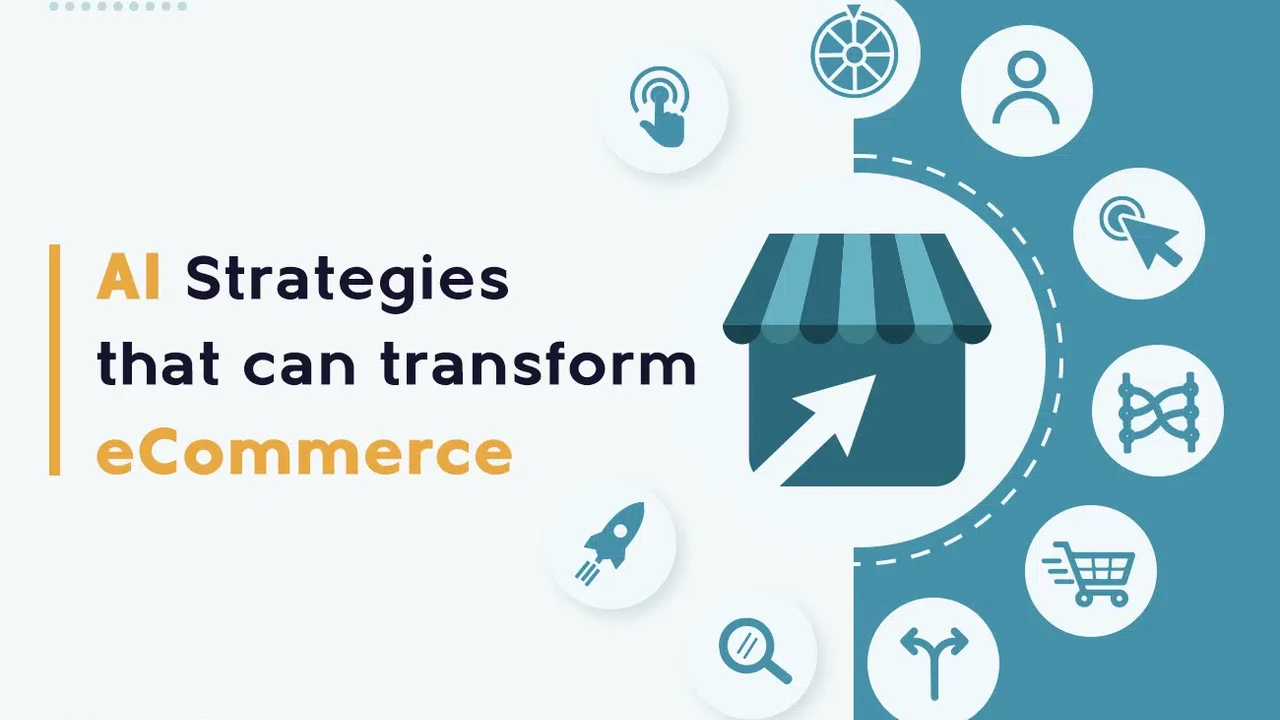
Boost your e-commerce sales and customer engagement by integrating AI into your online store. This article dives deep into how artificial intelligence is revolutionizing the e-commerce landscape, offering practical insights, product recommendations, and comparative analyses to help you leverage AI for unparalleled business growth.
Implementing AI in E-commerce Strategies
The world of e-commerce is constantly evolving, and staying ahead of the curve means embracing cutting-edge technologies. Artificial Intelligence (AI) is no longer a futuristic concept; it's a powerful tool that's reshaping how online businesses operate, interact with customers, and drive sales. If you're running an e-commerce store, ignoring AI is like trying to win a race with one hand tied behind your back. This comprehensive guide will walk you through the myriad ways AI can supercharge your e-commerce strategy, from personalized shopping experiences to optimized inventory management and beyond.
Why AI is a Game Changer for E-commerce Businesses
Let's face it, the online marketplace is crowded. Standing out requires more than just great products; it demands an exceptional customer experience and operational efficiency. AI delivers on both fronts. It allows you to understand your customers on a deeper level, automate tedious tasks, and make data-driven decisions that were once impossible. Think about it: AI can analyze vast amounts of data in seconds, identifying patterns and predicting behaviors that would take human teams weeks or months to uncover. This translates directly into increased conversions, higher customer lifetime value, and a healthier bottom line.
Personalized Shopping Experiences with AI Driven Recommendations
One of the most impactful applications of AI in e-commerce is personalization. Gone are the days of one-size-fits-all marketing. Customers expect tailored experiences, and AI makes this a reality. Recommendation engines, powered by machine learning algorithms, analyze browsing history, purchase patterns, demographic data, and even real-time behavior to suggest products that are highly relevant to each individual shopper. This isn't just about showing 'customers who bought this also bought that'; it's about predicting what a customer *will* want before they even know it themselves.
Top AI Recommendation Engines and Their Features
- Dynamic Yield: This platform offers a comprehensive personalization suite, including product recommendations, content personalization, and A/B testing. It uses machine learning to create highly individualized experiences across web, mobile, and email. Dynamic Yield is known for its robust segmentation capabilities and real-time optimization. Pricing is typically enterprise-level, requiring a custom quote based on usage and features.
- Algolia Recommend: While primarily known for search, Algolia also offers a powerful recommendation engine. It leverages its search infrastructure to deliver fast and relevant recommendations based on user behavior and product attributes. It's a good choice for businesses already using Algolia for search or those looking for a developer-friendly solution. Pricing is usage-based, with various tiers depending on API calls and features.
- Recombee: A dedicated recommendation API that allows for highly customized recommendation logic. Recombee is praised for its flexibility and ability to handle complex recommendation scenarios. It's a strong option for developers who want fine-grained control over their recommendation algorithms. They offer a free tier for small usage and paid plans based on the number of recommendations and data points.
- Nosto: Nosto provides AI-powered personalization for e-commerce, focusing on product recommendations, personalized emails, and pop-ups. It's designed to be easy to integrate and use, making it popular among Shopify and Magento users. Nosto offers various pricing plans, often starting with a percentage of influenced revenue or a fixed monthly fee, depending on the e-commerce platform and traffic.
When choosing a recommendation engine, consider your e-commerce platform, your technical capabilities, and your budget. Most providers offer demos or free trials, so take advantage of those to see which solution best fits your needs.
Optimizing Customer Service with AI Chatbots and Virtual Assistants
Customer service is a critical component of e-commerce success. AI-powered chatbots and virtual assistants are transforming how businesses handle inquiries, provide support, and even guide customers through the sales funnel. These AI tools can answer frequently asked questions, track orders, process returns, and even offer product suggestions 24/7, freeing up human agents to handle more complex issues.
Leading AI Chatbot Solutions for E-commerce
- Zendesk Answer Bot: Integrated within the Zendesk ecosystem, Answer Bot uses AI to automatically answer common customer questions, deflecting tickets and providing instant support. It learns from your knowledge base and customer interactions. Pricing is part of Zendesk's broader support plans, which vary based on features and agent count.
- Intercom: Intercom offers a robust platform for customer messaging, including AI-powered chatbots (Fin) that can automate conversations, qualify leads, and provide personalized support. It's known for its user-friendly interface and comprehensive customer engagement features. Intercom's pricing is tiered, based on the number of active users and features utilized.
- Drift: Specializing in conversational marketing and sales, Drift's AI chatbots are designed to engage website visitors, qualify leads, and book meetings. It's particularly strong for B2B e-commerce or high-value product sales. Drift offers various plans, often starting with a free tier for basic features and scaling up for advanced AI capabilities.
- Gorgias: Built specifically for e-commerce, Gorgias integrates with platforms like Shopify, Magento, and BigCommerce. Its AI capabilities help automate responses to common e-commerce queries like 'Where is my order?' or 'Can I return this item?' It centralizes customer interactions across multiple channels. Pricing is based on the number of support tickets and integrations.
Implementing an AI chatbot can significantly reduce response times, improve customer satisfaction, and lower support costs. Start with automating common queries and gradually expand the chatbot's capabilities as you gather more data.
Streamlining Operations with AI Powered Inventory and Supply Chain Management
Beyond the customer-facing aspects, AI is also a powerhouse for optimizing back-end operations. Inventory management, demand forecasting, and supply chain logistics are complex challenges for any e-commerce business. AI can analyze historical sales data, market trends, seasonal fluctuations, and even external factors like weather patterns to predict demand with remarkable accuracy. This leads to optimized stock levels, reduced waste, and improved fulfillment efficiency.
AI Tools for Inventory and Supply Chain Optimization
- Lokad: Lokad specializes in demand forecasting and inventory optimization using probabilistic forecasting. It helps businesses make data-driven decisions about stock levels, pricing, and promotions, reducing overstock and stockouts. Pricing is typically custom, based on data volume and complexity.
- Blue Yonder (formerly JDA Software): A comprehensive supply chain planning and execution platform that leverages AI and machine learning for demand forecasting, inventory optimization, and warehouse management. It's an enterprise-grade solution for large e-commerce operations. Pricing is custom and can be substantial.
- NetSuite (Oracle NetSuite): While a broader ERP system, NetSuite includes robust inventory management features that can be enhanced with AI integrations for demand planning and optimization. It's a good fit for growing businesses looking for an integrated solution. Pricing varies widely based on modules and user count.
- Cin7: An inventory management and order fulfillment software that integrates with various e-commerce platforms. While not purely AI-driven, it offers features like demand forecasting and automated reordering that can be enhanced with AI add-ons or custom integrations. Pricing is subscription-based, varying by features and order volume.
The key here is data. The more historical sales data and external factors you feed into these AI systems, the more accurate their predictions will be. This translates into significant cost savings and improved customer satisfaction due to fewer stockouts.
Enhancing Marketing and Sales with AI Driven Insights
AI's analytical capabilities extend far beyond recommendations. It can revolutionize your marketing and sales efforts by providing deep insights into customer behavior, optimizing ad spend, and personalizing marketing campaigns at scale.
AI for Marketing Automation and Ad Optimization
- Adext AI: This platform uses AI to optimize ad campaigns across various channels (Facebook, Google, Instagram) by automatically adjusting bids, targeting, and creative elements to maximize ROI. It's designed to continuously learn and improve campaign performance. Pricing is often a percentage of ad spend or a fixed monthly fee.
- Phrasee: Specializes in AI-powered language generation for marketing copy, including email subject lines, push notifications, and ad copy. Phrasee's AI learns what resonates with your audience, leading to higher open rates and click-through rates. Pricing is custom, based on usage and features.
- Optimove: A customer data platform (CDP) with AI capabilities for orchestrating personalized marketing campaigns across multiple channels. Optimove helps businesses understand customer behavior and predict future actions, enabling highly targeted and effective campaigns. Pricing is enterprise-level, requiring a custom quote.
- Albert AI: An autonomous AI marketing platform that takes over the execution and optimization of digital marketing campaigns. Albert AI manages everything from media buying to audience segmentation and creative optimization. It's a high-end solution for businesses looking for full marketing automation. Pricing is typically enterprise-level.
AI can help you identify your most valuable customers, predict churn, and even determine the optimal time to send a marketing email. This level of precision was unimaginable just a few years ago.
Fraud Detection and Security with AI in E-commerce
E-commerce businesses are constantly battling fraud. Chargebacks, fake accounts, and stolen credit cards can lead to significant financial losses and reputational damage. AI is proving to be an invaluable ally in this fight, using sophisticated algorithms to detect suspicious patterns and anomalies that human eyes might miss.
AI Powered Fraud Detection Solutions
- Signifyd: Signifyd offers a fraud protection solution that uses AI and machine learning to review orders and provide a 100% financial guarantee against fraudulent chargebacks. It automates fraud prevention, allowing businesses to approve more legitimate orders. Pricing is often a percentage of protected revenue or a fixed monthly fee.
- Forter: Forter provides real-time fraud prevention across the entire customer journey, from account creation to checkout. Its AI-powered platform analyzes billions of data points to accurately distinguish between legitimate and fraudulent transactions. Pricing is typically enterprise-level, based on transaction volume.
- Riskified: Riskified uses AI to identify and approve legitimate online orders that other fraud systems might decline. They also offer a chargeback guarantee, taking on the financial risk of approved orders. Pricing is often a percentage of approved revenue.
- Sift: Sift offers a digital trust and safety platform that uses AI to detect and prevent various types of fraud, including payment fraud, account takeover, and content abuse. It provides a holistic view of user behavior to identify risky activities. Pricing is usage-based, with various tiers.
These AI solutions can significantly reduce your fraud rates, protect your revenue, and improve the overall security of your e-commerce store. The investment in AI fraud detection often pays for itself by preventing costly chargebacks and maintaining customer trust.
The Future of E-commerce with Generative AI and Beyond
While we've covered many current applications, the future of AI in e-commerce is even more exciting. Generative AI, for instance, is poised to revolutionize content creation, from product descriptions and marketing copy to even generating unique product designs. Imagine AI creating personalized landing pages for every single visitor, or generating video ads tailored to specific demographics.
Emerging AI Trends to Watch
- Generative AI for Content Creation: Tools like OpenAI's GPT-4 or Google's Bard can already generate compelling product descriptions, blog posts, and social media content, saving businesses immense time and resources. Expect more specialized generative AI tools for e-commerce.
- AI in Virtual and Augmented Reality (VR/AR): AI will enhance VR/AR shopping experiences, making virtual try-ons more realistic and personalized. Imagine an AI assistant guiding you through a virtual store, recommending products based on your preferences and body type.
- Predictive Analytics for Hyper-Personalization: Beyond current recommendations, AI will predict not just what you want, but *when* you want it, and even *how* you want to pay for it, leading to truly seamless shopping journeys.
- AI-Powered Voice Commerce: As voice assistants become more prevalent, AI will play a crucial role in understanding natural language queries and facilitating purchases through voice commands.
- Autonomous Retail: Think cashier-less stores and automated warehouses. While still in early stages, AI is the backbone of these innovations, promising unprecedented efficiency in physical retail spaces that complement e-commerce.
The integration of AI into e-commerce is not just about adopting new tools; it's about fundamentally rethinking how you do business. It's about creating a more intelligent, efficient, and customer-centric online store. Start small, experiment with different AI solutions, and continuously analyze the results. The businesses that embrace AI today will be the leaders of tomorrow's e-commerce landscape.
:max_bytes(150000):strip_icc()/277019-baked-pork-chops-with-cream-of-mushroom-soup-DDMFS-beauty-4x3-BG-7505-5762b731cf30447d9cbbbbbf387beafa.jpg)