The Role of Data in AI Training and Performance
{ "article": [ { "title": "The Role of Data in AI Training and Performance", "meta_description": "Understand the critical importance of data quality and quantity in training effective AI models.", "content": "Understand the critical importance of data quality and quantity in training effective AI models.\n\n
\n\n
Why Data is the Lifeblood of AI Models
\n\nAlright, let's talk about AI. Everyone's buzzing about it, right? ChatGPT, Midjourney, all these incredible tools doing mind-blowing things. But here's the secret sauce, the unsung hero behind all that magic: data. Think of AI models like super-smart students. They don't just wake up knowing everything. They need to be taught, and that teaching comes in the form of data. Lots and lots of data. The quality and quantity of this data directly impact how well an AI model performs, how accurate it is, and how useful it becomes. Without good data, even the most sophisticated algorithms are just fancy calculators with nothing to calculate. It's like trying to bake a gourmet cake with rotten ingredients – no matter how good your recipe or oven, the result will be a disaster. So, if you're looking to build, use, or even just understand AI better, grasping the fundamental role of data is absolutely crucial.
\n\nData Quantity More is Often Better for AI Training
\n\nWhen it comes to training AI, especially deep learning models, size often matters. A lot. The more data an AI model can learn from, the more patterns it can identify, the more nuances it can pick up, and the better it can generalize to new, unseen data. Imagine teaching a child to recognize cats. If you show them just one picture of a cat, they might think all cats are that specific color or breed. But if you show them thousands of pictures of cats – big ones, small ones, fluffy ones, sleek ones, black ones, white ones, cats in different poses, different lighting – they'll develop a much more robust understanding of what a 'cat' truly is. Similarly, large datasets allow AI models to build a comprehensive internal representation of the information they're processing. This is why companies like Google, Meta, and OpenAI invest heavily in collecting and curating massive datasets. For example, training a large language model like GPT-3 involved processing hundreds of billions of words from the internet. This sheer volume allows it to generate coherent, contextually relevant text across a vast array of topics. More data generally leads to better performance, reduced overfitting (where the model performs well on training data but poorly on new data), and improved generalization capabilities. However, it's not just about raw numbers; the right kind of data in large quantities is the ultimate goal.
\n\nData Quality The Unsung Hero of AI Performance
\n\nWhile quantity is important, quality is paramount. You can have a mountain of data, but if it's dirty, biased, irrelevant, or poorly labeled, your AI model will learn all the wrong things. This is often summarized by the phrase "Garbage In, Garbage Out" (GIGO). If you feed an AI model garbage data, you'll get garbage results. High-quality data is clean, accurate, consistent, relevant, and representative of the real-world scenarios the AI will encounter. Let's break down what high-quality data means:
\n\n- \n
- Accuracy: Is the information correct? Incorrect labels or values will mislead the model. \n
- Completeness: Are there missing values or gaps? Incomplete data can lead to biased or inaccurate predictions. \n
- Consistency: Is the data formatted uniformly? Inconsistent formatting can confuse the model. \n
- Relevance: Does the data directly relate to the problem the AI is trying to solve? Irrelevant data adds noise. \n
- Representativeness: Does the data reflect the diversity of the real world? Biased data leads to biased AI. \n
Consider an AI model designed to diagnose medical conditions from images. If the training data primarily consists of images from one demographic group, the model might perform poorly when presented with images from other groups. This is a classic example of data bias leading to real-world problems. Data cleaning and preprocessing are crucial steps in ensuring data quality. This involves identifying and correcting errors, handling missing values, removing duplicates, and transforming data into a suitable format for the AI model. Investing time and resources in data quality assurance upfront saves immense headaches and improves performance down the line.
\n\nThe Impact of Data Bias on AI Outcomes
\n\nData bias is a significant concern in AI development. It occurs when the data used to train an AI model does not accurately represent the real world or contains inherent prejudices. This can lead to AI systems that perpetuate or even amplify existing societal biases, leading to unfair, discriminatory, or inaccurate outcomes. For instance, if an AI system for loan applications is trained on historical data where certain demographic groups were disproportionately denied loans, the AI might learn to replicate that bias, even if the original reasons for denial were discriminatory. Similarly, facial recognition systems trained predominantly on lighter skin tones may perform poorly on darker skin tones, leading to misidentification or false arrests. Addressing data bias requires a multi-faceted approach:
\n\n- \n
- Diverse Data Collection: Actively seeking out and including data from underrepresented groups. \n
- Bias Detection Tools: Using analytical tools to identify and quantify biases within datasets. \n
- Fairness Metrics: Implementing metrics to evaluate the fairness of AI model predictions across different groups. \n
- Algorithmic Interventions: Developing algorithms that can mitigate bias during training or inference. \n
- Human Oversight: Maintaining human review and intervention, especially in critical applications. \n
Companies like IBM and Google have dedicated research efforts to understanding and mitigating AI bias. IBM's AI Fairness 360 is an open-source toolkit that helps developers detect and reduce bias in machine learning models. Google's Responsible AI practices emphasize the importance of diverse datasets and rigorous testing for fairness. Ignoring data bias isn't just an ethical failing; it can lead to significant financial and reputational damage for businesses deploying biased AI systems.
\n\nData Labeling and Annotation The Human Touch in AI Training
\n\nFor many AI tasks, especially in supervised learning, data needs to be labeled or annotated. This means adding metadata or tags to raw data to provide context for the AI model. For example, in image recognition, humans might draw bounding boxes around objects and label them ("cat," "dog," "car"). In natural language processing, text might be annotated for sentiment ("positive," "negative," "neutral") or named entities ("person," "organization," "location"). This process is often labor-intensive but absolutely critical for training accurate models. Think of it as providing the answer key to the AI student. Without correctly labeled examples, the AI wouldn't know what it's supposed to learn. Several companies specialize in data labeling services, employing large workforces to annotate vast amounts of data. Some popular platforms and services include:
\n\n- \n
- Amazon Mechanical Turk: A crowdsourcing marketplace where individuals (Turkers) perform human intelligence tasks (HITs), including data labeling. It's highly flexible and cost-effective for large-scale annotation projects. Pricing varies per HIT, often fractions of a cent to a few dollars depending on complexity. \n
- Scale AI: A leading data labeling platform that provides high-quality data annotation for various AI applications, including autonomous vehicles, robotics, and e-commerce. They offer managed services with human annotators and advanced tools. Pricing is typically enterprise-level, based on project scope and volume. \n
- Appen: Another major player in the data annotation space, offering services for speech, text, image, and video data. They leverage a global crowd of over 1 million skilled contractors. Similar to Scale AI, pricing is customized for enterprise clients. \n
- Labelbox: A data labeling platform that provides tools for teams to manage, label, and iterate on their training data. It's more of a software solution for in-house teams or managed services. They offer free tiers for small projects and enterprise pricing for larger needs. \n
The quality of these labels directly impacts the AI's performance. Inconsistent or incorrect labels will introduce noise and errors into the training process, leading to a less effective model. Therefore, robust quality control mechanisms are essential in any data labeling pipeline.
\n\nData Augmentation Expanding Your Dataset Smartly
\n\nSometimes, acquiring enough diverse, high-quality data can be challenging or expensive. This is where data augmentation comes in. Data augmentation refers to techniques used to increase the amount of data by adding slightly modified copies of already existing data or newly created synthetic data from existing data. It's particularly common in computer vision and natural language processing. For images, augmentation techniques might include:
\n\n- \n
- Rotation: Rotating an image by a few degrees. \n
- Flipping: Horizontally or vertically flipping an image. \n
- Cropping: Taking random crops of an image. \n
- Brightness/Contrast adjustments: Altering the lighting conditions. \n
- Adding noise: Introducing random pixel variations. \n
For text, augmentation might involve:
\n\n- \n
- Synonym replacement: Replacing words with their synonyms. \n
- Random insertion/deletion/swap: Adding, removing, or swapping words. \n
- Back translation: Translating text to another language and then back to the original. \n
Data augmentation helps improve the model's ability to generalize by exposing it to a wider variety of data variations, making it more robust to real-world changes. It's a cost-effective way to expand your dataset without having to collect entirely new data. Many deep learning frameworks like TensorFlow and PyTorch have built-in data augmentation functionalities, making it relatively easy to implement.
\n\nData Storage and Management Best Practices for AI
\n\nOnce you have your data, you need to store and manage it effectively. This isn't just about having enough disk space; it's about ensuring data is accessible, secure, and organized for efficient AI training and deployment. Key considerations include:
\n\n- \n
- Scalability: Can your storage solution handle petabytes or even exabytes of data as your needs grow? Cloud storage solutions like Amazon S3, Google Cloud Storage, and Azure Blob Storage are popular choices due to their scalability and cost-effectiveness. \n
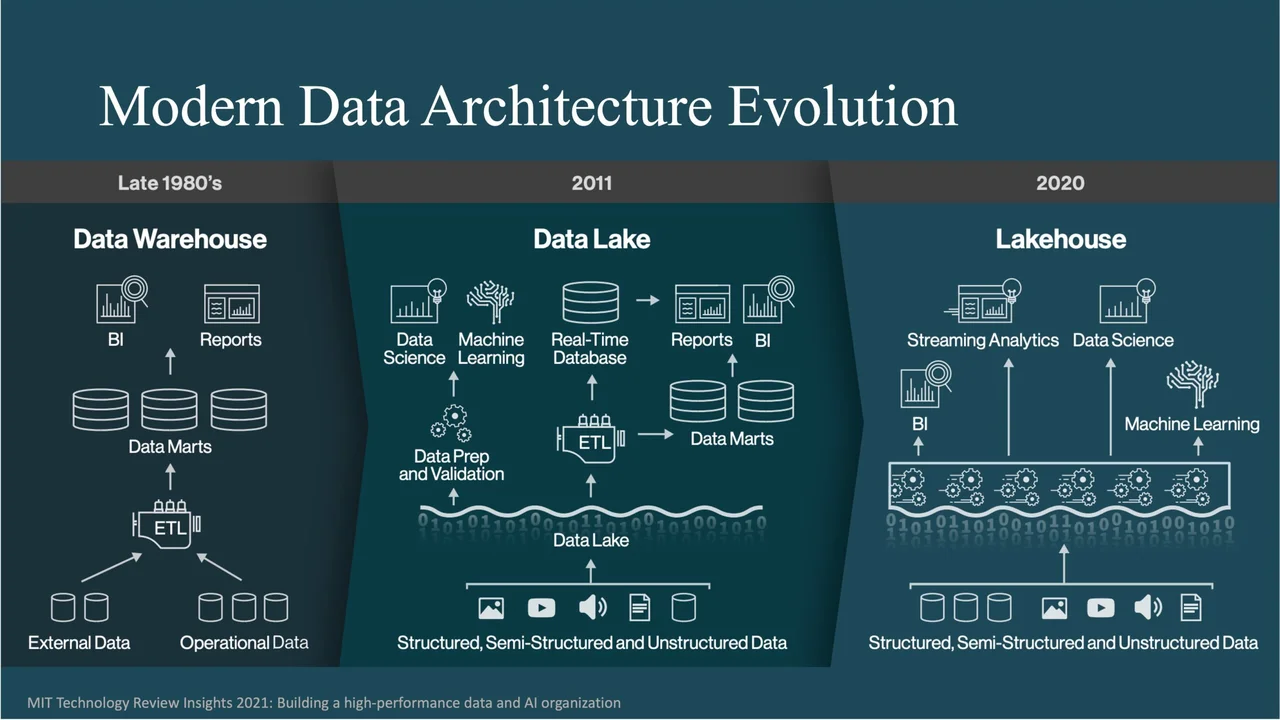
- Accessibility: Can your AI models and data scientists easily access the data with low latency? Data lakes and data warehouses are common architectures for storing large, diverse datasets. \n
- Security: Is your data protected from unauthorized access, breaches, and loss? This involves encryption, access controls, and regular backups. \n
- Version Control: How do you track changes to your datasets? Data versioning tools (like DVC - Data Version Control) are crucial for reproducibility and managing different iterations of your data. \n
- Metadata Management: How do you keep track of what data you have, where it came from, and what it contains? Data catalogs and metadata management tools help organize and discover data. \n
For smaller projects, local storage or network-attached storage (NAS) might suffice. But for serious AI development, cloud-based object storage and specialized data management platforms are almost a necessity. For example, Amazon S3 offers virtually unlimited storage, high durability, and integration with other AWS AI/ML services. Google Cloud Storage provides similar benefits within the Google Cloud ecosystem. These services typically charge based on storage consumed and data transfer, making them flexible for varying project sizes.
\n\nSynthetic Data Generation The Future of AI Training Data
\n\nWhile real-world data is invaluable, it often comes with challenges: privacy concerns, collection costs, bias, and scarcity for rare events. This is where synthetic data generation is gaining traction. Synthetic data is artificially manufactured data that mimics the statistical properties of real-world data without containing any actual real-world information. It's created using algorithms, often generative AI models themselves (like GANs - Generative Adversarial Networks, or VAEs - Variational Autoencoders). The benefits are significant:
\n\n- \n
- Privacy: No real personal information is involved, making it ideal for sensitive applications like healthcare or finance. \n
- Cost-effectiveness: Can be cheaper to generate than collecting and labeling real data, especially for large volumes. \n
- Bias Mitigation: Can be generated to be perfectly balanced, addressing biases present in real datasets. \n
- Rare Event Simulation: Can create data for rare scenarios that are difficult to capture in the real world (e.g., specific types of accidents for autonomous vehicles). \n
- Scalability: Can generate virtually unlimited amounts of data on demand. \n
Companies like Gretel.ai and Mostly AI specialize in synthetic data generation. Gretel.ai offers APIs and SDKs to generate high-quality synthetic data from existing datasets, focusing on privacy and utility. Mostly AI provides a synthetic data platform that allows businesses to create privacy-preserving synthetic versions of their customer data for analytics and AI training. Pricing for these services is typically subscription-based or usage-based, depending on the volume and complexity of data generation. While synthetic data is a powerful tool, it's crucial to ensure it accurately reflects the real data's characteristics to avoid training an AI model on misleading information. It's often used in conjunction with real data, especially for initial model training or for augmenting scarce real datasets.
\n\nThe Iterative Nature of Data and AI Model Development
\n\nDeveloping an AI model isn't a one-shot deal where you feed it data once and it's perfect. It's a highly iterative process, and data plays a central role in every loop. You start with some data, train a model, evaluate its performance, and then often realize you need more data, different data, or cleaner data to improve it. This cycle looks something like this:
\n\n- \n
- Data Collection: Gather initial data. \n
- Data Preprocessing: Clean, transform, and prepare the data. \n
- Model Training: Train the AI model on the prepared data. \n
- Model Evaluation: Test the model's performance on unseen data. \n
- Error Analysis: Understand where the model fails and why. \n
- Data Refinement/Augmentation: Based on error analysis, collect more specific data, improve data quality, or augment existing data. \n
- Retrain Model: Go back to step 3 with the refined data. \n
This continuous feedback loop between data and model performance is what drives progress in AI. As models are deployed, they often encounter new types of data or edge cases, necessitating further data collection and retraining. This is why MLOps (Machine Learning Operations) has become so important – it's about managing this entire lifecycle, including data pipelines, model deployment, monitoring, and continuous retraining. Companies like DataRobot and H2O.ai offer platforms that streamline this iterative process, providing tools for data preparation, model building, deployment, and monitoring, often with pricing models based on usage or enterprise licenses.
\n\nConclusion The Indispensable Role of Data in AI
\n\nSo, there you have it. Data isn't just a component of AI; it's the very foundation upon which all AI models are built and perform. From the sheer volume needed for robust learning to the meticulous quality required for accurate and fair outcomes, data dictates the success or failure of any AI endeavor. Understanding the nuances of data quantity, quality, bias, labeling, augmentation, storage, and even synthetic generation is absolutely essential for anyone involved in the AI space, whether you're a developer, a business leader, or just someone trying to make sense of this rapidly evolving field. As AI continues to advance, the importance of high-quality, well-managed data will only grow. It's the fuel that powers the AI revolution, and without it, the engines simply won't run.
" } ] }:max_bytes(150000):strip_icc()/277019-baked-pork-chops-with-cream-of-mushroom-soup-DDMFS-beauty-4x3-BG-7505-5762b731cf30447d9cbbbbbf387beafa.jpg)