Personalizing Customer Experiences with AI
Create highly personalized customer journeys and product recommendations using AI.
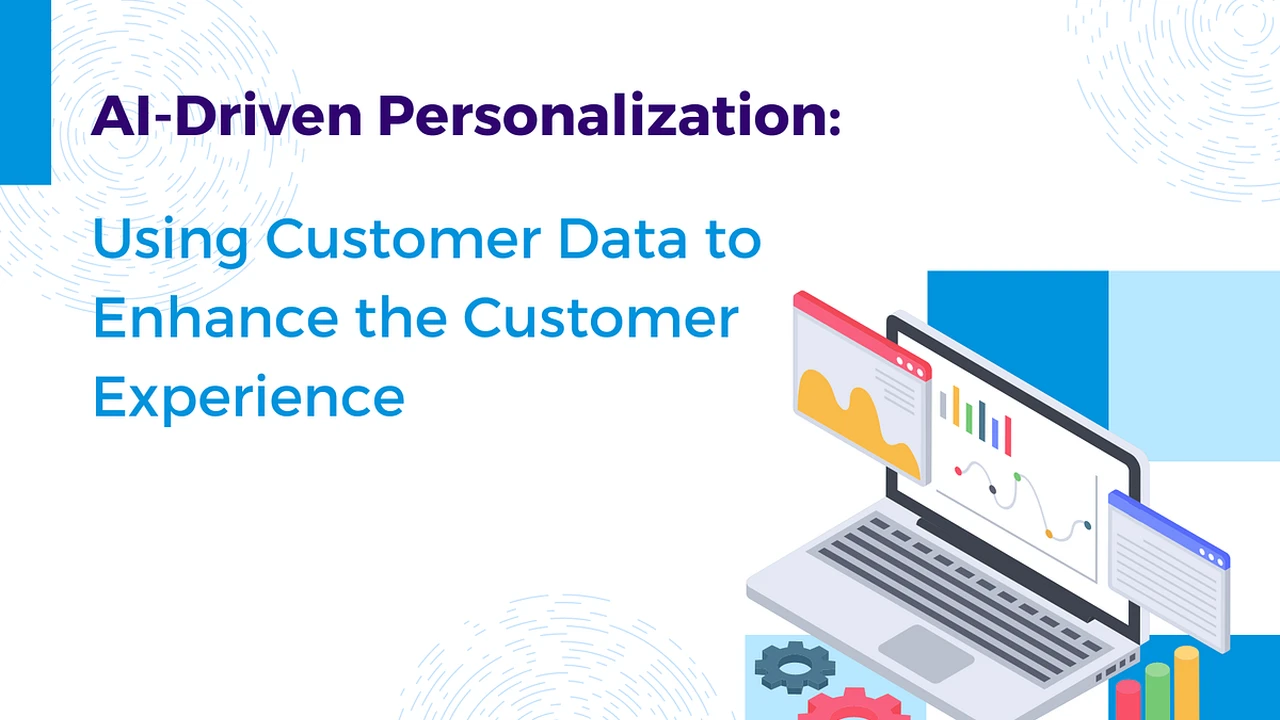
Personalizing Customer Experiences with AI
Create highly personalized customer journeys and product recommendations using AI. In today's hyper-competitive market, generic customer experiences just don't cut it anymore. Customers expect brands to understand their individual needs, preferences, and even their moods. This is where Artificial Intelligence (AI) steps in, transforming the way businesses interact with their clientele. AI-powered personalization isn't just a buzzword; it's a strategic imperative for businesses looking to foster loyalty, drive sales, and stand out from the crowd. Imagine a world where every interaction a customer has with your brand feels tailor-made, as if you've known them for years. That's the promise of AI-driven personalization.
Why AI Personalization Matters for Customer Engagement
The shift from mass marketing to individualized experiences is profound. AI personalization allows businesses to move beyond basic segmentation and truly understand each customer as an individual. This leads to more relevant communications, better product suggestions, and ultimately, a more satisfying customer journey. When customers feel understood and valued, they are more likely to engage, purchase, and become loyal advocates for your brand. It's about building relationships at scale, something that was previously impossible without AI.
Key Benefits of AI Driven Personalization for Businesses
Implementing AI for personalization offers a multitude of benefits. Firstly, it significantly boosts customer satisfaction. When recommendations are spot-on and interactions are seamless, customers are happier. Secondly, it drives higher conversion rates. Personalized product suggestions and targeted offers are far more effective than generic ones. Thirdly, it increases customer lifetime value (CLTV) by fostering loyalty and encouraging repeat purchases. Fourthly, AI can reduce customer churn by proactively addressing potential issues and offering timely solutions. Finally, it provides invaluable insights into customer behavior, allowing businesses to continuously refine their strategies.
How AI Personalization Works Understanding the Technology
At its core, AI personalization relies on collecting and analyzing vast amounts of customer data. This data can include browsing history, purchase patterns, demographic information, social media interactions, and even real-time behavior on your website or app. AI algorithms, particularly machine learning models, then process this data to identify patterns, predict future behavior, and generate personalized recommendations or experiences. This involves techniques like collaborative filtering, content-based filtering, and deep learning. The more data an AI system has, the more accurate and nuanced its personalization capabilities become.
AI Powered Product Recommendation Engines Top Platforms and Features
Product recommendation engines are perhaps the most visible application of AI personalization. These systems analyze customer data to suggest products they are likely to be interested in. Here are some leading platforms:
Amazon Personalize Custom Recommendations at Scale
Amazon Personalize is a fully managed machine learning service that allows developers to easily add sophisticated personalization capabilities to their applications. It's built on the same technology used by Amazon.com for its own recommendations. It supports various use cases, including product recommendations, personalized search results, and custom content ranking. It's highly scalable and integrates well with other AWS services.
- Use Case: E-commerce platforms, media streaming services, content publishers.
- Features: Real-time personalization, various recommendation recipes (e.g., 'Customers who viewed this also viewed'), cold start problem handling, A/B testing.
- Pricing: Pay-as-you-go model based on data ingested, training hours, and recommendation requests. Can range from a few hundred to thousands of dollars per month depending on scale.
Algolia Personalization Search and Discovery Optimization
While primarily known for its search capabilities, Algolia offers powerful personalization features that integrate directly with its search and discovery platform. It uses AI to learn from user behavior and deliver personalized search results, product listings, and recommendations. This is particularly effective for businesses where search is a primary mode of customer interaction.
- Use Case: E-commerce sites, marketplaces, content platforms with extensive catalogs.
- Features: Personalized search ranking, dynamic re-ranking of results, A/B testing for personalization strategies, real-time analytics.
- Pricing: Tiered pricing based on records, search requests, and advanced features. Starts from around $300/month for basic personalization, scaling up significantly for enterprise needs.
Dynamic Yield Omnichannel Personalization and Testing
Dynamic Yield, now part of Mastercard, is a comprehensive AI-powered personalization platform designed for omnichannel experiences. It allows businesses to personalize websites, mobile apps, emails, and even in-store interactions. It offers a robust set of tools for A/B testing, segmentation, and real-time optimization, making it a favorite among larger enterprises.
- Use Case: Large e-commerce retailers, travel companies, financial institutions, media companies.
- Features: Advanced segmentation, behavioral messaging, product recommendations, A/B testing, predictive targeting, email personalization, mobile app personalization.
- Pricing: Enterprise-level pricing, typically custom quotes based on traffic volume and features. Expect significant investment, often starting in the thousands per month.
Optimizely Personalization Experimentation and Optimization
Optimizely (formerly Episerver) offers a powerful suite for digital experience optimization, including robust personalization capabilities. It focuses on experimentation and A/B testing to ensure that personalization strategies are truly effective. Their AI-driven recommendations and content personalization tools help businesses deliver relevant experiences across various touchpoints.
- Use Case: Marketing teams, product managers, e-commerce businesses focused on continuous optimization.
- Features: AI-powered recommendations, content personalization, A/B testing, multivariate testing, audience segmentation, real-time analytics.
- Pricing: Enterprise-level, custom pricing based on usage and modules. Similar to Dynamic Yield, it represents a substantial investment.
Recombee AI Powered Recommendation API
Recombee provides a flexible AI-powered recommendation API that allows developers to integrate personalized recommendations into any application. It's known for its speed and ability to handle complex recommendation scenarios. It's a good choice for businesses that want to build custom recommendation systems without managing the underlying machine learning infrastructure.
- Use Case: Startups, developers, businesses with specific integration needs, e-commerce.
- Features: Real-time recommendations, various recommendation types (e.g., 'similar items', 'personal recommendations'), A/B testing, detailed analytics, flexible API.
- Pricing: Usage-based pricing, starting with a free tier for small usage, then scaling up based on requests and data. Can be very cost-effective for smaller to medium-sized businesses, potentially hundreds to low thousands per month.
AI in Customer Journey Mapping and Optimization
Beyond product recommendations, AI is revolutionizing the entire customer journey. AI can analyze customer interactions across all touchpoints – from initial website visit to post-purchase support – to identify pain points, predict churn, and optimize the path to conversion. This involves using AI for predictive analytics, sentiment analysis, and automated journey orchestration.
AI Driven Content Personalization and Delivery
Content is king, but personalized content is even better. AI can dynamically adapt website content, email newsletters, and even ad creatives based on individual user preferences and behavior. This ensures that customers always see the most relevant information, leading to higher engagement and conversion rates. Think of a news website showing you articles based on your reading history, or an email marketing campaign sending different subject lines to different segments based on predicted open rates.
AI Powered Customer Service and Support Personalization
AI chatbots and virtual assistants are becoming increasingly sophisticated, offering personalized support around the clock. These AI tools can understand natural language, access customer history, and provide tailored solutions, escalating to human agents only when necessary. This not only improves customer satisfaction but also significantly reduces operational costs for businesses. Imagine a chatbot that remembers your previous interactions and immediately understands your current query, providing a seamless support experience.
Challenges and Considerations in AI Personalization Implementation
While the benefits are clear, implementing AI personalization isn't without its challenges. Data privacy and security are paramount; businesses must ensure they comply with regulations like GDPR and CCPA. Data quality is another critical factor; 'garbage in, garbage out' applies strongly to AI. Over-personalization can also be a pitfall, leading to a 'filter bubble' effect or even feeling intrusive. Finally, integrating AI solutions with existing systems can be complex and requires careful planning and technical expertise.
The Future of AI Personalization Hyper Personalization and Beyond
The future of AI personalization is moving towards 'hyper-personalization,' where experiences are not just tailored to individuals but are also dynamic and adapt in real-time based on context, mood, and even biometric data. We can expect more predictive personalization, where AI anticipates needs before customers even express them. The integration of AI with virtual and augmented reality will also open up new frontiers for immersive and personalized experiences. The goal is to create a truly seamless and intuitive interaction where the brand anticipates and fulfills customer desires almost telepathically.
:max_bytes(150000):strip_icc()/277019-baked-pork-chops-with-cream-of-mushroom-soup-DDMFS-beauty-4x3-BG-7505-5762b731cf30447d9cbbbbbf387beafa.jpg)