Teaching AI Tools and Prompt Engineering
Share your expertise by teaching others how to effectively use AI tools and master prompt engineering.
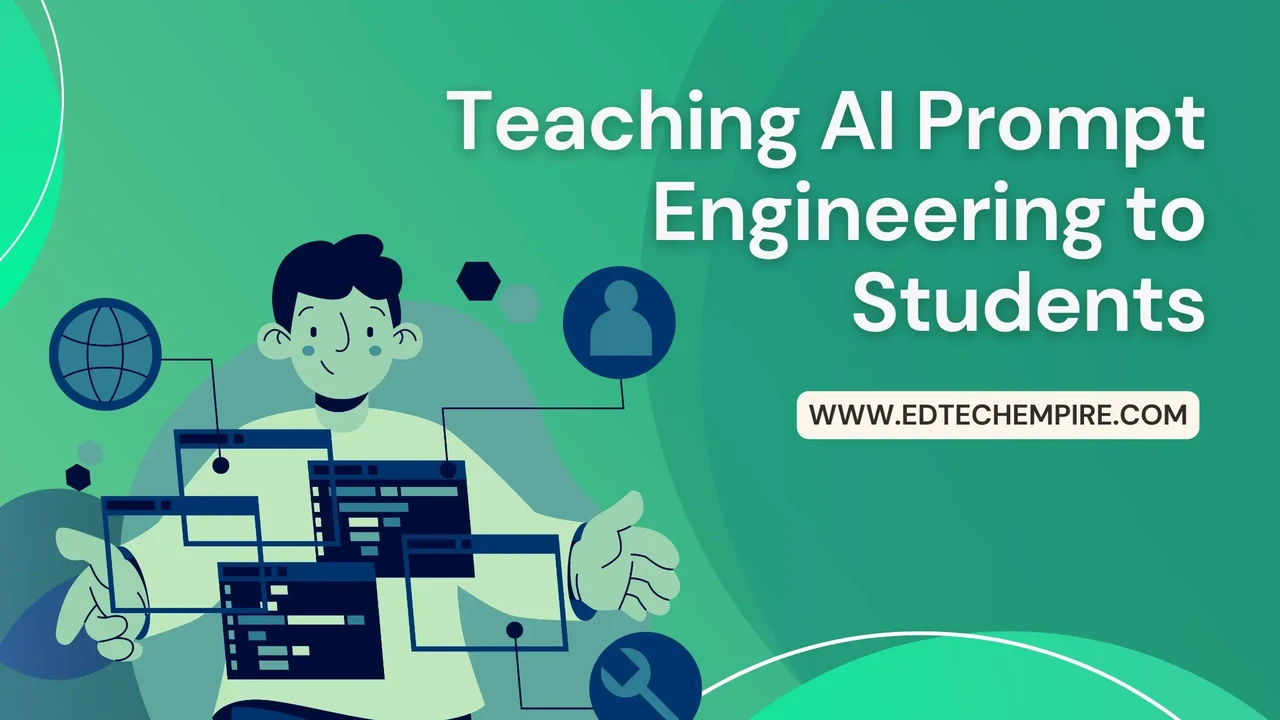
Share your expertise by teaching others how to effectively use AI tools and master prompt engineering. This is a fantastic way to monetize your AI skills, and it's a field that's absolutely booming right now. Everyone wants to get a piece of the AI pie, but not everyone knows how to bake it. That's where you come in! You've been tinkering with AI, you've figured out what works and what doesn't, and now you can package that knowledge and sell it.
Teaching AI Tools and Prompt Engineering Your Path to Profit
Why Teach AI Tools and Prompt Engineering The Growing Demand
Look around! AI is everywhere. From generating stunning images to writing entire articles, AI tools are transforming industries. But here's the catch: these tools are powerful, but they're not always intuitive. People are struggling to get the most out of them. They're typing in vague prompts and getting garbage back, or they're using AI for basic tasks when it could be doing so much more. This creates a massive demand for people who can bridge that gap – people like you who can teach others how to effectively use these tools and, more importantly, how to master prompt engineering. Think about it: businesses want to integrate AI to save costs and boost efficiency, creators want to leverage AI to produce more content faster, and individuals just want to understand what all the fuss is about. The market for AI education is exploding, and it's not just for tech gurus. Even grandmas want to learn how to make AI art for their grandkids!Identifying Your Niche in AI Education Targeting Your Audience
Before you jump in, it's smart to figure out who you want to teach. Are you aiming for complete beginners who don't even know what a 'prompt' is? Or are you looking to help advanced users fine-tune their AI workflows? Maybe you want to focus on a specific AI tool, like Midjourney for artists, or ChatGPT for writers. Here are a few ideas for niches:- AI for Small Business Owners: Teaching them how to use AI for marketing, customer service, or content creation.
- Prompt Engineering for Content Creators: Helping writers, video producers, and graphic designers generate better ideas and content.
- AI Art Generation for Artists: Guiding visual artists on how to use tools like Midjourney or Stable Diffusion to enhance their work or create new styles.
- AI for Students and Researchers: Showing them how to use AI for research, essay writing, or data analysis.
- Specific Tool Mastery: Becoming the go-to expert for a particular AI tool, like 'Mastering ChatGPT for Business' or 'Unlocking the Power of DALL-E 3'.
Crafting Your AI Curriculum What to Teach
Once you know who you're teaching, you need to decide what you're going to teach them. A good curriculum should be structured, practical, and provide clear, actionable steps. Here's a breakdown of what you might include:Understanding AI Basics Core Concepts for Beginners
Start with the fundamentals. What is AI? What's the difference between AI, Machine Learning, and Deep Learning? Explain concepts like neural networks in simple terms. This foundational knowledge is crucial, especially for beginners, as it helps them understand *why* AI works the way it does.Introduction to Popular AI Tools Hands-On Experience
This is where you introduce the actual tools. Don't just talk about them; show them in action. Provide step-by-step tutorials. For example:- ChatGPT (OpenAI): Explain its capabilities for text generation, summarization, brainstorming, and coding assistance.
- Midjourney (Midjourney Inc.): Demonstrate how to create stunning images from text prompts, focusing on styles, aspect ratios, and advanced parameters.
- DALL-E 3 (OpenAI): Show its integration with ChatGPT, its ability to generate diverse images, and its strengths in understanding complex prompts.
- Stable Diffusion (Stability AI): Discuss its open-source nature, customizability, and local installation options for more advanced users.
- ElevenLabs (ElevenLabs.io): Showcase its realistic voice generation and voice cloning capabilities for audio content.
- Descript (Descript.com): Highlight its AI features for video editing, transcription, and filler word removal.
The Art of Prompt Engineering Mastering AI Communication
This is the core of your offering. Prompt engineering is about communicating effectively with AI models to get the desired output. It's not just about typing a question; it's about crafting precise, clear, and detailed instructions. Cover topics like:- Clarity and Specificity: How to avoid ambiguity in prompts.
- Context and Constraints: Providing background information and setting boundaries for the AI.
- Role-Playing: Instructing the AI to act as a specific persona (e.g., 'Act as a marketing expert').
- Iterative Prompting: Refining prompts based on initial AI responses.
- Negative Prompting: Telling the AI what *not* to include (especially useful for image generation).
- Temperature and Creativity: Understanding how to control the AI's output variability.
- Advanced Techniques: Chain-of-thought prompting, few-shot prompting, and other sophisticated methods.
Practical Applications and Use Cases Real-World Scenarios
Show your students how to apply AI tools and prompt engineering to real-world problems. This makes the learning tangible and immediately useful. Examples include:- Generating blog post ideas and outlines.
- Creating social media captions and ad copy.
- Designing unique logos or brand assets.
- Producing realistic voiceovers for videos or podcasts.
- Summarizing long documents or research papers.
- Brainstorming business names or product ideas.
Troubleshooting and Best Practices Overcoming Challenges
AI isn't perfect. Teach your students how to troubleshoot common issues, like getting irrelevant responses or repetitive content. Share best practices for ethical AI use, data privacy, and avoiding plagiarism.Choosing Your Teaching Platform Where to Share Your Knowledge
There are many ways to deliver your AI education. Each has its pros and cons, and some might be better suited for different types of content or audiences.Online Course Platforms Passive Income Potential
This is a popular choice for creating evergreen content that can generate passive income. You create the course once, and people can buy it anytime. Platforms like:- Udemy: A massive marketplace with a huge audience. Easy to upload courses, but competition is high, and Udemy takes a significant cut of sales. Good for reaching a broad audience.
- Teachable: Gives you more control over your branding and pricing. You build your own storefront. Better for building a dedicated audience and offering premium courses.
- Thinkific: Similar to Teachable, offering robust features for course creation, marketing, and student management.
- Skillshare: Focuses on creative skills and project-based learning. Good for shorter, hands-on courses.
Live Workshops and Webinars Interactive Learning
Live sessions allow for real-time interaction, Q&A, and a more personalized experience. You can host these on platforms like Zoom, Google Meet, or specialized webinar platforms.- Zoom: Widely used, easy to set up, and familiar to most.
- WebinarJam: Designed specifically for webinars, offering features like automated webinars, landing pages, and email integrations.
- Eventbrite: Great for promoting and selling tickets to your workshops.
One-on-One Coaching Personalized Guidance
For those who want highly personalized attention, one-on-one coaching is a premium service. This allows you to tailor your teaching to the individual's specific needs and goals.- Calendly: For scheduling appointments.
- Zoom/Google Meet: For the actual coaching sessions.
- Stripe/PayPal: For payment processing.
YouTube and Social Media Free Content for Lead Generation
While not directly monetized through teaching (unless you count ad revenue), creating free tutorials and tips on YouTube, TikTok, or Instagram can be a powerful way to build an audience and drive traffic to your paid offerings. Think of it as your marketing funnel.Marketing Your AI Education Reaching Your Students
Even the best course won't sell itself. You need a solid marketing strategy to reach your target audience.Content Marketing Demonstrating Expertise
Create valuable content that showcases your expertise. This could be blog posts, short video tutorials, infographics, or even free prompt templates. Share these on your website, social media, and relevant forums. For example, a blog post titled '5 ChatGPT Prompts to Boost Your Productivity' could lead people to your full course.Social Media Engagement Building Community
Be active on platforms where your target audience hangs out. LinkedIn for business professionals, Instagram/TikTok for creators, Reddit for tech enthusiasts. Share tips, answer questions, and engage in discussions. Use relevant hashtags like #AITools #PromptEngineering #AICourse #LearnAI.SEO Optimization Getting Found Online
Optimize your website, course descriptions, and content for search engines. Use keywords that your potential students are searching for, such as 'learn prompt engineering,' 'AI writing tools course,' or 'Midjourney tutorial.'Email Marketing Nurturing Leads
Build an email list by offering a freebie (e.g., a 'Prompt Engineering Cheat Sheet'). Then, send regular newsletters with valuable AI tips, updates, and promotions for your courses or workshops.Partnerships and Collaborations Expanding Reach
Collaborate with other creators, influencers, or businesses in the AI or creative space. You could do joint webinars, cross-promote each other's content, or even co-create a course.Tools to Help You Teach AI Your Tech Stack
Beyond the AI tools themselves, you'll need some other software to create and deliver your educational content.- Screen Recording Software: For creating video tutorials. Options include OBS Studio (free), Camtasia (paid), or Loom (freemium).
- Video Editing Software: To polish your tutorials. DaVinci Resolve (free), Adobe Premiere Pro (paid), or CapCut (freemium mobile/desktop).
- Presentation Software: For slides in your workshops or courses. Google Slides (free), PowerPoint (paid), or Canva (freemium).
- Website Builder: To host your blog, course landing pages, and portfolio. WordPress, Squarespace, or Wix.
- Email Marketing Platform: For building and managing your email list. Mailchimp (freemium), ConvertKit (paid), or ActiveCampaign (paid).
- Payment Processing: To accept payments for your courses or coaching. Stripe or PayPal.
:max_bytes(150000):strip_icc()/277019-baked-pork-chops-with-cream-of-mushroom-soup-DDMFS-beauty-4x3-BG-7505-5762b731cf30447d9cbbbbbf387beafa.jpg)