Monetizing AI Transcription Services
{ "article": [ { "title": "Monetizing AI Transcription Services", "meta_description": "Provide accurate and fast transcription services using AI tools for various industries.", "content": "Monetizing AI Transcription Services: Provide accurate and fast transcription services using AI tools for various industries.\n\n
\n\n
The Rise of AI in Transcription Services
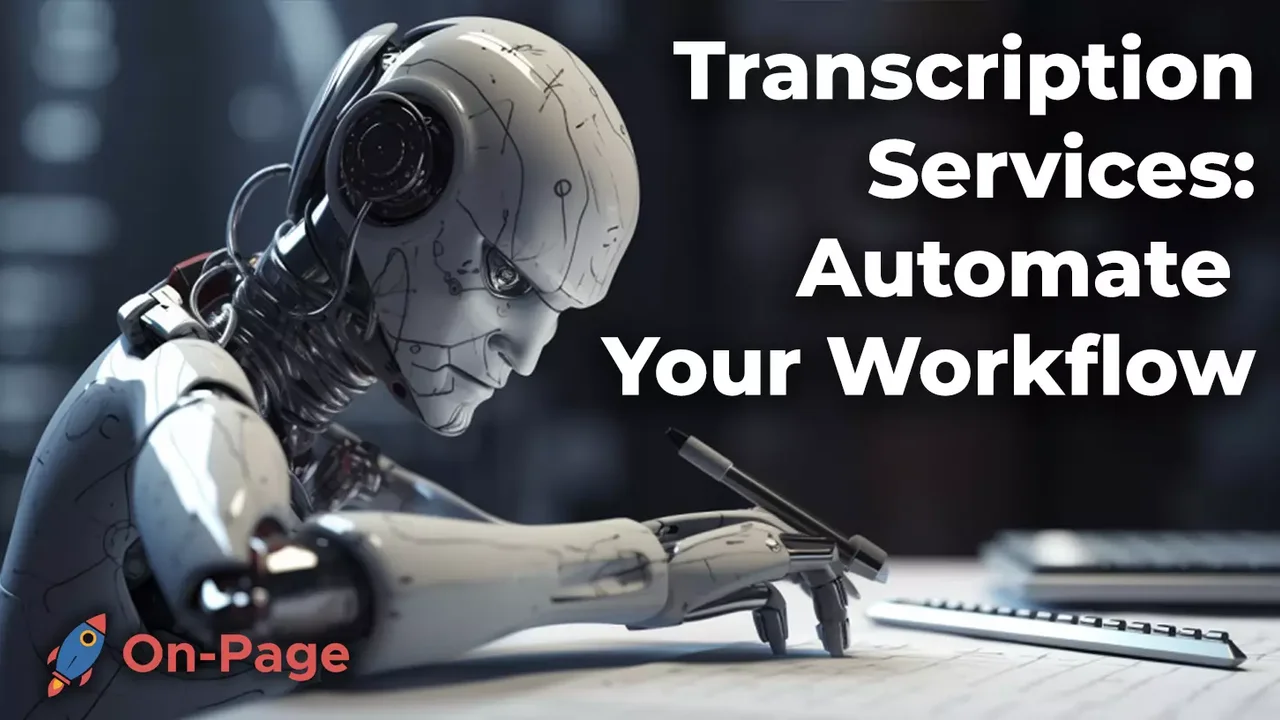
\n\nHey there, ever thought about how much audio and video content is out there? Podcasts, webinars, interviews, lectures, meetings – the list goes on. And guess what? A huge chunk of this content needs to be transcribed into text. Why? For accessibility, SEO, content repurposing, legal documentation, and so much more. Traditionally, this was a super time-consuming and often expensive process, relying heavily on human transcribers. But with the rapid advancements in Artificial Intelligence, specifically in Automatic Speech Recognition (ASR) technology, the game has totally changed. AI transcription services are now incredibly accurate, fast, and affordable, opening up a massive opportunity for anyone looking to start a profitable side hustle or even a full-blown business.
\n\nThink about it: businesses need transcripts for their marketing videos, legal firms for court proceedings, educators for online courses, and podcasters for show notes. The demand is constant and growing. By leveraging AI tools, you can offer these services efficiently, scale your operations, and carve out a niche for yourself in this booming market. It's not just about pressing a button and getting text; it's about understanding the nuances, refining the output, and providing a valuable service that saves clients time and money.
\n\nUnderstanding AI Transcription How It Works
\n\nSo, how does AI transcription actually work? At its core, it uses complex algorithms and machine learning models trained on vast amounts of audio data to convert spoken words into written text. When you upload an audio file to an AI transcription service, the AI analyzes the sound waves, identifies speech patterns, separates speakers, and then converts those sounds into text. It's pretty mind-blowing when you think about it!
\n\nThese AI models are constantly learning and improving. The more data they process, the better they get at understanding different accents, speech speeds, and even distinguishing between multiple speakers. While AI is incredibly powerful, it's not always perfect. Background noise, unclear audio, or highly specialized jargon can sometimes trip it up. This is where the 'human touch' comes in, which we'll talk about later. But for a first pass, AI transcription is incredibly efficient and accurate, often achieving accuracy rates upwards of 90-95% on clear audio.
\n\nKey Benefits of Using AI for Transcription Business
\n\nWhy should you consider using AI for your transcription business? Well, the benefits are pretty compelling:
\n\n- \n
- Speed: AI can transcribe hours of audio in minutes, something a human transcriber would take days to do. This means faster turnaround times for your clients, which is a huge selling point. \n
- Cost-Effectiveness: AI transcription is significantly cheaper than human transcription. This allows you to offer competitive pricing while still maintaining healthy profit margins. \n
- Scalability: With AI, you're not limited by the number of hours you can personally work. You can handle a much larger volume of projects, allowing your business to grow without proportional increases in labor costs. \n
- Consistency: AI doesn't get tired or make typos due to fatigue. It provides a consistent level of output, which can then be refined. \n
- Accessibility: AI tools are readily available and often cloud-based, meaning you can access them from anywhere with an internet connection. \n
Top AI Transcription Tools for Your Business
\n\nAlright, let's get down to some specifics. There are a bunch of fantastic AI transcription tools out there, each with its own strengths and pricing models. Here are some of the top contenders you should definitely check out:
\n\nRev AI for Professional Transcription Needs
\n\nRev is a well-known name in the transcription world, and their AI offering, Rev AI, is top-notch. They've been in the business for a long time, so they understand the nuances of transcription. Rev AI offers highly accurate speech-to-text APIs and services, making it a great choice for businesses that need reliable and scalable solutions.
\n\n- \n
- Use Cases: Ideal for media companies, podcasters, researchers, and anyone needing high-volume, accurate transcription. They handle various audio qualities well. \n
- Features: High accuracy, speaker diarization (identifying different speakers), timestamping, custom vocabulary support (great for niche industries), and robust API for integration into your own workflows. \n
- Pricing: Rev AI typically charges per minute of audio. For their standard ASR, it's usually around $0.25 per minute. They also offer human transcription services if a client needs 99%+ accuracy, which you can upsell. \n
- Pros: Excellent accuracy, strong reputation, good for large volumes, API friendly. \n
- Cons: Can be pricier than some other AI-only options, especially for very long files. \n
Happy Scribe for Multilingual Transcription and Subtitles
\n\nHappy Scribe is a fantastic option if you're looking to offer multilingual transcription services or need to generate subtitles and captions. They support a wide range of languages and have a user-friendly interface.
\n\n- \n
- Use Cases: Perfect for content creators, e-learning platforms, and businesses with a global audience. Great for generating subtitles for videos. \n
- Features: Supports over 120 languages and dialects, automatic subtitle generation, speaker identification, timestamping, and various export formats (SRT, VTT, TXT, DOCX). \n
- Pricing: Happy Scribe offers a free trial for a short duration. Their paid plans are typically subscription-based, starting from around $10-$20 per month for a certain number of hours, or pay-as-you-go options around $0.20-$0.25 per minute. \n
- Pros: Excellent multilingual support, great for subtitles, intuitive interface. \n
- Cons: Accuracy can vary slightly with less common languages or very poor audio quality. \n
Trint for Collaborative Transcription and Editing
\n\nTrint is known for its powerful editor that allows for easy correction and collaboration on transcripts. If your service involves a lot of post-transcription editing and client collaboration, Trint could be a great fit.
\n\n- \n
- Use Cases: Journalists, researchers, marketing teams, and anyone who needs to quickly edit and share transcripts. \n
- Features: Interactive editor that links audio to text, speaker identification, search functionality, collaborative features, and mobile app. \n
- Pricing: Trint is generally on the higher end for AI transcription, often starting around $48 per month for their basic plan, which includes a certain number of transcription hours. They also have enterprise solutions. \n
- Pros: Superb interactive editor, excellent for collaboration, good accuracy. \n
- Cons: Higher price point, might be overkill for simple, unedited transcription needs. \n
Otter ai for Meeting and Conversation Transcription
\n\nOtter.ai is a popular choice, especially for transcribing meetings, lectures, and live conversations. It's designed to be a personal AI assistant for note-taking.
\n\n- \n
- Use Cases: Students, professionals, remote teams, and anyone who frequently attends meetings and needs quick summaries or full transcripts. \n
- Features: Real-time transcription, speaker identification, summary generation, keyword extraction, and integration with Zoom, Google Meet, and Microsoft Teams. \n
- Pricing: Otter.ai offers a generous free plan with limited transcription minutes per month. Paid plans start around $8.33 per month (billed annually) for more minutes and features. \n
- Pros: Excellent for meetings, real-time transcription, good free tier, user-friendly. \n
- Cons: Less suited for very long, complex audio files or professional broadcast quality needs. \n
AssemblyAI for Developers and Custom Solutions
\n\nIf you're a bit more tech-savvy or plan to build custom solutions, AssemblyAI is a powerful API-first platform. It's designed for developers to integrate advanced speech-to-text capabilities into their own applications.
\n\n- \n
- Use Cases: Developers, startups building transcription-related apps, and businesses needing highly customized transcription workflows. \n
- Features: High accuracy, speaker diarization, sentiment analysis, content moderation, topic detection, and custom vocabulary. \n
- Pricing: AssemblyAI uses a pay-as-you-go model, typically around $0.0045 per second (which translates to about $0.27 per minute) for their core ASR. They also have volume discounts. \n
- Pros: Highly customizable, advanced features, excellent for developers. \n
- Cons: Requires technical knowledge to implement, not a ready-to-use web interface for non-developers. \n
Setting Up Your AI Transcription Service Business Model
\n\nOkay, you've got the tools in mind. Now, how do you actually set up this business? It's not just about having the software; it's about creating a service that clients will pay for. Here's a breakdown of a viable business model:
\n\nDefining Your Niche and Target Audience
\n\nWhile AI transcription is broad, specializing can help you stand out. Are you going to focus on:
\n\n- \n
- Podcasters: Offering show notes, full transcripts for SEO, and episode summaries. \n
- Academics/Researchers: Transcribing interviews, lectures, and focus group discussions. \n
- Legal Professionals: Handling depositions, court proceedings, and legal dictations (be mindful of confidentiality and accuracy requirements here). \n
- Content Creators: Providing captions for YouTube videos, social media content, and online courses. \n
- Businesses: Transcribing meetings, webinars, and conference calls. \n
Each niche has specific needs and pricing expectations. Understanding your target audience will help you tailor your marketing and services.
\n\nPricing Your Transcription Services Competitively
\n\nThis is crucial. You need to be competitive but also profitable. Since AI does most of the heavy lifting, you can price lower than traditional human transcription services, but higher than just the raw AI cost because you're adding value. Consider these factors:
\n\n- \n
- Per Minute Rate: This is the most common. Rates can range from $0.50 to $1.50 per audio minute, depending on the niche, turnaround time, and level of human editing. \n
- Tiered Pricing: Offer different tiers based on accuracy needs and turnaround time. For example, a 'Basic AI' tier (minimal human review) at a lower price, and a 'Premium' tier (thorough human review) at a higher price. \n
- Add-on Services: Charge extra for speaker identification, timestamping, verbatim transcription (including 'ums' and 'ahs'), or specific formatting. \n
- Volume Discounts: Offer lower per-minute rates for large projects to attract bigger clients. \n
Remember, your profit margin comes from the difference between what you pay the AI tool and what you charge the client, minus your time for editing and quality control.
\n\nThe Human Touch Quality Control and Editing
\n\nThis is where you add immense value. While AI is great, it's not perfect. You absolutely need to incorporate a human review and editing process. This is often called 'post-editing' or 'human-in-the-loop' transcription. Here's why it's vital:
\n\n- \n
- Accuracy: Catching errors the AI missed (e.g., proper nouns, industry-specific terms, accents). \n
- Readability: Ensuring the transcript flows well and is easy to read, even if the original audio was disjointed. \n
- Formatting: Applying specific formatting requests from clients (e.g., specific speaker labels, timestamps). \n
- Confidentiality: For sensitive content, a human review ensures no data breaches or misinterpretations. \n
Your service isn't just about providing raw AI output; it's about delivering a polished, accurate, and client-ready transcript. This human touch is what differentiates you from simply telling clients to use an AI tool themselves.
\n\nMarketing Your AI Transcription Services
\n\nYou've got your service, now how do you get clients? Marketing is key!
\n\nBuilding an Online Presence Website and Portfolio
\n\nFirst things first, you need a professional online presence. A simple website showcasing your services, pricing, and a portfolio of your work is essential. Even if you're just starting, you can create sample transcripts from publicly available audio (e.g., TED Talks, public domain interviews) to demonstrate your quality.
\n\nYour website should clearly state your turnaround times, accuracy guarantees, and the types of audio you specialize in. Make it easy for potential clients to contact you for quotes or to upload files.
\n\nLeveraging Freelance Platforms and Social Media
\n\nDon't underestimate the power of freelance platforms like Upwork, Fiverr, and Freelancer.com. Many individuals and small businesses look for transcription services there. Create compelling profiles, highlight your AI-powered efficiency, and offer competitive rates to get your first few clients and build up reviews.
\n\nSocial media, especially LinkedIn, can also be a great place to find clients. Share content about the benefits of transcription, tips for clear audio recording, and showcase your expertise. Engage with potential clients in relevant industry groups.
\n\nSEO Strategies for Transcription Services
\n\nSince you're building an online business, SEO (Search Engine Optimization) is super important. Think about what your potential clients are searching for:
\n\n- \n
- "Transcription services near me" \n
- "Podcast transcription" \n
- "Meeting transcription AI" \n
- "Affordable video captions" \n
- "Legal transcription services" \n
Use these keywords naturally throughout your website content, blog posts, and service descriptions. Create blog posts that answer common questions about transcription or compare different transcription methods. For example, a blog post titled "AI vs. Human Transcription: Which is Right for Your Project?" could attract relevant traffic.
\n\nScaling Your AI Transcription Business
\n\nOnce you start getting clients, you'll want to think about scaling. This is where the AI advantage really shines.
\n\nAutomating Workflows and Client Management
\n\nAs your volume increases, look for ways to automate. Can you set up an automated system for clients to upload files and receive quotes? Can you use project management tools to track progress and communicate with clients efficiently? Tools like Zapier can connect different apps (e.g., your website form to your AI transcription tool, then to your email for notification).
\n\nHiring and Training Human Editors
\n\nIf you reach a point where you can't keep up with the human editing yourself, it's time to hire. You can find freelance editors who specialize in proofreading and transcription. Train them on your specific quality standards and the nuances of working with AI-generated transcripts. This allows you to take on even more projects without sacrificing quality.
\n\nExpanding Service Offerings Beyond Basic Transcription
\n\nOnce you've mastered basic transcription, consider expanding your services:
\n\n- \n
- Translation Services: If you're using a tool like Happy Scribe, you can offer translation of transcripts into other languages. \n
- Summarization: Provide concise summaries of long audio files or meetings. \n
- Content Repurposing: Help clients turn their audio/video content into blog posts, social media snippets, or e-books. \n
- Captioning and Subtitling: Specialize in creating accurate captions for videos, which is a huge market. \n
By offering these additional services, you increase your revenue per client and become a more comprehensive solution provider.
\n\nChallenges and Considerations in AI Transcription
\n\nIt's not all smooth sailing. There are a few challenges and considerations to keep in mind:
\n\nHandling Poor Audio Quality
\n\nThis is probably the biggest headache. AI struggles with heavy background noise, multiple people speaking over each other, very thick accents, or low-quality recordings. You'll need a clear policy for these situations. You might charge a premium for difficult audio, or even decline projects if the quality is too poor to guarantee a reasonable accuracy level.
\n\nData Privacy and Confidentiality
\n\nMany clients will be uploading sensitive information. You need to ensure the AI transcription tools you use are compliant with data privacy regulations (like GDPR or HIPAA, if applicable to your niche). Clearly communicate your data handling policies to clients and ensure you're using secure platforms.
\n\nStaying Updated with AI Advancements
\n\nThe AI landscape is evolving at lightning speed. New tools, better algorithms, and improved accuracy are constantly emerging. You'll need to stay informed about these advancements to ensure you're always using the best tools and offering the most competitive services. Subscribe to AI newsletters, follow industry blogs, and regularly test new platforms.
\n\nYour Path to a Profitable AI Transcription Business
\n\nStarting an AI transcription service is a fantastic way to leverage cutting-edge technology for a profitable venture. The demand for transcribed content is only going to grow, and with AI, you have the power to meet that demand efficiently and affordably. By focusing on quality, providing excellent customer service, and continuously adapting to new technologies, you can build a thriving business that serves a wide range of clients across various industries. So, what are you waiting for? Dive in and start transcribing your way to success!
" } ] }:max_bytes(150000):strip_icc()/277019-baked-pork-chops-with-cream-of-mushroom-soup-DDMFS-beauty-4x3-BG-7505-5762b731cf30447d9cbbbbbf387beafa.jpg)