Offering AI Powered Graphic Design Services
{ "article": [ { "title": "Offering AI Powered Graphic Design Services", "meta_description": "Leverage AI to provide efficient and creative graphic design solutions to clients.", "content": "Leverage AI to provide efficient and creative graphic design solutions to clients.\n\n
\n\n
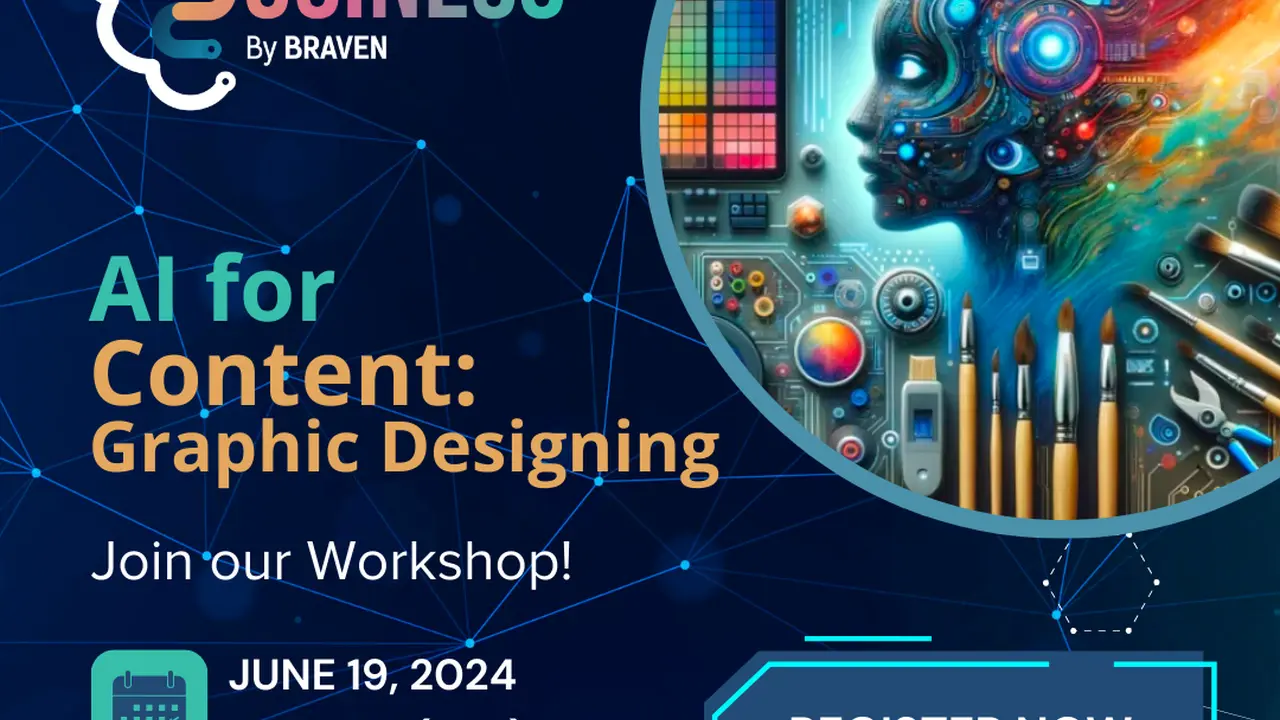
The Rise of AI in Graphic Design Revolutionizing Creativity
\n\nHey there, aspiring design entrepreneur! Ever thought about how artificial intelligence is totally changing the game in graphic design? It's not just about fancy algorithms anymore; AI is becoming a powerful co-pilot for designers, helping them churn out amazing visuals faster and more efficiently than ever before. If you're looking to start a side hustle or even a full-blown business, offering AI-powered graphic design services is a goldmine waiting to be explored. This isn't about replacing human creativity, but rather augmenting it, allowing you to take on more projects, deliver stunning results, and ultimately, make more money.
\n\nThink about it: clients always want things yesterday, and they want them to look incredible. Traditional graphic design can be time-consuming, especially when you're dealing with revisions, multiple concepts, and tight deadlines. This is where AI swoops in like a superhero. From generating initial concepts to automating repetitive tasks, AI tools can significantly cut down your design time, freeing you up to focus on the more strategic and creative aspects of your work. Plus, with AI, you can offer a wider range of services, from logo design to social media graphics, all with a level of speed and precision that would be impossible manually.
\n\nWhy AI Graphic Design is Your Next Big Opportunity Unlocking Efficiency and Innovation
\n\nSo, why jump into AI graphic design now? Simple: demand is skyrocketing. Businesses, big and small, are constantly in need of fresh, engaging visual content. Whether it's for their websites, social media, marketing campaigns, or branding, good design is crucial. And guess what? Many of them are looking for cost-effective and quick solutions. That's exactly what AI-powered services can provide. You can offer competitive pricing because your overhead and time investment are lower, making you an attractive option for a wide range of clients.
\n\nBeyond just speed and cost, AI also brings a new level of innovation to the table. These tools can generate design variations you might never have thought of, explore different color palettes, and even suggest layouts based on current trends. This means you're not just delivering designs; you're delivering cutting-edge, trend-aware visuals that can truly make your clients stand out. It's about being smarter, not just working harder.
\n\nEssential AI Graphic Design Tools Your Creative Arsenal
\n\nAlright, let's get down to the nitty-gritty: what tools do you actually need? The market is flooded with AI design platforms, each with its own strengths. Here are some of the top contenders you should consider integrating into your workflow, along with their typical use cases and pricing structures. Remember, many offer free trials or freemium models, so you can test them out before committing.
\n\nAdobe Firefly The Creative Cloud Powerhouse
\n\nUse Case: Adobe Firefly is a generative AI model integrated into the Adobe Creative Cloud ecosystem. It's fantastic for generating images from text prompts, creating vector graphics, applying text effects, and even recoloring existing artwork. If your clients need unique illustrations, background elements, or stylized text, Firefly is a game-changer. It's particularly useful for designers already familiar with Adobe products like Photoshop and Illustrator, as it seamlessly integrates into their workflows.
\n\nComparison: Unlike standalone AI image generators, Firefly's strength lies in its integration. You can generate an image in Firefly and immediately bring it into Photoshop for further refinement, or use its vector capabilities directly within Illustrator. This makes the post-generation editing process much smoother.
\n\nPricing: Firefly is generally included with Adobe Creative Cloud subscriptions, which start around $54.99/month for the All Apps plan. There are also individual app plans (e.g., Photoshop or Illustrator) that include Firefly credits. Adobe also offers a free web version with limited credits for personal use.
\n\nMidjourney The Artistic Visionary
\n\nUse Case: Midjourney is renowned for its ability to generate stunning, high-quality artistic images from text prompts. If your clients need conceptual art, unique illustrations for book covers, album art, or highly stylized marketing visuals, Midjourney is your go-to. Its strength lies in its aesthetic quality and ability to interpret complex artistic directions.
\n\nComparison: While DALL-E 3 (which we'll discuss next) is great for more literal interpretations, Midjourney excels at creating visually striking and often surreal or abstract art. It has a distinct artistic style that many designers find appealing. It operates primarily through Discord, which can be a learning curve for some, but its community and continuous updates are a huge plus.
\n\nPricing: Midjourney offers several subscription tiers. The Basic Plan starts at $10/month for limited GPU time, while the Standard Plan at $30/month offers more GPU time and features. There's also a Pro Plan for heavier users. They occasionally offer free trials for a limited number of generations.
\n\nDALL-E 3 The Versatile Image Generator
\n\nUse Case: DALL-E 3, integrated with ChatGPT Plus, is excellent for generating a wide range of images, from realistic photos to cartoon styles, based on detailed text descriptions. It's particularly good at understanding complex prompts and generating images that accurately reflect the requested elements. This makes it ideal for social media content, blog post images, simple illustrations, and product mockups.
\n\nComparison: DALL-E 3 is often praised for its ability to follow instructions precisely and generate text within images more accurately than many other models. Its integration with ChatGPT means you can refine your prompts conversationally, which is a huge advantage for non-technical users or those who struggle with prompt engineering.
\n\nPricing: DALL-E 3 is accessible through ChatGPT Plus, which costs $20/month. This subscription also gives you access to other advanced ChatGPT features, making it a good value if you plan to use AI for text generation as well.
\n\nCanva AI Tools The User-Friendly Design Assistant
\n\nUse Case: Canva has integrated various AI features, including Magic Design (for generating designs from text), Magic Write (for text generation), and a text-to-image generator. Canva is perfect for clients who need quick, professional-looking social media graphics, presentations, flyers, and basic marketing materials. Its drag-and-drop interface makes it incredibly user-friendly, even for design novices.
\n\nComparison: While not as powerful for complex artistic generation as Midjourney or Firefly, Canva's AI tools are designed for speed and accessibility. It's ideal for designers who need to produce a high volume of simple, clean designs quickly. Its vast library of templates and stock assets further enhances its utility.
\n\nPricing: Canva offers a robust free plan with limited AI features. The Canva Pro plan, which unlocks most AI tools and premium assets, costs around $12.99/month or $119.99/year. There are also team plans available.
\n\nRunwayML The Multimedia AI Powerhouse
\n\nUse Case: While primarily known for its video generation capabilities, RunwayML also offers powerful image generation and editing tools. It's excellent for creating unique visual assets, transforming images, and even generating textures. If your services extend to motion graphics or video, RunwayML is an invaluable tool for creating cohesive visual campaigns.
\n\nComparison: RunwayML stands out for its focus on multimedia. Its Gen-1 and Gen-2 models can transform existing videos or generate new ones from text, making it a versatile tool for designers who want to offer more than just static images. Its image tools are also very capable, offering unique stylistic options.
\n\nPricing: RunwayML offers a free plan with limited credits. Paid plans start at $15/month for the Standard plan, offering more credits and features, scaling up to Pro and Unlimited plans for heavier usage.
\n\nOther Notable Tools and Considerations
\n\n- \n
- Leonardo.ai: A strong contender for image generation, offering various models and fine-tuning capabilities. Great for specific art styles. \n
- Stable Diffusion: An open-source model that can be run locally or through various online interfaces. Offers immense flexibility and customization for advanced users. \n
- Figma Plugins: Many AI-powered plugins are emerging for Figma, allowing designers to automate tasks, generate icons, or even create design systems. \n
When choosing tools, consider your niche. Are you focusing on highly artistic illustrations? Midjourney might be key. Are you doing a lot of social media content? Canva's AI features will be a lifesaver. Do you need deep integration with professional design software? Adobe Firefly is a strong choice. Don't be afraid to mix and match to create your ultimate AI design toolkit.
\n\nSetting Up Your AI Graphic Design Service From Concept to Client
\n\nOkay, you've got your tools. Now what? Setting up your service involves a few key steps to ensure you're professional, efficient, and attracting the right clients.
\n\nDefining Your Niche and Services What Will You Offer
\n\nDon't try to be everything to everyone. While AI allows for versatility, specializing can help you stand out. Will you focus on:
\n\n- \n
- AI-generated illustrations for authors and publishers? \n
- Social media content creation for small businesses? \n
- Branding and logo design with AI-assisted concept generation? \n
- Marketing collateral (flyers, brochures) for local businesses? \n
- Unique digital art for NFTs or print-on-demand products? \n
Clearly define what you offer. For example, instead of just 'graphic design,' you could say 'AI-Powered Social Media Visuals' or 'Generative Art for Brand Storytelling.' This helps potential clients understand your unique value proposition.
\n\nCrafting Your Portfolio Showcasing AI Capabilities
\n\nYour portfolio is your storefront. It needs to showcase the best of what AI can do, combined with your human touch. Create a diverse range of mock projects or personal pieces using your chosen AI tools. Include:
\n\n- \n
- Before-and-after examples: Show how you took an AI-generated image and refined it in Photoshop or Illustrator. This highlights your skill beyond just prompt engineering. \n
- Different styles: Demonstrate your ability to generate images in various aesthetics (e.g., realistic, cartoon, abstract, minimalist). \n
- Client-specific examples (if you have them): Even if they're hypothetical, show how you'd apply AI to solve a client's specific design problem. \n
Platforms like Behance, Dribbble, or even a simple Squarespace or Wix website are great for hosting your portfolio.
\n\nPricing Your Services Value-Based and Competitive
\n\nPricing can be tricky. Since AI speeds things up, you might be tempted to charge less. However, remember you're selling value, not just hours. Consider:
\n\n- \n
- Project-based pricing: This is often best for design services. Quote a flat fee for a logo package, a set of social media graphics, or a series of illustrations. \n
- Retainer models: For ongoing content needs, offer monthly retainers where clients pay a fixed fee for a certain number of designs or hours. \n
- Tiered packages: Offer basic, standard, and premium packages with varying levels of service and deliverables. \n
Research what other designers are charging, but also factor in the efficiency AI brings. You can offer premium quality at a more competitive rate due to your reduced time investment. Don't undervalue your expertise in prompt engineering and post-processing.
\n\nMarketing Your Services Reaching Your Target Audience
\n\nHow do you get clients? Here are some effective strategies:
\n\n- \n
- Social Media: Instagram, Pinterest, and LinkedIn are visual platforms perfect for showcasing your AI designs. Use relevant hashtags like #AIdesign #generativeart #AIgraphicdesign #digitalart. \n
- Freelance Platforms: Sites like Upwork, Fiverr, and Freelancer.com are great for finding initial clients. Clearly state 'AI-powered' in your service descriptions. \n
- Content Marketing: Start a blog or YouTube channel sharing tips on AI design, showcasing your process, or reviewing AI tools. This establishes you as an expert. \n
- Networking: Join online design communities, AI forums, and local business groups. Word-of-mouth is powerful. \n
- Direct Outreach: Identify businesses that could benefit from your services and send personalized pitches. Think small businesses, startups, or content creators. \n
Workflow Optimization Maximizing AI Efficiency
\n\nThe real magic of AI in graphic design comes from an optimized workflow. It's not just about pressing a button; it's about smart integration.
\n\nPrompt Engineering Mastering the Art of AI Communication
\n\nThis is arguably the most crucial skill in AI graphic design. Learning how to write effective prompts that yield the desired results is an art form. It involves:
\n\n- \n
- Specificity: Be clear about subjects, styles, colors, moods, and composition. \n
- Keywords: Use descriptive adjectives and artistic terms (e.g., 'cinematic lighting,' 'impressionistic style,' 'cyberpunk aesthetic'). \n
- Negative prompts: Tell the AI what you *don't* want to see. \n
- Iterative refinement: Start broad, then refine your prompts based on the initial outputs. \n
Practice, practice, practice! The more you experiment with different prompts, the better you'll become at coaxing the AI to produce exactly what you envision.
\n\nPost-Processing and Refinement The Human Touch
\n\nAI-generated images are rarely perfect straight out of the box. This is where your traditional design skills come into play. You'll often need to:
\n\n- \n
- Clean up imperfections: AI can sometimes produce strange artifacts or distorted elements. \n
- Color correction and grading: Adjust colors to match brand guidelines or achieve a specific mood. \n
- Composition adjustments: Crop, resize, or rearrange elements for better visual balance. \n
- Adding text and branding: Integrate client logos, text, and other branding elements. \n
- Upscaling: Ensure the image resolution is suitable for the intended use (print vs. web). \n
Tools like Adobe Photoshop, Illustrator, and even Affinity Photo/Designer are essential for this stage. This human refinement is what elevates an AI-generated image into a professional, client-ready design.
\n\nClient Communication and Feedback Streamlining Revisions
\n\nEven with AI, client communication remains key. Set clear expectations about the AI generation process. Explain that you'll provide initial AI-generated concepts, and then you'll refine the chosen concepts manually. Use project management tools like Asana, Trello, or even just shared Google Docs to manage feedback and revisions efficiently. Clear communication prevents misunderstandings and ensures client satisfaction.
\n\nChallenges and Considerations Navigating the AI Landscape
\n\nWhile AI offers incredible opportunities, it's not without its challenges. Being aware of these will help you navigate the landscape successfully.
\n\nCopyright and Ownership Understanding the Legalities
\n\nThis is a hot topic. The legal landscape around AI-generated content and copyright is still evolving. In many jurisdictions, purely AI-generated works may not be eligible for copyright protection. However, if you significantly modify or add human creativity to an AI-generated image, your human contribution might be copyrightable.
\n\nRecommendation: Always check the terms of service for the AI tools you use regarding commercial use and ownership. Be transparent with clients about the AI's role in the creation process. For critical projects, advise clients to consult legal counsel regarding copyright if they have concerns. Focus on the value you add through your prompt engineering, curation, and post-processing, as this is where your unique human skill lies.
\n\nEthical Use and Bias Responsible AI Design
\n\nAI models are trained on vast datasets, which can sometimes contain biases. This can lead to AI generating images that perpetuate stereotypes or lack diversity. As a designer, it's your responsibility to be aware of these potential biases and actively work to mitigate them through careful prompting and post-processing. Strive to create inclusive and representative designs.
\n\nStaying Updated The Ever-Evolving AI Frontier
\n\nThe AI world moves at lightning speed. New models, features, and best practices emerge constantly. Dedicate time each week to:
\n\n- \n
- Reading industry news and blogs. \n
- Following AI researchers and artists on social media.
- Experimenting with new tools and features. \n
- Joining AI design communities. \n
Continuous learning is not just a recommendation; it's a necessity to stay competitive in this rapidly evolving field.
\n\nThe Future is Now Your AI Design Journey
\n\nOffering AI-powered graphic design services isn't just a trend; it's a fundamental shift in how creative work is done. By embracing AI, you're not just keeping up with the times; you're positioning yourself at the forefront of a new wave of creative entrepreneurship. It's about leveraging powerful technology to amplify your skills, serve more clients, and unlock new levels of creativity and efficiency.
\n\nSo, what are you waiting for? Dive in, experiment with the tools, hone your prompt engineering skills, and start building your AI-powered design empire. The opportunities are vast, and the demand is real. Go create something amazing!
" } ] }:max_bytes(150000):strip_icc()/277019-baked-pork-chops-with-cream-of-mushroom-soup-DDMFS-beauty-4x3-BG-7505-5762b731cf30447d9cbbbbbf387beafa.jpg)