Providing AI Powered Market Research
Offer insights to businesses through AI-driven market research and trend analysis.
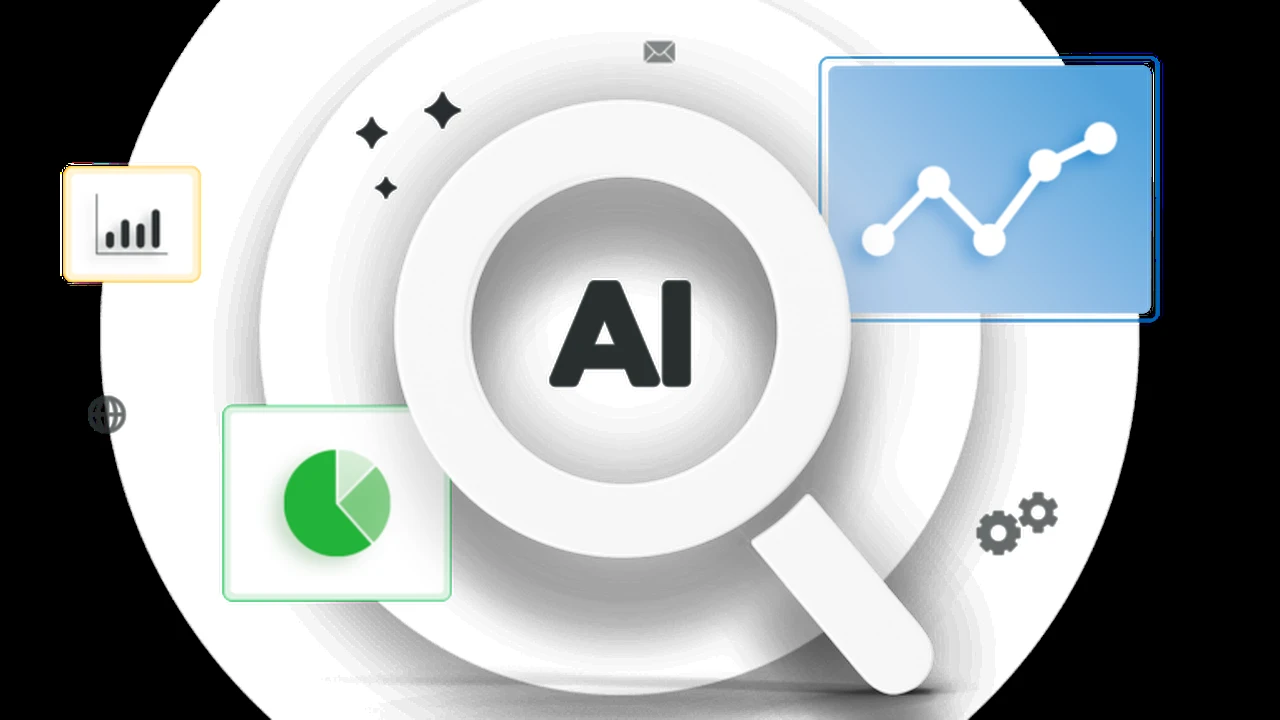
Offer insights to businesses through AI-driven market research and trend analysis.
Providing AI Powered Market Research for Competitive Advantage
Hey there, aspiring entrepreneur! Ever thought about how much businesses crave deep insights into their markets? It's like they're constantly searching for a crystal ball to predict what customers want, what competitors are doing, and where the next big trend is coming from. Well, guess what? You can be that crystal ball, or at least, you can wield the power of AI to provide it. Offering AI-powered market research services isn't just a cool idea; it's a massive opportunity to carve out a profitable niche for yourself. We're talking about helping businesses, big and small, gain a serious competitive edge by understanding their landscape better than ever before. Let's dive into how you can set up and run this kind of side hustle, what tools you'll need, and how to make it a success.
Why AI Powered Market Research is a Game Changer for Businesses
Traditional market research can be slow, expensive, and often relies on limited data sets. Think about it: surveys, focus groups, manual data analysis – it all takes time and resources. AI, on the other hand, can process vast amounts of data in a fraction of the time, identify patterns that humans might miss, and provide real-time insights. This means businesses can make faster, more informed decisions, adapt to market changes quickly, and ultimately, stay ahead of the curve. From understanding consumer sentiment on social media to predicting sales trends, AI brings a level of precision and speed that's simply unmatched. It's not just about collecting data; it's about extracting actionable intelligence.
Understanding Your Target Market for AI Market Research Services
Who needs AI-powered market research? Pretty much any business looking to grow, innovate, or simply survive in today's fast-paced environment. Small to medium-sized businesses (SMBs) are a fantastic starting point because they often lack the in-house resources for sophisticated market research. They're hungry for insights but might be intimidated by the complexity or cost. E-commerce stores, startups launching new products, marketing agencies, and even established companies looking to optimize their strategies are all potential clients. Focus on businesses that are data-driven or aspire to be. Your pitch should highlight how your services can save them time, reduce risk, and uncover opportunities they wouldn't find otherwise.
Key Services to Offer in AI Driven Market Research
When you're offering AI-powered market research, you're not just running a tool; you're providing a service that interprets data and delivers actionable recommendations. Here are some core services you can offer:
Consumer Sentiment Analysis and Social Listening with AI
This involves using AI to monitor social media, review sites, forums, and news articles to understand what people are saying about a brand, product, or industry. It's about gauging public opinion, identifying pain points, and spotting emerging trends. Tools can analyze text for tone (positive, negative, neutral), identify key themes, and even track sentiment over time. This is invaluable for reputation management, product development, and marketing campaign optimization.
Competitor Analysis and Benchmarking with AI Tools
Help businesses understand their competitive landscape. AI can analyze competitor websites, social media activity, pricing strategies, product reviews, and even advertising campaigns. You can identify their strengths and weaknesses, spot gaps in the market, and benchmark your client's performance against their rivals. This service provides a clear roadmap for competitive differentiation.
Market Trend Identification and Forecasting using AI
AI excels at spotting patterns in vast datasets. You can use it to identify emerging market trends, predict future consumer behavior, and forecast demand for products or services. This is crucial for strategic planning, inventory management, and identifying new business opportunities. Think about using AI to analyze search trends, news articles, and industry reports to paint a picture of what's coming next.
Product Development and Innovation Insights with AI
Help clients develop better products by understanding customer needs and preferences. AI can analyze product reviews, customer feedback, and even competitor product features to identify desired functionalities, common complaints, and areas for innovation. This can significantly reduce the risk associated with new product launches.
Target Audience Segmentation and Profiling with AI
Go beyond basic demographics. AI can analyze customer data to create highly detailed audience segments based on behavior, preferences, and psychographics. This allows businesses to tailor their marketing messages and product offerings to specific groups, leading to higher conversion rates and customer satisfaction.
Essential AI Tools for Your Market Research Side Hustle
You don't need to be a data scientist to offer these services, but you do need to know your way around some powerful AI tools. Here are a few categories and specific product recommendations, along with their typical use cases and pricing structures. Keep in mind that pricing can vary based on features, data volume, and subscription tiers.
AI Powered Social Listening and Sentiment Analysis Platforms
Brandwatch
Use Case: Comprehensive social media monitoring, consumer intelligence, trend analysis, crisis management. Brandwatch is a powerhouse for understanding public perception and market trends across a vast array of online sources. It's great for deep dives into brand health, campaign performance, and competitive intelligence.
Comparison: Offers very granular data and advanced analytics capabilities, often preferred by larger enterprises or agencies due to its robust feature set. It can track sentiment, identify influencers, and segment conversations by topic or demographic.
Pricing: Enterprise-level pricing, typically starting from several hundred to thousands of dollars per month, depending on data volume and features. They usually offer custom quotes.
Talkwalker
Use Case: Real-time social listening, brand monitoring, crisis detection, influencer identification, and consumer insights. Talkwalker is known for its extensive data coverage and real-time alerts, making it excellent for staying on top of fast-moving conversations.
Comparison: Similar to Brandwatch in its comprehensive nature but often praised for its user-friendly interface and strong focus on real-time data. It's a strong contender for agencies and brands needing immediate insights.
Pricing: Starts from around $9,600 per year for their basic 'Essentials' plan, scaling up significantly for more advanced features and data volume.
Mention
Use Case: Simpler brand monitoring, social listening, and competitor tracking for SMBs. Mention is more accessible for smaller operations looking to keep an eye on their online presence without the complexity of enterprise solutions.
Comparison: More affordable and easier to use than Brandwatch or Talkwalker, making it a good entry point for freelancers or small agencies. It provides essential monitoring and reporting features.
Pricing: Free plan available for basic monitoring. Paid plans start from around $49/month for 'Solo' and go up to $450+/month for 'Company' plans, offering more alerts, users, and data.
AI Driven Market Trend and Data Analysis Tools
Google Trends
Use Case: Identifying search interest trends over time, comparing keyword popularity, and discovering related queries. While not strictly an AI tool in the advanced sense, its data aggregation and visualization are incredibly useful for spotting macro trends.
Comparison: Free and easy to use, but limited to search data. It's a great starting point for understanding public interest in specific topics or products.
Pricing: Free.
Statista
Use Case: Accessing a vast database of statistics, market data, industry reports, and consumer insights. Statista aggregates data from thousands of sources, making it a go-to for quick access to verified market information.
Comparison: Not an AI analysis tool itself, but an invaluable data source that can feed into your AI analysis. It provides context and verified numbers that AI tools might not generate directly.
Pricing: Free access to some basic statistics. Premium accounts start from around $588/year for 'Single Account' access, offering full access to reports and data.
Tableau (with AI integrations)
Use Case: Data visualization, business intelligence, and increasingly, AI-powered insights. While primarily a BI tool, Tableau integrates with AI/ML models (e.g., Python, R) to provide predictive analytics and deeper insights from your data.
Comparison: Excellent for presenting your findings in a visually compelling way. Its AI capabilities are more about integrating external models or using its built-in 'Ask Data' feature for natural language queries, rather than being a standalone AI research platform.
Pricing: Tableau Creator starts at $70/user/month (billed annually). Other roles like Viewer and Explorer have different pricing tiers.
AI Powered Survey and Feedback Analysis Tools
Qualtrics (with AI features)
Use Case: Designing and distributing surveys, collecting feedback, and using AI to analyze open-ended text responses for sentiment and themes. Qualtrics is an experience management platform that leverages AI for deeper insights from customer feedback.
Comparison: A robust enterprise-level solution for comprehensive feedback management. Its AI capabilities are strong for text analysis and identifying key drivers of customer satisfaction or dissatisfaction.
Pricing: Custom pricing, typically in the enterprise range, based on usage and features. They offer various solutions for different business needs.
SurveyMonkey (with AI features)
Use Case: Creating surveys, collecting responses, and using AI to analyze text responses and provide automated insights. SurveyMonkey is more accessible for smaller businesses and individuals.
Comparison: More user-friendly and affordable than Qualtrics for basic to intermediate survey needs. Its AI features help automate the analysis of qualitative data, making it easier to extract insights from open-ended questions.
Pricing: Free basic plan. Paid plans start from around $39/month for 'Advantage Annual' (billed annually) for individuals, with team plans costing more.
AI Powered SEO and Keyword Research Tools (for market demand)
Semrush
Use Case: Comprehensive SEO, content marketing, competitor analysis, and keyword research. Semrush uses AI to analyze search data, identify trending topics, and understand search intent, which is crucial for gauging market demand.
Comparison: An all-in-one marketing toolkit. Its AI-driven features help you understand what people are searching for, how competitive certain keywords are, and what content is performing well in a given niche. This directly translates to market demand insights.
Pricing: Pro plan starts at $129.95/month. Guru plan at $249.95/month. Business plan at $499.95/month (with annual billing discounts available).
Ahrefs
Use Case: Similar to Semrush, Ahrefs is a powerful SEO and content marketing tool that provides extensive data on keywords, backlinks, and competitor performance. Its data helps in understanding market size and content gaps.
Comparison: Often considered a direct competitor to Semrush, with a strong focus on backlink analysis and keyword difficulty. Its AI-like capabilities help in identifying content opportunities and understanding what topics resonate with audiences.
Pricing: Lite plan starts at $99/month. Standard plan at $199/month. Advanced plan at $399/month. Enterprise plan at $999+/month (with annual billing discounts).
General Purpose AI Tools for Data Synthesis and Reporting
ChatGPT / GPT-4 (OpenAI)
Use Case: Summarizing research findings, drafting reports, generating ideas for market segments, brainstorming survey questions, and even helping to structure your analysis. While not a data collection tool, it's invaluable for synthesizing information and generating narratives.
Comparison: A powerful language model that can assist in almost every stage of the research process, from initial brainstorming to final report generation. It's a versatile assistant for qualitative analysis and content creation.
Pricing: Free for basic ChatGPT. ChatGPT Plus (GPT-4 access) is $20/month. API access is usage-based.
Google Bard / Gemini (Google AI)
Use Case: Similar to ChatGPT, useful for summarizing, brainstorming, and generating text. Gemini's integration with Google's ecosystem can be particularly useful for pulling in real-time information or analyzing data from Google Workspace.
Comparison: Google's answer to OpenAI's models, offering similar capabilities for text generation and summarization. Its strength lies in its potential integration with Google's vast data and services.
Pricing: Free for basic Bard. Gemini Advanced (powered by Ultra 1.0) is part of the Google One AI Premium plan for $19.99/month.
Setting Up Your AI Market Research Workflow
Once you have your tools, you need a process. Here's a simplified workflow:
Client Onboarding and Needs Assessment for Market Research
Start by understanding your client's specific goals. What problem are they trying to solve? What decisions do they need to make? This will dictate the type of research you conduct. A detailed brief is essential.
Data Collection and Aggregation with AI Tools
Use your chosen AI tools to collect relevant data. This might involve setting up social listening queries, pulling competitor data, or analyzing survey responses. Ensure you're collecting data from diverse and reliable sources.
AI Powered Data Analysis and Pattern Recognition
This is where the magic happens. Let the AI tools process the data. Look for trends, anomalies, sentiment shifts, and key themes. Don't just rely on the raw output; use your human intelligence to guide the AI and interpret its findings.
Interpretation and Insight Generation from AI Data
The AI provides data, but you provide the insights. What does the data mean for your client? What are the actionable takeaways? This is where you translate complex data into clear, concise recommendations.
Reporting and Presentation of AI Market Research Findings
Present your findings in a clear, visually appealing report. Use charts, graphs, and executive summaries. Highlight the key insights and provide specific, actionable recommendations. Tools like Tableau or even Google Slides can help here. Make sure your report directly addresses the client's initial goals.
Pricing Your AI Market Research Services
Pricing can be tricky, but here are some models to consider:
Project Based Pricing for Market Research Reports
Charge a flat fee per project. This is good for clearly defined scopes, like a competitor analysis report or a one-off sentiment analysis. Estimate your time, tool costs, and desired profit margin.
Retainer Based Pricing for Ongoing Market Insights
Offer ongoing services for a monthly fee. This is great for clients who need continuous monitoring of market trends, brand sentiment, or competitor activity. It provides stable income for you and continuous value for the client.
Value Based Pricing for Strategic Market Research
Price your services based on the value you provide to the client. If your insights help them save millions or generate significant revenue, you can command a higher price. This requires a strong understanding of your client's business and the potential impact of your work.
Remember to factor in the cost of your AI tools, your time, and your expertise. Don't underprice yourself! AI-powered insights are valuable.
Marketing Your AI Powered Market Research Services
How do you get clients? Here are some ideas:
Building a Strong Online Presence for Market Research
Create a professional website showcasing your services, case studies (even hypothetical ones to start), and testimonials. Optimize it for SEO with keywords like 'AI market research,' 'consumer insights,' 'competitor analysis,' etc.
Content Marketing for AI Insights and Trends
Write blog posts, create infographics, or record short videos about the power of AI in market research. Share insights, explain complex concepts, and demonstrate your expertise. This positions you as a thought leader.
Networking and Partnerships in the Business Community
Attend industry events, join online forums, and connect with marketing agencies, business consultants, and e-commerce store owners. They might be looking for someone with your skills or can refer clients to you.
Offering Free Consultations or Mini Audits for Potential Clients
A free 15-30 minute consultation can be a great way to understand a potential client's needs and demonstrate how you can help. You could even offer a small, free 'mini-audit' of their current market position using some basic AI tools to show them what's possible.
Challenges and Considerations in AI Market Research
It's not all smooth sailing. Be aware of these challenges:
Data Quality and Bias in AI Driven Insights
AI is only as good as the data it's fed. Be mindful of data quality, potential biases in the data sources, and how that might affect your insights. Always cross-reference findings where possible.
Interpreting AI Outputs and Avoiding Over-Reliance
AI tools provide data and patterns, but human interpretation is crucial. Don't just copy-paste AI outputs. Understand what the data means in context and add your strategic recommendations.
Staying Updated with Rapid AI Advancements
The AI landscape changes incredibly fast. Dedicate time to learning about new tools, features, and methodologies. This continuous learning is essential to stay competitive.
Client Education on AI Capabilities and Limitations
Some clients might have unrealistic expectations about AI. Educate them on what AI can and cannot do, and manage their expectations regarding the scope and depth of your research.
Your Path to Becoming an AI Powered Market Research Consultant
Providing AI-powered market research is a fantastic way to leverage cutting-edge technology for a profitable side hustle. It's about combining powerful AI tools with your analytical skills and business acumen to deliver invaluable insights to clients. By focusing on clear communication, actionable recommendations, and continuous learning, you can build a thriving business that helps other businesses succeed. So, go ahead, start exploring those tools, hone your analytical skills, and get ready to help businesses gain that competitive edge they're desperately looking for.
:max_bytes(150000):strip_icc()/277019-baked-pork-chops-with-cream-of-mushroom-soup-DDMFS-beauty-4x3-BG-7505-5762b731cf30447d9cbbbbbf387beafa.jpg)