The Future of Business with Generative AI
Explore how generative AI is poised to revolutionize various aspects of business operations and creativity.
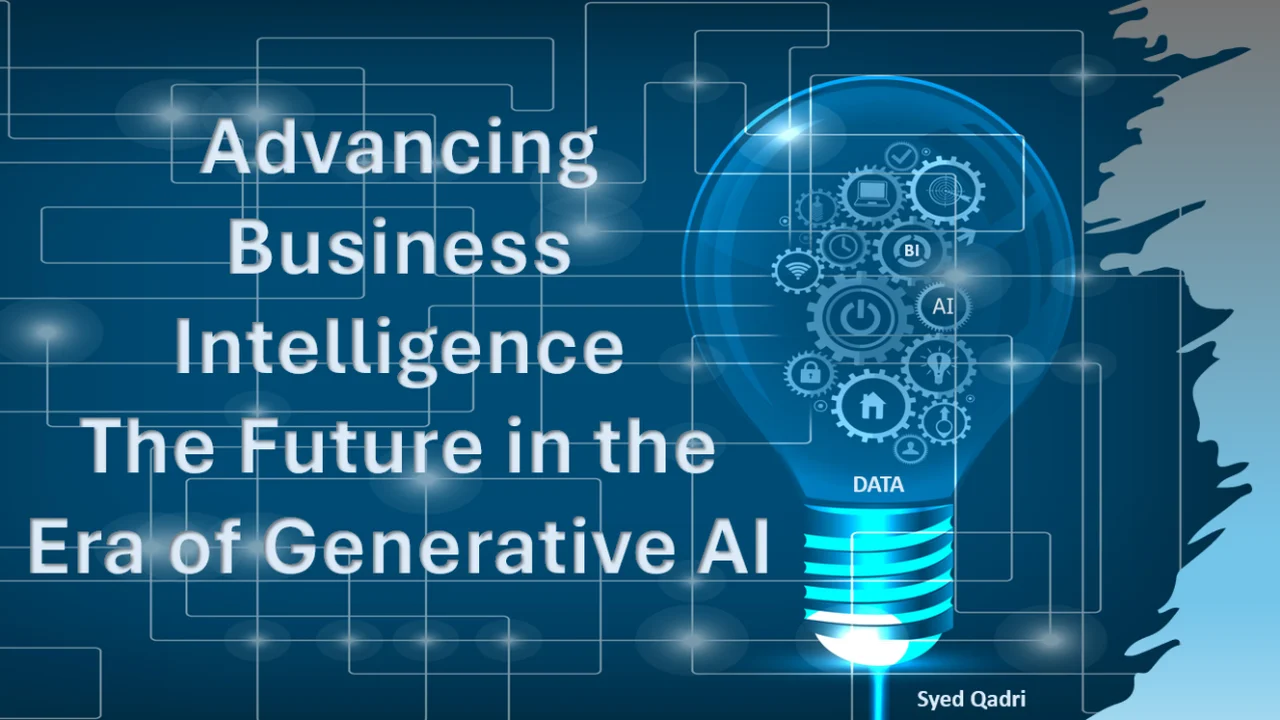
Explore how generative AI is poised to revolutionize various aspects of business operations and creativity.
The Future of Business with Generative AI
Understanding Generative AI What It Is and Why It Matters
Generative AI has rapidly moved from a niche technological concept to a mainstream buzzword, and for good reason. At its core, generative AI refers to artificial intelligence systems capable of producing new, original content, rather than simply analyzing or classifying existing data. This content can take many forms: text, images, audio, video, code, and even 3D models. Unlike traditional AI, which often relies on predefined rules or patterns, generative AI learns from vast datasets to understand the underlying structures and characteristics of the data, enabling it to create novel outputs that often mimic human creativity.
The 'why it matters' part is crucial for businesses. For decades, automation focused on repetitive, rule-based tasks. Generative AI, however, automates and augments creative and intellectual tasks. This shift has profound implications for productivity, innovation, and competitive advantage across virtually every industry. It means businesses can generate marketing copy in seconds, design product prototypes overnight, or even create personalized customer experiences at scale, all with unprecedented speed and efficiency.
Transforming Content Creation and Marketing with Generative AI Tools
One of the most immediate and impactful applications of generative AI in business is in content creation and marketing. The ability to generate high-quality text, images, and video on demand is a game-changer for marketing teams, content agencies, and individual creators.
AI Powered Text Generation for Marketing Copy and Beyond
Gone are the days of staring at a blank page, struggling for the perfect headline or product description. Generative AI text models can produce a wide array of written content, from blog posts and social media updates to email newsletters and ad copy. This not only speeds up the content pipeline but also allows for extensive A/B testing and personalization.
Recommended Tools for Text Generation:
- Jasper AI: This is a popular choice for marketing teams. Jasper excels at generating long-form content like blog posts, articles, and even books, as well as short-form copy for ads and social media. It offers various templates and integrates with SEO tools like Surfer SEO.
- Copy.ai: Known for its user-friendly interface and versatility, Copy.ai is great for generating marketing copy, sales emails, and digital ad content. It provides numerous tools for different use cases and supports multiple languages.
- Writesonic: Writesonic offers a comprehensive suite of AI writing tools, including article writers, ad copy generators, and even a chatbot builder. It's particularly strong for e-commerce product descriptions and landing page copy.
Use Cases and Comparisons:
Jasper AI is often preferred by content agencies and larger marketing departments due to its robust features for long-form content and team collaboration. Its pricing starts around $49/month for creator mode, scaling up for business plans. Copy.ai is more accessible for small businesses and freelancers, with a generous free tier and paid plans starting at $49/month. It's excellent for quick, diverse copy generation. Writesonic provides a good balance, with a free trial and paid plans starting at $19/month, making it a cost-effective option for various content needs, especially for those focused on e-commerce.
AI Driven Image and Video Creation for Visual Marketing
Visual content is king in digital marketing, and generative AI is revolutionizing its production. Businesses can now create unique images, illustrations, and even short videos without needing extensive design skills or expensive stock photo subscriptions.
Recommended Tools for Image and Video Generation:
- Midjourney: While primarily an image generator, Midjourney produces stunning, high-quality artistic images from text prompts. It's widely used by designers and marketers for unique visual assets.
- DALL-E 3 (via ChatGPT Plus/Enterprise): OpenAI's DALL-E 3 offers impressive image generation capabilities, often excelling at understanding complex prompts and generating coherent scenes. Its integration with ChatGPT makes it highly accessible for text-to-image workflows.
- RunwayML: This platform is a powerhouse for generative video. It offers features like text-to-video, image-to-video, and various AI magic tools for video editing, making it invaluable for creating dynamic visual content.
Use Cases and Comparisons:
Midjourney is ideal for businesses needing highly artistic and stylized images for branding, social media, or advertising. It operates via Discord, with plans starting at $10/month. DALL-E 3 is excellent for more literal interpretations of prompts and is easier to integrate into existing content workflows, especially if you're already using ChatGPT. Access is typically through ChatGPT Plus ($20/month) or enterprise plans. RunwayML is the go-to for video content, allowing businesses to create short promotional videos, social media clips, or even animated explainers. Pricing starts with a free tier, with paid plans from $15/month.
Optimizing Business Operations with Generative AI
Beyond content, generative AI is streamlining various internal business operations, leading to increased efficiency, cost savings, and improved decision-making.
Automating Customer Service and Support with AI Chatbots
Generative AI-powered chatbots are far more sophisticated than their rule-based predecessors. They can understand complex queries, provide nuanced responses, and even engage in natural language conversations, significantly enhancing customer experience and reducing the load on human support agents.
Recommended Tools for AI Chatbots:
- Intercom: While not purely generative AI, Intercom integrates advanced AI capabilities (including generative AI for response generation) to power its customer messaging platform, offering proactive support and personalized interactions.
- Drift: Drift focuses on conversational marketing and sales, using AI chatbots to qualify leads, book meetings, and answer common questions, providing a seamless experience for website visitors.
- Custom GPTs (via OpenAI API): For businesses with specific needs, building a custom chatbot using OpenAI's API (e.g., GPT-4) allows for highly tailored solutions integrated directly into existing systems.
Use Cases and Comparisons:
Intercom is a comprehensive solution for customer communication, ideal for businesses looking for an all-in-one platform for chat, email, and help desk, with AI augmenting human agents. Pricing varies widely based on features and usage. Drift is best for sales and marketing teams focused on lead generation and qualification through conversational AI. Its plans start from around $2,500/month for larger businesses. Building Custom GPTs offers maximum flexibility and control, suitable for businesses with development resources and unique requirements. API usage is pay-as-you-go, based on token consumption.
Enhancing Product Development and Design with Generative AI
Generative AI is accelerating the product development lifecycle by assisting with ideation, design, and even prototyping. It can generate multiple design variations, optimize existing designs, and simulate performance, leading to faster innovation cycles.
Recommended Tools for Product Design:
- Autodesk Dreamcatcher (Research Project): While not a commercial product yet, it showcases the potential of generative design, where AI explores thousands of design options based on specified parameters.
- Midjourney/DALL-E for Concept Art: These image generators can be used to quickly visualize product concepts, packaging ideas, or user interfaces, providing a rapid ideation tool for designers.
- NVIDIA Omniverse: This platform allows for 3D design collaboration and simulation, with AI playing a role in generating assets and optimizing virtual environments for product testing.
Use Cases and Comparisons:
For early-stage ideation and concept visualization, Midjourney and DALL-E are incredibly powerful for generating diverse visual ideas quickly. NVIDIA Omniverse is for more advanced 3D design, simulation, and digital twin creation, suitable for manufacturing, architecture, and engineering firms. Its pricing is typically enterprise-level, often requiring custom quotes.
Generative AI in Data Analysis and Business Intelligence
Generative AI is not just about creating; it's also about understanding and interpreting data in new ways, making complex data analysis more accessible and actionable for business leaders.
Simplifying Data Insights with Natural Language Processing
Generative AI, particularly large language models (LLMs), can translate complex data into understandable narratives, answer questions about data in natural language, and even generate reports or summaries, democratizing access to business intelligence.
Recommended Tools for Data Analysis:
- ChatGPT Enterprise: Beyond its general conversational abilities, ChatGPT Enterprise offers enhanced data analysis features, allowing users to upload datasets and ask questions in natural language to gain insights.
- Tableau (with AI integrations): While primarily a data visualization tool, Tableau is increasingly integrating AI capabilities, including natural language queries and generative AI for explaining data trends.
- Microsoft Power BI (with Copilot): Microsoft's Copilot for Power BI leverages generative AI to help users create reports, summarize data, and ask questions about their data using natural language.
Use Cases and Comparisons:
ChatGPT Enterprise is excellent for quick, ad-hoc data exploration and generating summaries or explanations from datasets, ideal for business users who aren't data scientists. Pricing is custom for enterprise. Tableau and Power BI are more robust business intelligence platforms, with AI augmenting their existing capabilities to make data more accessible and actionable. Tableau Creator licenses start around $75/month, and Power BI Pro is $10/user/month.
Navigating the Challenges and Ethical Considerations of Generative AI
While the opportunities are vast, businesses must also be mindful of the challenges and ethical implications associated with generative AI.
Ensuring Data Privacy and Security
Generative AI models are trained on massive datasets, raising concerns about data privacy, especially when dealing with sensitive customer or proprietary business information. Businesses need robust data governance policies and secure environments for AI deployment.
Addressing Bias and Fairness in AI Outputs
AI models can inherit biases present in their training data, leading to outputs that are unfair, discriminatory, or unrepresentative. Businesses must implement strategies to detect and mitigate bias to ensure equitable and responsible AI use.
Managing Copyright and Intellectual Property
The legal landscape around AI-generated content and intellectual property is still evolving. Businesses need to understand the implications for ownership, licensing, and potential infringement when using AI to create content or products.
Maintaining Human Oversight and Control
Despite AI's capabilities, human oversight remains critical. Generative AI should be seen as an augmentation tool, not a replacement for human creativity, judgment, and ethical decision-making. Businesses need to establish clear guidelines for human review and intervention.
The Road Ahead for Generative AI in Business
Generative AI is not a fleeting trend; it's a foundational technology that will reshape how businesses operate, innovate, and interact with their customers. As the technology matures, we can expect even more sophisticated applications, deeper integrations into existing workflows, and a broader adoption across industries.
Businesses that embrace generative AI strategically, focusing on both its immense potential and its inherent challenges, will be best positioned to thrive in this new era. It's about leveraging AI to augment human capabilities, unlock new levels of creativity, and drive unprecedented growth. The future of business is undeniably intertwined with the power of generative AI, and the time to explore its possibilities is now.
:max_bytes(150000):strip_icc()/277019-baked-pork-chops-with-cream-of-mushroom-soup-DDMFS-beauty-4x3-BG-7505-5762b731cf30447d9cbbbbbf387beafa.jpg)