Understanding Machine Learning Concepts for Beginners
Demystify the core concepts of machine learning and its applications in everyday AI tools.
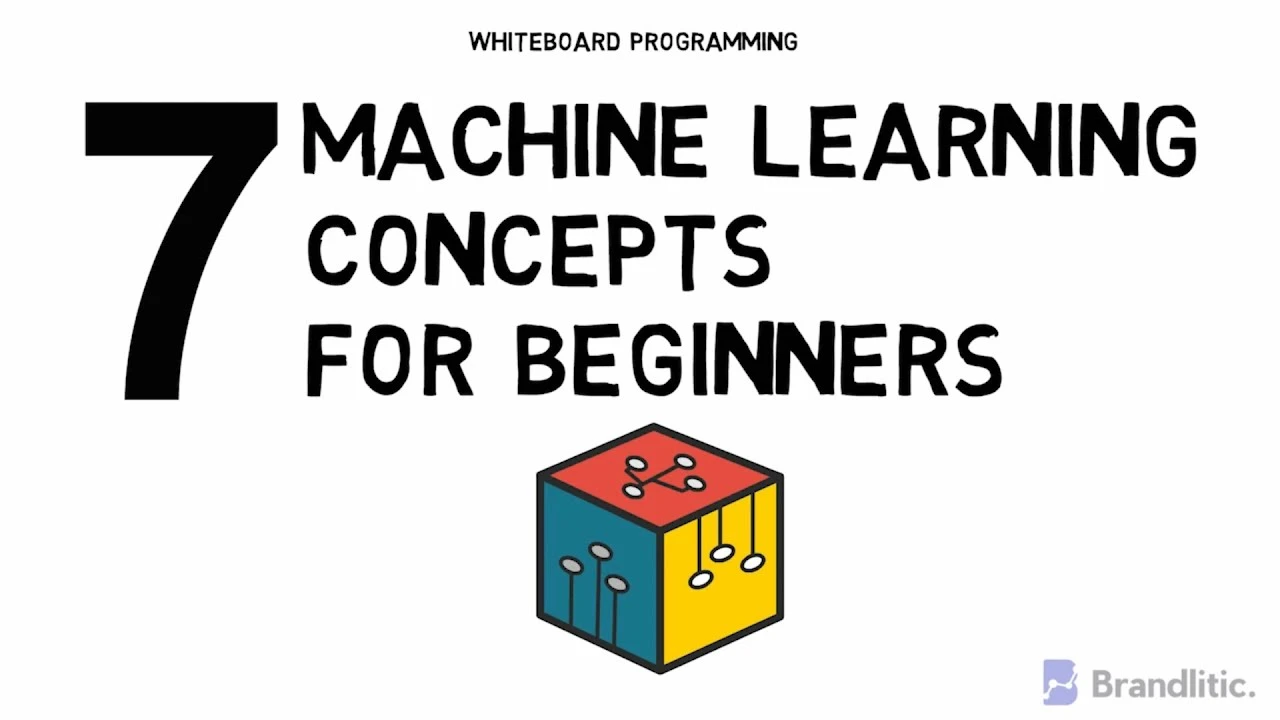
Demystify the core concepts of machine learning and its applications in everyday AI tools.
Understanding Machine Learning Concepts for Beginners
Hey there, aspiring AI enthusiast! Ever wondered how your Netflix recommends the next binge-worthy show, or how your spam filter magically catches those pesky emails? Chances are, machine learning is working its magic behind the scenes. It might sound like something out of a sci-fi movie, but machine learning (ML) is actually a super practical and fascinating field that's changing the world around us. If you're just starting out, the jargon can feel a bit overwhelming, but don't sweat it. We're going to break down the core concepts of machine learning in a way that's easy to grasp, showing you how it powers many of the AI tools you probably already use every day.
What is Machine Learning Anyway Understanding the Core Idea
At its heart, machine learning is about teaching computers to learn from data, without being explicitly programmed for every single task. Think of it like teaching a child. You don't give them a rigid set of rules for every situation; instead, you expose them to examples, and they learn to recognize patterns and make decisions based on those patterns. In ML, we feed vast amounts of data to algorithms, and these algorithms then 'learn' to identify relationships, make predictions, or classify information. The more data they get, the better they become at their job. It's all about finding patterns and making intelligent guesses.
Supervised Learning Your Data Driven Teacher
Let's dive into the most common type of machine learning: supervised learning. Imagine you're teaching a computer to tell the difference between pictures of cats and dogs. In supervised learning, you'd show the computer thousands of images, and for each image, you'd tell it, 'This is a cat,' or 'This is a dog.' This 'labeling' of data is crucial. The algorithm then learns to associate certain features (like whiskers, pointy ears, or a wagging tail) with either 'cat' or 'dog.' Once it's learned, you can give it a new, unlabeled picture, and it will predict whether it's a cat or a dog based on what it's seen before.
Key Supervised Learning Algorithms Classification and Regression
Within supervised learning, you'll often hear about two main types of problems: classification and regression.
- Classification: This is when you want to predict a category or a class. Our cat-or-dog example is a classification problem. Other examples include predicting whether an email is spam or not spam, or if a customer will churn (leave) or stay.
- Regression: This is when you want to predict a continuous value. For instance, predicting house prices based on features like size, location, and number of bedrooms is a regression problem. Predicting stock prices or temperature are other common regression tasks.
Popular Supervised Learning Tools and Libraries for Beginners
If you're looking to get your hands dirty with supervised learning, here are some fantastic tools and libraries that are beginner-friendly:
Scikit-learn The Python Powerhouse for ML
Description: Scikit-learn is a free software machine learning library for the Python programming language. It features various classification, regression, and clustering algorithms including support vector machines, random forests, gradient boosting, k-means, and DBSCAN, and is designed to interoperate with the Python numerical and scientific libraries NumPy and SciPy. It's incredibly popular because it's easy to use, well-documented, and covers a wide range of ML algorithms.
Use Cases: Ideal for general-purpose machine learning tasks like predicting customer churn, classifying images, or forecasting sales. It's a go-to for data scientists and ML engineers.
Comparison: While not a deep learning library, Scikit-learn excels in traditional ML. It's often used for baseline models before moving to more complex deep learning frameworks if needed.
Pricing: Free and open-source.
Google Colaboratory Your Cloud Based ML Playground
Description: Google Colab is a free cloud-based Jupyter notebook environment that allows you to write and execute Python code directly in your browser. It provides free access to powerful GPUs and TPUs, making it perfect for running machine learning experiments without needing expensive hardware.
Use Cases: Great for learning, experimenting with ML models, sharing code, and even running small to medium-sized projects. It integrates seamlessly with Google Drive.
Comparison: Unlike a local Python environment, Colab runs in the cloud, meaning you don't need to install anything. It's more accessible for beginners than setting up a full local development environment.
Pricing: Free for basic usage. Colab Pro and Pro+ offer faster GPUs and longer runtimes for a monthly subscription (e.g., Colab Pro starts around $9.99/month).
Weka The GUI Friendly ML Workbench
Description: Weka (Waikato Environment for Knowledge Analysis) is a collection of machine learning algorithms for data mining tasks. The algorithms are presented as a graphical user interface (GUI), making it very accessible for those who prefer not to write code. It's written in Java.
Use Cases: Excellent for beginners to explore different algorithms, visualize data, and understand ML concepts without coding. Useful for quick data analysis and model building.
Comparison: Weka's strength is its GUI, which sets it apart from code-centric libraries like Scikit-learn. It's less flexible for complex custom models but great for initial exploration.
Pricing: Free and open-source.
Unsupervised Learning Finding Hidden Structures in Data
Now, let's talk about unsupervised learning. Imagine you have a huge pile of LEGO bricks, and you want to sort them, but nobody tells you what each brick is for. You just have to figure out patterns on your own – maybe by color, size, or shape. That's unsupervised learning! In this type of ML, the data doesn't come with any labels. The algorithm's job is to find hidden patterns, structures, or relationships within the data all by itself.
Key Unsupervised Learning Algorithms Clustering and Dimensionality Reduction
Two common tasks in unsupervised learning are clustering and dimensionality reduction.
- Clustering: This is about grouping similar data points together. For example, a marketing team might use clustering to segment their customer base into different groups based on their purchasing behavior, without knowing those groups beforehand.
- Dimensionality Reduction: Sometimes, datasets have too many features or variables, which can make them hard to analyze and can even confuse ML algorithms. Dimensionality reduction techniques help reduce the number of features while retaining as much important information as possible. Think of it like summarizing a long document into a shorter one without losing the main points.
Popular Unsupervised Learning Tools and Libraries for Beginners
For exploring unsupervised learning, the same tools often apply, but here are some specific mentions:
Scikit-learn Revisited Unsupervised Capabilities
Description: Yes, Scikit-learn isn't just for supervised learning! It also offers a robust set of unsupervised learning algorithms, including various clustering methods (like K-Means, DBSCAN) and dimensionality reduction techniques (like PCA - Principal Component Analysis).
Use Cases: Customer segmentation, anomaly detection, data compression, feature engineering.
Comparison: Its unified API makes it easy to switch between supervised and unsupervised tasks within the same Python environment.
Pricing: Free and open-source.
Orange Data Mining A Visual Approach to ML
Description: Orange is an open-source data visualization, machine learning, and data mining toolkit. It features a visual programming front-end for explorative data analysis and interactive data visualization. You can drag and drop widgets to build workflows, making it very intuitive for beginners.
Use Cases: Ideal for visual learners to explore data, perform clustering, association rule mining, and other unsupervised tasks without writing code. Great for teaching and quick prototyping.
Comparison: Similar to Weka in its GUI approach but often considered more modern and visually appealing. It's excellent for understanding the flow of data through different ML steps.
Pricing: Free and open-source.
Reinforcement Learning Learning by Doing and Getting Rewards
Reinforcement learning (RL) is a bit different. Imagine teaching a robot to walk. You don't tell it exactly how to move each leg. Instead, you let it try different movements, and when it takes a step in the right direction, you give it a 'reward.' If it falls, it gets a 'penalty.' Over time, the robot learns which actions lead to rewards and which lead to penalties, eventually figuring out how to walk on its own. RL is all about an 'agent' learning to make decisions in an environment to maximize a 'reward signal.'
Key Reinforcement Learning Concepts Agent Environment Reward
- Agent: The learner or decision-maker (e.g., the robot).
- Environment: The world the agent interacts with (e.g., the floor the robot walks on).
- Reward: A signal that tells the agent how well it's doing (e.g., a positive score for walking, a negative score for falling).
Popular Reinforcement Learning Tools and Frameworks for Beginners
RL is a more advanced topic, but there are tools to help you get started:
OpenAI Gym Your RL Training Ground
Description: OpenAI Gym is a toolkit for developing and comparing reinforcement learning algorithms. It provides a collection of environments (like classic control problems, Atari games) that you can use to train your RL agents. It's not an RL algorithm itself, but a standardized interface to test them.
Use Cases: Perfect for learning and experimenting with RL algorithms. You can train agents to play games, balance poles, or navigate mazes.
Comparison: Gym provides the 'playground' for RL. You'd typically use it in conjunction with a deep learning framework like TensorFlow or PyTorch to implement the actual RL algorithms.
Pricing: Free and open-source.
Stable Baselines3 A User Friendly RL Library
Description: Stable Baselines3 is a set of reliable implementations of reinforcement learning algorithms in PyTorch. It's designed to be easy to use and provides a good starting point for applying state-of-the-art RL algorithms.
Use Cases: Implementing and testing various RL algorithms on Gym environments or custom environments. Good for researchers and practitioners.
Comparison: Builds on top of PyTorch and Gym, offering pre-implemented algorithms that are often hard to code from scratch. More accessible than implementing everything yourself.
Pricing: Free and open-source.
Deep Learning The Neural Network Revolution
You can't talk about machine learning today without mentioning deep learning. Deep learning is actually a subset of machine learning, inspired by the structure and function of the human brain – specifically, neural networks. These 'deep' neural networks have many layers, allowing them to learn incredibly complex patterns from vast amounts of data. Deep learning is what powers things like facial recognition, self-driving cars, and advanced natural language processing (like the AI models that generate text).
Key Deep Learning Concepts Neural Networks and Layers
The core of deep learning is the neural network. Imagine a network of interconnected 'neurons' (nodes) organized in layers. Data enters the input layer, passes through one or more 'hidden' layers where complex computations happen, and then exits through the output layer, providing a prediction or classification. The 'deep' part refers to having many hidden layers.
Popular Deep Learning Frameworks for Beginners
If you're ready to dive into deep learning, these are the giants:
TensorFlow Google's Open Source ML Platform
Description: Developed by Google, TensorFlow is an end-to-end open-source platform for machine learning. It has a comprehensive, flexible ecosystem of tools, libraries, and community resources that lets researchers push the state-of-the-art in ML and developers easily build and deploy ML-powered applications.
Use Cases: Everything from image recognition and natural language processing to recommendation systems and medical diagnosis. Widely used in both research and production environments.
Comparison: One of the two dominant deep learning frameworks (the other being PyTorch). TensorFlow has a strong production deployment story with TensorFlow Serving and TensorFlow Lite.
Pricing: Free and open-source.
PyTorch Facebook's Flexible Deep Learning Framework
Description: PyTorch is an open-source machine learning library based on the Torch library, used for applications such as computer vision and natural language processing. It's known for its flexibility, Pythonic interface, and dynamic computation graph, which makes debugging easier.
Use Cases: Very popular in academic research and for rapid prototyping. Excellent for building custom neural networks and experimenting with new architectures.
Comparison: Often preferred by researchers for its flexibility and ease of debugging. While TensorFlow has a strong production focus, PyTorch is rapidly catching up in that area too.
Pricing: Free and open-source.
Keras The User Friendly Deep Learning API
Description: Keras is a high-level neural networks API, written in Python and capable of running on top of TensorFlow, Microsoft Cognitive Toolkit (CNTK), or Theano. It was developed with a focus on enabling fast experimentation. It's incredibly user-friendly and abstracts away much of the complexity of raw TensorFlow or PyTorch.
Use Cases: Ideal for beginners to quickly build and train deep learning models. Great for rapid prototyping and learning the basics of neural networks without getting bogged down in low-level details.
Comparison: Keras acts as an abstraction layer, making deep learning much more accessible. If you're just starting with deep learning, Keras is often the recommended entry point before diving into the underlying frameworks.
Pricing: Free and open-source (as it runs on top of other free frameworks).
Applications of Machine Learning in Everyday AI Tools Real World Examples
So, where do you see all this machine learning in action? Pretty much everywhere! Let's look at some common AI tools and how ML powers them:
Spam Filters and Email Categorization Your Inbox Guardian
Every time an email lands in your spam folder, a machine learning model has likely classified it as such. These models are trained on vast datasets of legitimate and spam emails, learning to identify patterns like suspicious links, unusual sender addresses, or certain keywords. This is a classic supervised classification problem.
Recommendation Systems Your Personal Shopper and Entertainer
Netflix, Amazon, Spotify – they all use sophisticated recommendation systems powered by ML. These systems analyze your past behavior (what you've watched, bought, or listened to) and compare it with the behavior of millions of other users. They then use this information to predict what you might like next. This often involves a mix of supervised and unsupervised techniques, including collaborative filtering and clustering.
Voice Assistants Siri Alexa Google Assistant Your Conversational AI
When you ask Siri to set a timer or Alexa to play music, you're interacting with complex ML models. Natural Language Processing (NLP), a subfield of AI, uses deep learning to understand your spoken words, convert them into text, interpret their meaning, and then generate a relevant response. This involves speech recognition, natural language understanding, and natural language generation.
Image Recognition and Facial Detection Seeing with AI
From tagging friends in photos on social media to unlocking your phone with your face, image recognition is a powerful application of deep learning, specifically Convolutional Neural Networks (CNNs). These models are trained on millions of images to identify objects, faces, and even emotions within pictures and videos.
Fraud Detection Protecting Your Finances
Banks and financial institutions use ML to detect fraudulent transactions in real-time. Models are trained on historical transaction data, learning to spot unusual patterns or anomalies that might indicate fraud. This is often an unsupervised learning problem (anomaly detection) or a supervised classification problem if labeled fraud data is available.
Self Driving Cars The Future of Transportation
Autonomous vehicles are perhaps one of the most ambitious applications of AI and ML. They rely on a combination of computer vision (to 'see' the road, other cars, pedestrians), reinforcement learning (to make driving decisions), and predictive analytics (to anticipate traffic and road conditions). It's a complex symphony of various ML techniques working together.
Getting Started with Machine Learning for Beginners Your First Steps
Feeling inspired? Great! Here's how you can start your own machine learning journey:
Learn Python The Language of ML
Python is the undisputed king of machine learning. Its simplicity, vast libraries (like NumPy, Pandas, Scikit-learn, TensorFlow, PyTorch), and large community make it the ideal language. There are tons of free resources online to learn Python basics.
Understand the Math Basics Don't Be Scared
While you don't need to be a math genius, a basic understanding of linear algebra, calculus, and statistics will go a long way. Concepts like vectors, matrices, derivatives, and probability are fundamental to understanding how ML algorithms work. Don't worry, you can learn these as you go.
Start with a Simple Project Hands On Learning
The best way to learn is by doing. Pick a simple project, like predicting house prices or classifying iris flowers (a classic ML dataset). Use a beginner-friendly library like Scikit-learn or Keras in Google Colab. There are many tutorials available online that walk you through these first projects step-by-step.
Explore Datasets Kaggle and UCI Machine Learning Repository
Machine learning thrives on data. Websites like Kaggle and the UCI Machine Learning Repository offer thousands of datasets for you to practice with. Kaggle also hosts competitions, which are a fantastic way to learn and test your skills.
Join the Community Learn from Others
The ML community is vibrant and supportive. Join online forums, attend webinars, or follow prominent ML practitioners on social media. Learning from others' experiences and asking questions is invaluable.
Machine learning is a powerful and rapidly evolving field. By understanding these core concepts and getting hands-on with the tools, you're well on your way to demystifying AI and perhaps even building your own intelligent applications. Happy learning!
:max_bytes(150000):strip_icc()/277019-baked-pork-chops-with-cream-of-mushroom-soup-DDMFS-beauty-4x3-BG-7505-5762b731cf30447d9cbbbbbf387beafa.jpg)