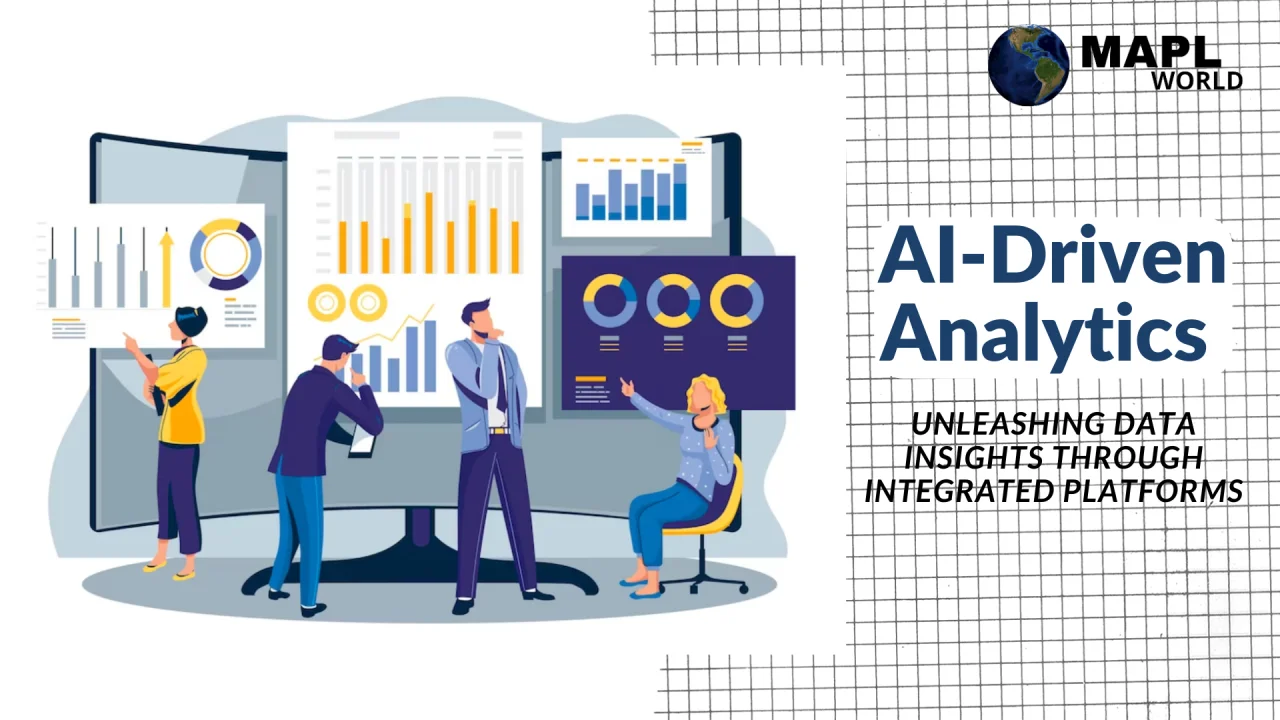
Help businesses make data-driven decisions by providing AI-powered data analysis and reporting.
Help businesses make data-driven decisions by providing AI-powered data analysis and reporting.
Offering AI Driven Data Analysis Services
The Rise of Data Driven Decision Making and AI's Role
In today's fast-paced business world, data isn't just information; it's the new gold. Companies, big and small, are sitting on mountains of data, from customer interactions and sales figures to website traffic and operational metrics. But raw data, by itself, is just noise. The real value comes from transforming that noise into actionable insights. This is where data analysis steps in, and more recently, where AI has become an absolute game-changer. AI-driven data analysis isn't just about crunching numbers faster; it's about uncovering hidden patterns, predicting future trends with remarkable accuracy, and automating complex analytical tasks that would take humans weeks or even months to complete. If you're looking for a lucrative side hustle or even a full-blown business, offering AI-powered data analysis services is a fantastic opportunity. You're essentially becoming the translator between complex data and clear, strategic business decisions.
Think about it: many businesses, especially small to medium-sized enterprises (SMEs), lack the in-house expertise or the expensive software to properly analyze their data. They know they *should* be using data, but they don't know *how*. That's your entry point. You can provide them with the clarity they need to optimize their marketing spend, improve customer retention, identify new revenue streams, or streamline their operations. It's about empowering them to make smarter choices, and that's incredibly valuable.
Key AI Tools for Data Analysis Your Arsenal
To offer top-notch AI-driven data analysis services, you'll need a robust toolkit. The good news is that many powerful AI tools are now accessible, some even with free tiers or affordable subscriptions. Here are some of the leading platforms you should consider integrating into your service offerings, along with their typical use cases and pricing models.
Google Cloud AI Platform and BigQuery for Scalable Data Solutions
Google Cloud offers a comprehensive suite of AI and machine learning services that are incredibly powerful, especially for handling large datasets. BigQuery, for instance, is a fully managed, serverless data warehouse that enables super-fast SQL queries against petabytes of data. It's perfect for businesses with massive amounts of transactional data or web analytics.
* Use Cases: Large-scale data warehousing, real-time analytics, complex SQL queries, integrating with other Google Cloud AI services like AutoML for custom model training.
* Features: Serverless architecture, petabyte-scale data processing, built-in machine learning capabilities (BigQuery ML), integration with Google Data Studio for visualization.
* Pricing: Usage-based. You pay for storage, queries, and data ingestion. There's a free tier for BigQuery that includes 10 GB of storage and 1 TB of query processing per month, which is great for getting started or for smaller projects. Enterprise-level usage can range from hundreds to thousands of dollars per month depending on data volume and query complexity.
Microsoft Azure Machine Learning for Enterprise Grade AI
Azure Machine Learning is Microsoft's cloud-based platform for building, training, and deploying machine learning models. It's highly integrated with other Azure services and offers a lot of flexibility for both code-first and low-code/no-code approaches.
* Use Cases: Predictive analytics, customer churn prediction, fraud detection, recommendation engines, custom AI model development and deployment.
* Features: Drag-and-drop designer, automated machine learning (AutoML), MLOps capabilities for model management, integration with Azure Synapse Analytics for data warehousing.
* Pricing: Pay-as-you-go. Costs are based on compute resources used for training and deployment, data storage, and other services. A free account often includes credits to explore services, with typical costs for active projects ranging from tens to hundreds of dollars per month, scaling up significantly for large-scale enterprise deployments.
Amazon Web Services AWS SageMaker for Machine Learning Development
AWS SageMaker is a fully managed service that provides every developer and data scientist with the ability to build, train, and deploy machine learning models quickly. It's known for its breadth of features and integration with the vast AWS ecosystem.
* Use Cases: Developing and deploying custom machine learning models, natural language processing (NLP) tasks, computer vision, time-series forecasting.
* Features: Pre-built algorithms, managed Jupyter notebooks, MLOps tools, distributed training, integration with AWS data services like S3 and Redshift.
* Pricing: Pay-as-you-go. Costs are based on instance types used for training and hosting models, data storage, and data transfer. AWS offers a free tier for SageMaker for the first two months, after which costs can vary widely from tens to thousands of dollars per month depending on the scale of operations.
Tableau and Power BI for Data Visualization and Business Intelligence
While not strictly AI tools in the sense of building models, Tableau and Power BI are indispensable for presenting AI-driven insights in an understandable and actionable way. They connect to various data sources, including those processed by AI tools, and allow for the creation of interactive dashboards and reports.
* Use Cases: Creating interactive dashboards, business intelligence reporting, data exploration, visualizing AI model outputs.
* Features: Drag-and-drop interface, wide range of chart types, data blending, real-time dashboards, mobile access.
* Pricing:
* Tableau: Subscription-based. Tableau Creator (for individual analysts) is typically around $70 per user per month. Tableau Viewer (for consuming dashboards) is around $15 per user per month. There's a free public version (Tableau Public) for sharing visualizations online.
* Power BI: Microsoft Power BI Desktop is free. Power BI Pro (for sharing and collaboration) is around $10 per user per month. Power BI Premium (for larger organizations) starts at around $5,000 per month for dedicated capacity.
DataRobot and H2Oai for Automated Machine Learning AutoML
These platforms specialize in Automated Machine Learning (AutoML), making AI accessible even if you're not a seasoned data scientist. They automate many steps of the machine learning workflow, from data preparation to model selection and deployment.
* Use Cases: Rapid prototyping of AI models, quick insights from data, automating repetitive data science tasks, for users with less coding experience.
* Features: Automated feature engineering, algorithm selection, hyperparameter tuning, model deployment, interpretability tools.
* Pricing: Enterprise-level solutions, typically requiring custom quotes. DataRobot and H2O.ai are generally more expensive, aimed at larger businesses or consultancies, with costs potentially ranging from thousands to tens of thousands of dollars annually, depending on usage and features.
Python Libraries Pandas Scikit-learn TensorFlow PyTorch for Custom Solutions
For those with coding skills, Python remains the lingua franca of data science and AI. Libraries like Pandas (for data manipulation), Scikit-learn (for traditional machine learning), TensorFlow, and PyTorch (for deep learning) offer unparalleled flexibility and control.
* Use Cases: Custom data cleaning and transformation, building bespoke machine learning models, deep learning applications (e.g., image recognition, natural language processing), research and development.
* Features: Open-source, highly customizable, vast community support, integration with virtually any data source.
* Pricing: Free and open-source. The cost comes in the form of compute resources (e.g., cloud VMs) if you're running large models, and your time investment in learning and coding.
Identifying Your Niche and Target Clients for AI Data Services
While the demand for data analysis is broad, specializing can help you stand out. Consider focusing on specific industries or types of problems. This allows you to build deep expertise and tailor your marketing efforts more effectively.
E-commerce Businesses Optimizing Sales and Customer Experience
E-commerce companies generate vast amounts of data: customer browsing behavior, purchase history, abandoned carts, product reviews, and marketing campaign performance. AI can help them personalize recommendations, predict sales trends, optimize pricing, and identify customer churn risks.
* Services You Can Offer: Customer segmentation, personalized product recommendations, sales forecasting, inventory optimization, A/B testing analysis, marketing campaign effectiveness analysis.
* Keywords: E-commerce analytics, online sales optimization, customer journey mapping, predictive merchandising.
Healthcare Providers Improving Patient Outcomes and Operational Efficiency
Healthcare data is complex but incredibly valuable. AI can assist with predictive diagnostics, optimizing hospital operations, managing patient flow, and even drug discovery.
* Services You Can Offer: Patient readmission prediction, disease outbreak forecasting, resource allocation optimization, clinical trial data analysis, personalized treatment plan insights.
* Keywords: Healthcare analytics, medical data insights, patient care optimization, clinical predictive modeling.
Marketing Agencies Enhancing Campaign Performance and ROI
Marketing agencies are constantly looking for ways to prove ROI and optimize their campaigns. AI can help them understand audience behavior, predict campaign success, and automate reporting.
* Services You Can Offer: Ad spend optimization, audience targeting, content performance analysis, sentiment analysis of customer feedback, lead scoring, attribution modeling.
* Keywords: Marketing analytics, campaign optimization, digital marketing insights, customer acquisition cost reduction.
Small Businesses Unlocking Growth Potential with Data
Many small businesses are data-rich but insight-poor. They might have sales data, customer lists, or website analytics but don't know how to leverage them. You can be their data expert.
* Services You Can Offer: Basic sales trend analysis, customer retention strategies, identifying profitable product lines, website traffic analysis, local market insights.
* Keywords: Small business data insights, growth analytics for SMEs, operational efficiency for small businesses.
Structuring Your AI Data Analysis Service Offerings
When you're offering services, it's helpful to have clear packages or a defined scope of work. This makes it easier for clients to understand what they're getting and for you to price your services effectively.
Data Audit and Strategy Development
Before diving into analysis, many clients need help understanding what data they have, where it lives, and what questions it can answer. This initial phase is crucial.
* Deliverables: Data inventory report, data quality assessment, identification of key business questions, recommended data collection strategies, AI implementation roadmap.
* Pricing: Project-based, typically ranging from $1,000 to $5,000+ depending on the complexity and size of the client's data infrastructure.
Predictive Analytics and Forecasting
This is where AI truly shines. Businesses want to know what's likely to happen in the future so they can prepare.
* Deliverables: Predictive models (e.g., sales forecasts, churn predictions), detailed reports on model accuracy and insights, actionable recommendations based on predictions.
* Pricing: Project-based or retainer. A single predictive model project might range from $2,500 to $10,000+, while ongoing forecasting services could be $500 to $2,000 per month.
Customer Segmentation and Personalization
Understanding customers deeply is key to effective marketing and product development.
* Deliverables: Customer segments identified (e.g., high-value, at-risk), profiles for each segment, recommendations for personalized marketing campaigns or product features.
* Pricing: Project-based, typically $2,000 to $7,500 per segmentation project.
Automated Reporting and Dashboard Creation
Many businesses struggle with manual reporting. You can set up automated systems that provide real-time insights.
* Deliverables: Interactive dashboards (e.g., in Tableau, Power BI), automated data pipelines, training for client staff on using the dashboards.
* Pricing: Project-based for initial setup ($1,500 to $6,000+), with optional ongoing maintenance retainers ($200 to $500 per month).
Ad Hoc Data Analysis and Problem Solving
Sometimes clients just have a specific, urgent question they need answered with data.
* Deliverables: Specific data analysis reports addressing a particular business question, insights, and recommendations.
* Pricing: Hourly rate (e.g., $75-$200/hour) or small fixed-price projects ($500-$2,000).
Marketing Your AI Data Analysis Services Attracting Clients
Even with the best skills and tools, you need to get the word out. Marketing your services effectively is crucial for attracting clients.
Building a Strong Online Presence and Portfolio
Your website is your digital storefront. Make sure it clearly articulates your services, showcases your expertise, and provides examples of your work.
* Website: Professional, easy to navigate, with clear calls to action. Include a dedicated services page and an 'About Us' section that highlights your AI and data expertise.
* Portfolio: Create case studies (even hypothetical ones if you're just starting) that demonstrate how you've used AI to solve business problems. Show before-and-after scenarios, highlighting the impact of your analysis. Use anonymized data if working with real client examples.
* Blog/Content Marketing: Regularly publish articles on AI, data analysis, and industry-specific insights. This positions you as an expert and helps with SEO. For example, write about '5 Ways AI Can Boost Your E-commerce Sales' or 'Understanding Customer Churn with Predictive Analytics'.
Leveraging Social Media and Professional Networks
LinkedIn is your best friend for B2B services. Share your blog posts, engage in relevant discussions, and connect with potential clients and industry leaders.
* LinkedIn: Optimize your profile to highlight your AI data analysis skills. Share insights, comment on industry news, and participate in relevant groups. Use LinkedIn Sales Navigator if you're serious about lead generation.
* Industry Forums and Communities: Participate in online forums or communities where your target clients hang out. Offer valuable advice without overtly selling. This builds trust and credibility.
Networking and Partnerships
Offline networking, even in a digital age, is still powerful. Consider partnering with complementary businesses.
* Local Business Groups: Join your local chamber of commerce or business networking groups. Many small businesses are looking for data expertise.
* Partnerships: Collaborate with marketing agencies, web development firms, or business consultants. They often have clients who need data analysis but don't offer it themselves. You can offer a referral fee or a joint service package.
Offering Free Consultations or Workshops
A free initial consultation can be a great way to understand a client's needs and demonstrate your value. You could also offer a free webinar or workshop on a specific data analysis topic.
* Free Consultations: Use this to qualify leads and identify pain points. Don't give away all your secrets, but provide enough value to show you understand their challenges.
* Workshops/Webinars: Host a short online session on 'Getting Started with Data for Small Businesses' or 'AI for Marketing Optimization'. This establishes your authority and generates leads.
Pricing Your AI Data Analysis Services Fairly and Profitably
Pricing is always tricky, but it's crucial to value your expertise and the impact you deliver.
Value Based Pricing
Instead of just charging by the hour, consider the value you bring to the client. If your analysis helps them save $10,000 or generate an extra $20,000 in revenue, your service is worth a significant portion of that.
* Example: If you help an e-commerce client increase their conversion rate by 1% which translates to $5,000 in extra monthly revenue, charging them $2,000 for the project is a win-win.
Project Based Pricing
For defined scopes of work, a fixed project fee works well. This gives clients certainty about costs.
* How to Calculate: Estimate the hours required, multiply by your desired hourly rate, and add a buffer for unforeseen complexities. Then, consider the value to the client and adjust accordingly.
Retainer Based Pricing for Ongoing Services
For services like ongoing reporting, monthly forecasting, or continuous optimization, a monthly retainer provides stable income for you and consistent support for the client.
* Benefits: Predictable income, deeper client relationships, ability to provide continuous value.
Hourly Rates for Ad Hoc Work
For smaller, undefined tasks, an hourly rate is appropriate. Make sure your hourly rate reflects your expertise and the market rate for AI and data professionals.
* Typical Range: For experienced AI data analysts, hourly rates can range from $75 to $250+, depending on your location, experience, and the complexity of the work.
Challenges and How to Overcome Them in AI Data Analysis
No business is without its hurdles. Being aware of potential challenges allows you to prepare for them.
Data Quality and Availability
Garbage in, garbage out. Poor data quality is a common problem. Clients might have incomplete, inconsistent, or siloed data.
* Solution: Emphasize the importance of data quality from the outset. Offer data cleaning and preparation as a separate service. Use tools that can handle messy data or advise clients on better data collection practices.
Client Understanding and Expectations
Many clients don't fully understand what AI can and cannot do. They might have unrealistic expectations or struggle to articulate their needs.
* Solution: Educate your clients. Use clear, non-technical language. Set realistic expectations about project timelines and outcomes. Focus on the business problem you're solving, not just the technology.
Staying Updated with Rapid AI Advancements
The AI landscape evolves incredibly fast. New tools, algorithms, and techniques emerge constantly.
* Solution: Dedicate time each week to learning. Follow AI research, subscribe to industry newsletters, attend webinars, and experiment with new tools. Continuous learning is non-negotiable in this field.
Data Privacy and Security Concerns
Handling client data means you must be meticulous about privacy and security, especially with regulations like GDPR and CCPA.
* Solution: Implement robust data security protocols. Use secure cloud environments. Have clear data processing agreements with clients. Be transparent about how you handle their data.
Competition and Differentiation
The field is growing, and more people are offering similar services.
* Solution: Specialize in a niche. Develop a unique selling proposition (USP). Provide exceptional customer service. Build a strong brand reputation through testimonials and case studies.
The Future is Data Driven Your Opportunity
The demand for data-driven insights is only going to grow. As businesses become more aware of the power of their data, and as AI tools become even more sophisticated and accessible, the need for skilled professionals who can bridge the gap between raw data and actionable business intelligence will skyrocket. By offering AI-driven data analysis services, you're not just providing a service; you're empowering businesses to thrive in the digital age. It's a rewarding path, both intellectually and financially, and one that positions you at the forefront of the AI revolution. Start small, build your expertise, and watch your business grow as you help others unlock the true potential of their data.
:max_bytes(150000):strip_icc()/277019-baked-pork-chops-with-cream-of-mushroom-soup-DDMFS-beauty-4x3-BG-7505-5762b731cf30447d9cbbbbbf387beafa.jpg)